Steel Push Piers for Foundation Repair: A Permanent Solution for Settling Foundations
Foundation settlement is one of the most serious structural issues a property can face. When a foundation begins to sink or shift, the entire structure above it is affected—leading to cracks, misaligned doors and windows, uneven floors, and long-term safety concerns. While cosmetic fixes may temporarily hide the symptoms, they do nothing to address the underlying problem. One of the most reliable and permanent solutions for foundation settlement is steel push pier foundation repair.
This article explains how steel push piers work, when they are needed, and why they are considered a long-term solution for stabilizing and lifting settled foundations.
Understanding Foundation Settlement
Foundation settlement occurs when the soil beneath a structure can no longer support the weight of the building. This can happen gradually or suddenly and is often caused by:
Weak or poorly compacted soil
Soil erosion from poor drainage or groundwater movement
Expansive clay soils that shrink and swell with moisture changes
Long-term load stress on shallow footings
As soil shifts or compresses, the foundation loses support and begins to sink. Over time, this movement compromises the structural integrity of the building.
What Are Steel Push Piers?
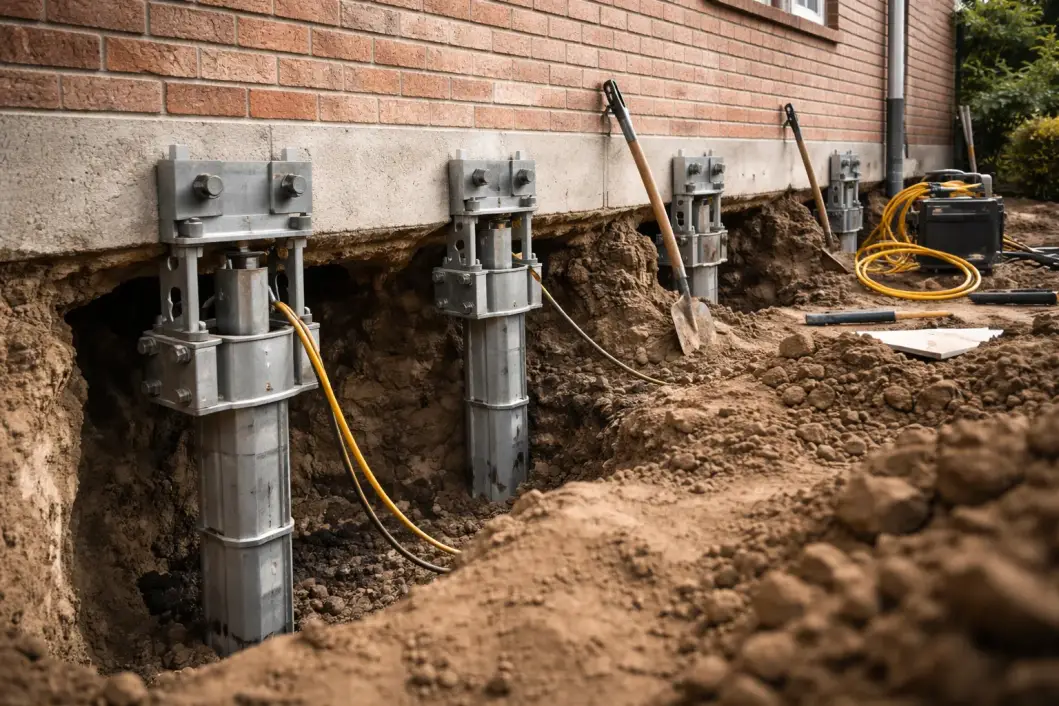
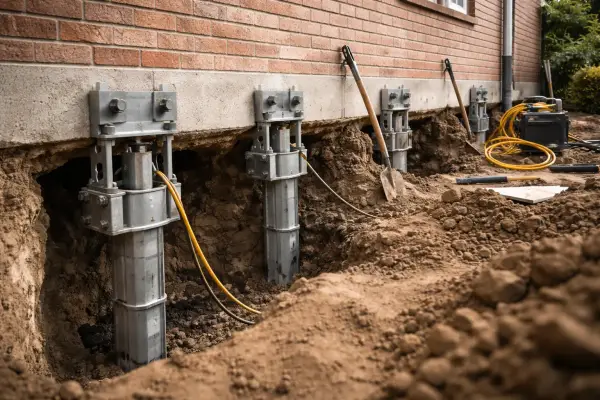
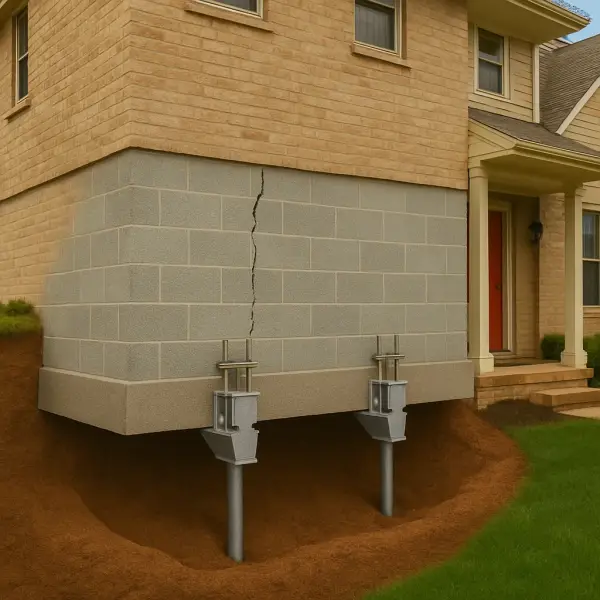
Steel push piers are deep foundation support systems designed to stabilize and, in many cases, lift a settling foundation. They consist of high-strength, galvanized steel segments that are hydraulically driven into the ground until they reach stable load-bearing soil or bedrock.
Unlike surface-level repairs, push piers transfer the weight of the structure away from unstable soils and onto deeper, more competent strata. This makes them especially effective for long-term foundation repair.
How Steel Push Pier Foundation Repair Works
Steel push pier installation follows a precise, engineered process:
Foundation Access
Small excavations are made at strategic points along the foundation footing where settlement is occurring.Bracket Installation
Steel foundation brackets are secured to the footing. These brackets act as the load-transfer point between the structure and the pier system.Hydraulic Pier Driving
Steel pier sections are hydraulically driven through unstable soil layers. Each section is added sequentially until sufficient resistance is achieved, indicating stable load-bearing soil or bedrock.Load Transfer and Stabilization
Once proper depth is reached, the weight of the structure is transferred from the failing soil onto the steel piers.Optional Foundation Lift
In many cases, controlled lifting can be performed to recover lost elevation and improve structural alignment.
This method ensures long-term stability by bypassing problematic soil conditions entirely.
Signs Your Foundation May Need Steel Push Piers
Foundation settlement rarely goes unnoticed. Common warning signs include:
Stair-step cracks in brick or block walls
Vertical or diagonal cracks in foundation walls
Doors and windows that stick or won’t close properly
Uneven or sloping floors
Separation between walls, ceilings, or exterior trim
If these symptoms continue to worsen, structural support—not surface repair—is usually required.
Steel Push Piers vs. Other Foundation Repair Methods
Steel Push Piers vs. Helical Piers
Steel push piers rely on the weight of the structure to drive the piers to load-bearing soil, making them ideal for heavier buildings. Helical piers, by contrast, are screwed into the soil and are often better suited for lighter structures or new construction.
Steel Push Piers vs. Foam Injection
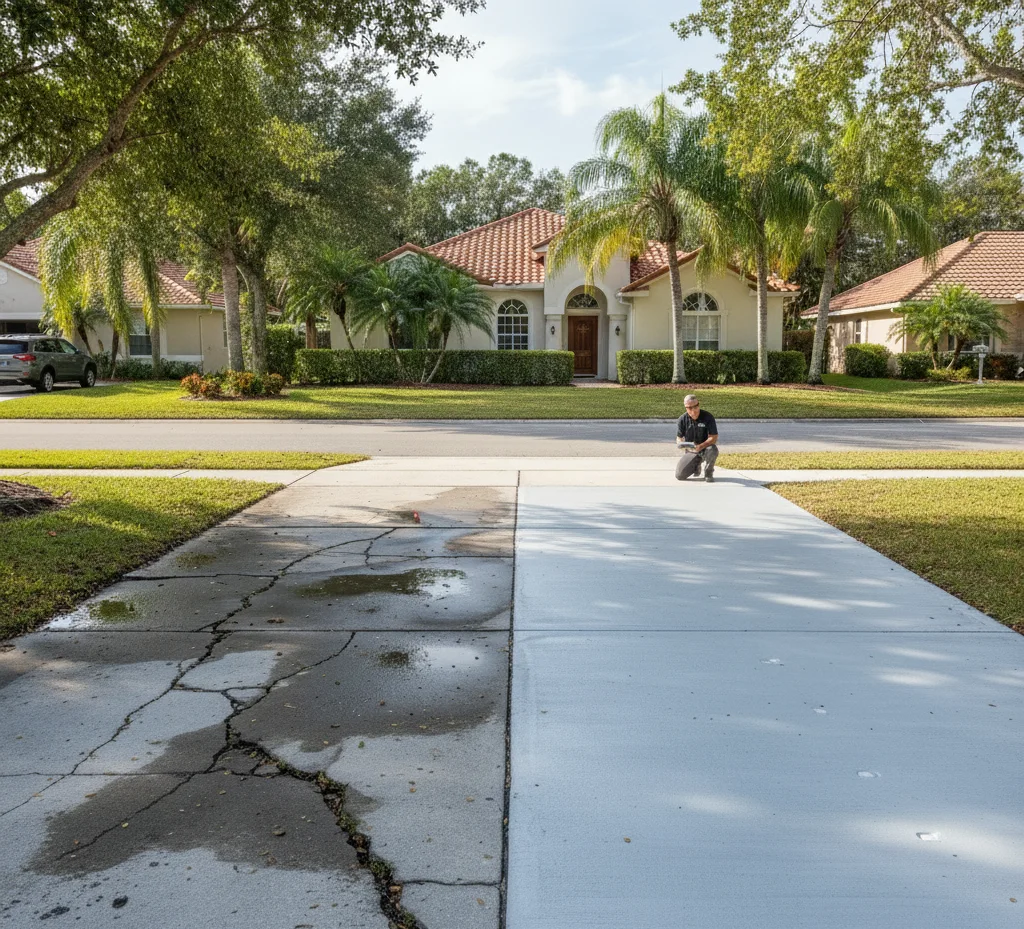
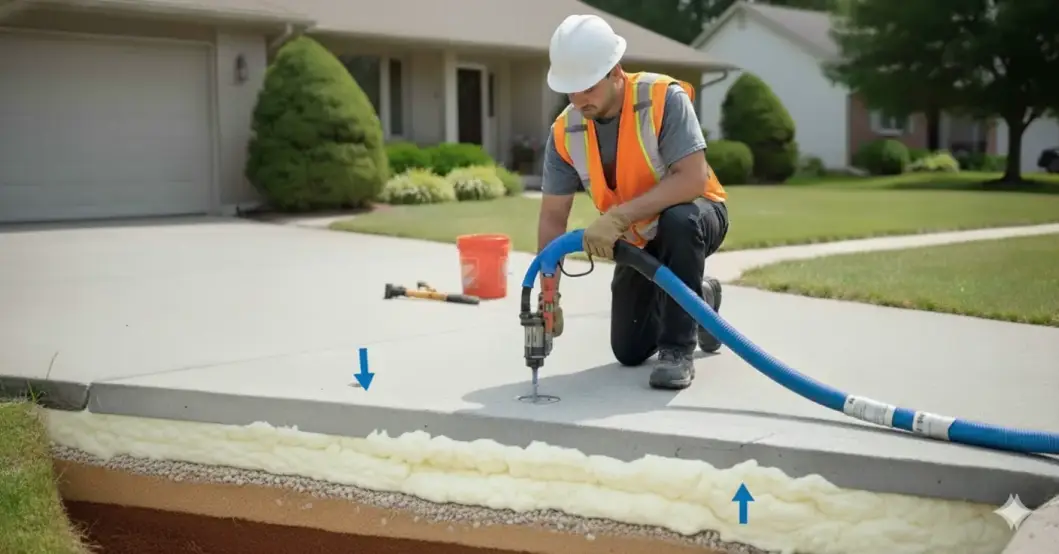
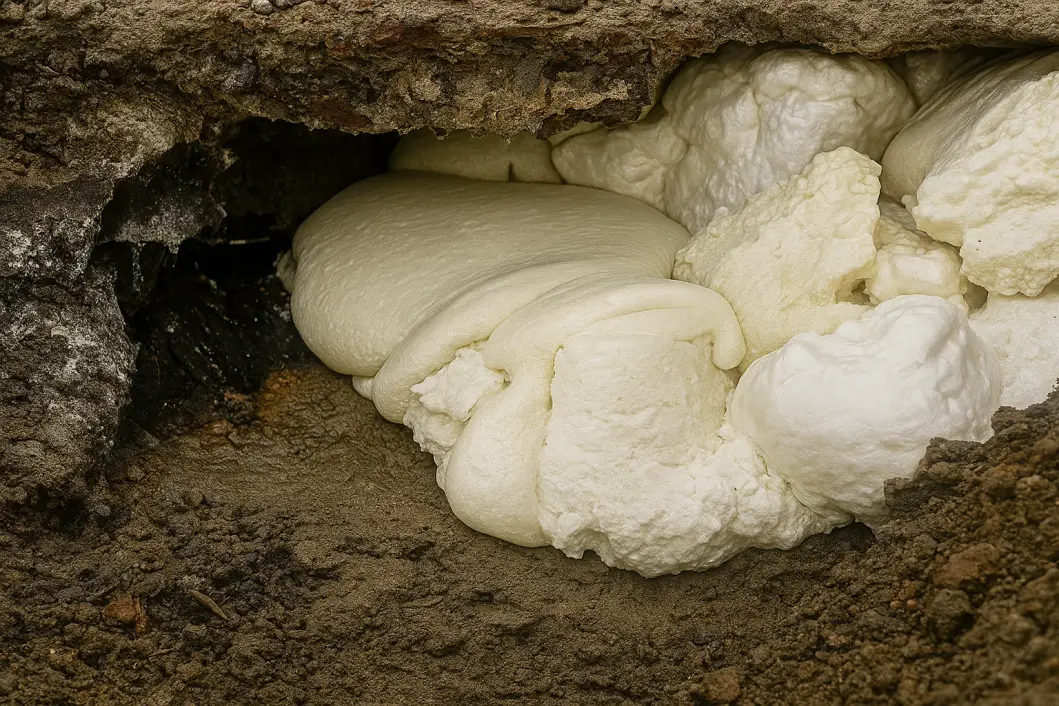
Polyurethane foam injection is highly effective for lifting and stabilizing concrete slabs and improving soil support in shallow applications. However, when a structure requires deep load transfer due to severe settlement, steel push piers provide the necessary structural support that foam alone cannot achieve.
Steel Push Piers vs. Concrete Underpinning
Traditional concrete underpinning is labor-intensive, disruptive, and time-consuming. Steel push piers offer faster installation, less excavation, and more predictable performance.
Benefits of Steel Push Pier Foundation Repair
Steel push piers are widely used because they offer several key advantages:
Permanent foundation stabilization
High load-bearing capacity suitable for residential and commercial structures
Minimal disruption compared to excavation-heavy repairs
Adaptability to various soil conditions
Potential foundation lifting, reducing visible damage
When installed correctly, steel push piers are designed to last the lifetime of the structure.
Are Steel Push Piers Right for Every Foundation Problem?
While steel push piers are extremely effective, they are not a universal solution. They are best suited for:
Foundations experiencing vertical settlement
Structures with accessible footing depths
Situations where stable soil or bedrock is reachable
In cases involving lateral wall movement, soil washout, or voids beneath slabs, alternative or complementary solutions such as soil stabilization or wall reinforcement may be required. A professional evaluation is critical to determining the correct repair strategy.
Installation Timeline and What to Expect
Most steel push pier installations are completed within a few days, depending on the number of piers and site conditions. The process typically involves:
Limited excavation around the foundation
Controlled installation with minimal vibration
Immediate structural stabilization
Site cleanup and restoration
Because the repair addresses the root cause of settlement, results are immediate and measurable.
Cost Factors for Steel Push Pier Foundation Repair
The cost of steel push pier foundation repair varies based on several factors:
Number of piers required
Depth needed to reach stable soil
Accessibility of the foundation
Structural load and building type
While steel push piers represent a higher upfront investment than cosmetic repairs, they offer superior long-term value by preventing recurring damage and future repair costs.
Integrating Steel Push Piers into a Complete Foundation Repair Strategy
In many cases, the best results come from combining solutions. Steel push piers may be used alongside:
Crack repair systems
Drainage improvements
Polyurethane foam soil stabilization for surrounding slabs
This integrated approach ensures both structural support and soil integrity are addressed.
Why Choose SlabFix for Foundation Repair Solutions
SlabFix specializes in advanced foundation repair and ground stabilization solutions designed for long-term performance. With a deep understanding of soil behavior and structural support systems, SlabFix develops customized repair strategies tailored to each property’s specific conditions.
By combining structural foundation systems like steel push piers with modern soil stabilization techniques, SlabFix delivers durable, minimally invasive solutions that protect your investment and restore confidence in your foundation.
Conclusion
Foundation settlement is not a problem that improves on its own. Steel push piers provide a proven, permanent solution by transferring structural loads to stable soil deep below the surface. When installed by experienced professionals, they restore stability, prevent further movement, and extend the life of your foundation.
If your property is showing signs of settlement, early evaluation and proper foundation repair can prevent costly damage and ensure long-term structural safety.