How Boat Traffic Slowly Destroys Seawalls: The Hidden Impact of Repeated Wakes
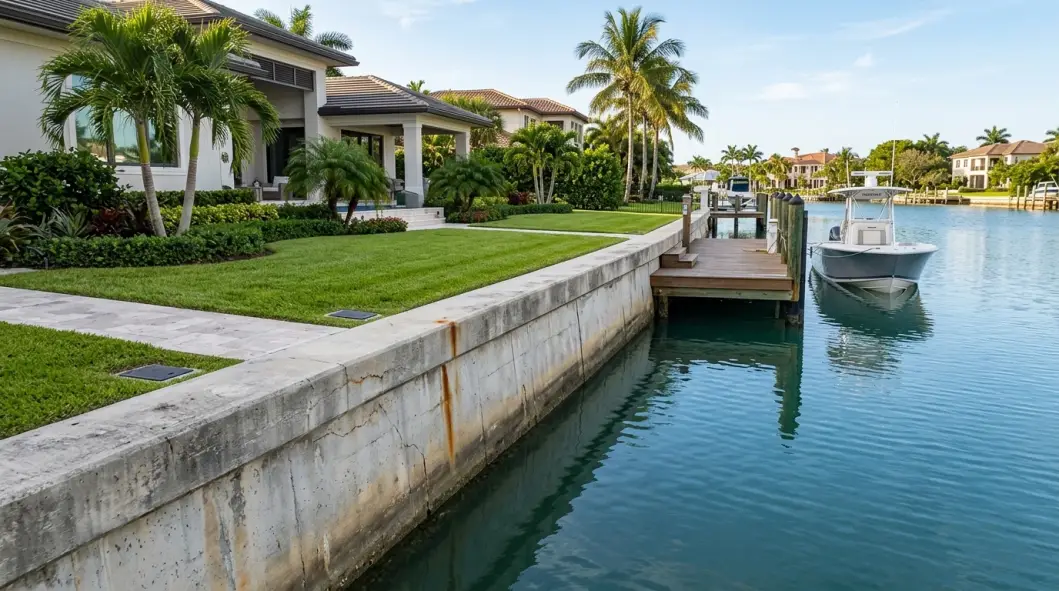
Owning a canal‑front property feels safe when a concrete seawall stands between you and the water. But boat wake seawall damage builds up slowly with every wave that hits the wall over the years. In Florida canals and other calm waterways, repeated wakes can become one of the main drivers of seawall erosion from boat traffic, even when the surface looks peaceful most of the day.
Why Boat Wakes Are So Hard on Seawalls
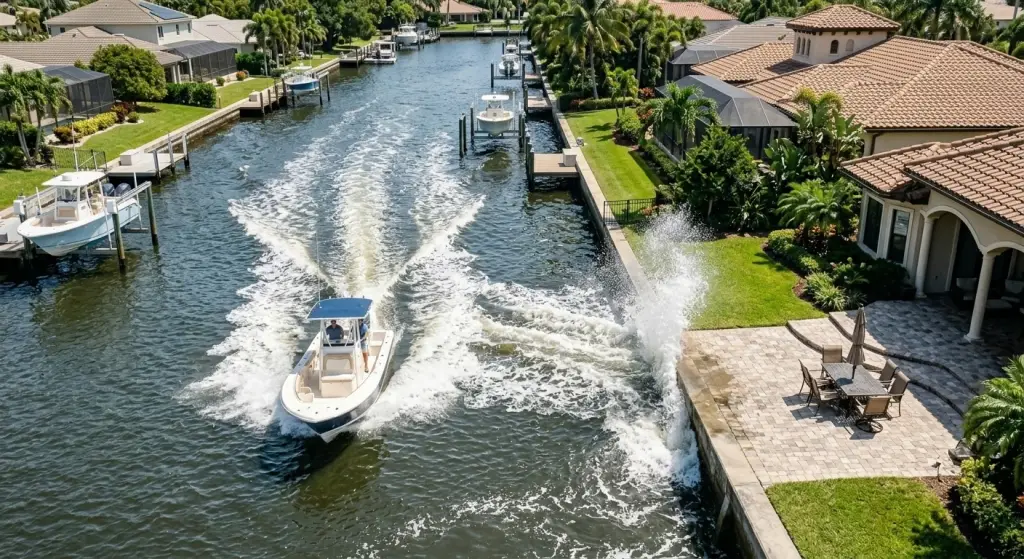
Every passing boat creates a train of waves that carries energy. That energy must go somewhere. In narrow canals, those waves often travel almost straight into the concrete wall instead of spreading out along a natural shoreline.
Studies on wake‑driven erosion show that boat wakes stir up sediment from the bottom and push it away from the bank. Over time, that process reshapes the shoreline and eats away at support near the wall.
When a wave hits a vertical seawall, the energy does not soak into sand or plants. The wave reflects downward and outward at the base of the wall. That reflection scours sediment and washes away material that supports the toe of the seawall. As this scouring repeats, the connection between the wall and the canal bed weakens and the structure becomes more vulnerable to cracking and movement.
Why Canal Seawalls Face Extra Risk
Canals look calmer than open water, but they can be much tougher on seawalls. In a narrow canal, wakes bounce between opposite banks. The same wave energy can strike both sides several times before it finally dies out.
Boat‑wake models for the Florida Intracoastal Waterway and similar systems show that in many sheltered reaches, boat wakes are often the largest waves hitting the shoreline on normal days. In many residential canal neighborhoods, boat traffic runs all day, especially on weekends and holidays. The seawall rarely gets a break. Instead, it takes one small hit after another, and canal seawall damage builds up slowly over time.
The Hidden Process: From Wake to Soil Loss
Most of the damage does not start on the face of the concrete. It begins in the soil behind and under the seawall. Each time waves push water against the wall, some of that water can force its way through tiny gaps, joints, or older construction defects.
When the water flows back toward the canal, it carries fine soil particles with it. That process creates small internal channels. As wakes and tides repeat this cycle, those channels grow into real voids in the backfill zone behind the wall.
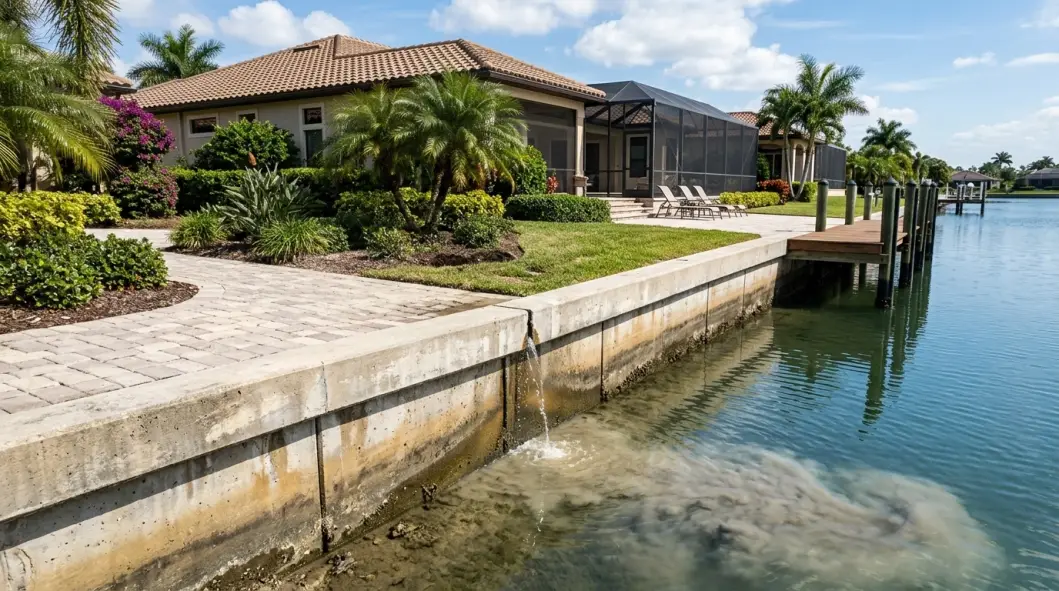
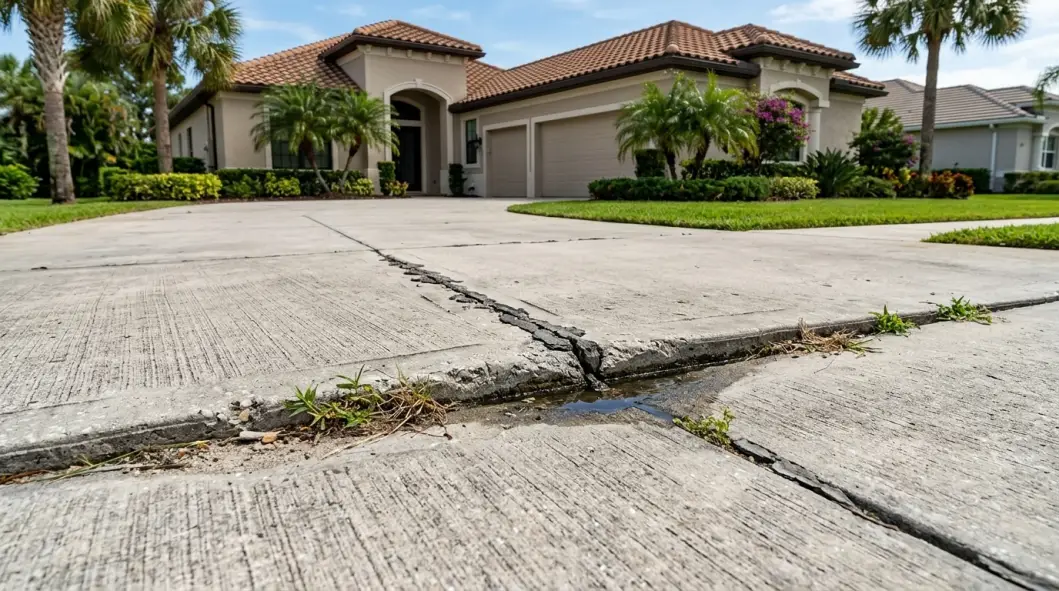
From the water side, the wall may still look fine. On the land side, the yard begins to settle slowly. Pavers or deck slabs crack. Small low spots appear in the lawn. A gap may open between the back of the seawall and the soil. All of these are early warning signs that seawall erosion from boat traffic has begun.
At the same time, the base of the wall keeps losing support because of wave reflection and scouring at the toe. Once enough soil disappears, the wall can start to lean slightly toward the canal or bow in the middle. Both are clear signs that the structure no longer has the support it once did.
Early Warning Signs of Boat‑Wake Seawall Damage
You can avoid many serious problems if you act when the first signs show up. Contractors and seawall inspectors often point to the same core warning signs:
Cracks in the seawall cap or panels, especially at joints or near tie‑back locations.
Soil loss behind the wall, such as a narrow gap or “trench” opening along the seawall line.
Soft spots or depressions in the yard close to the seawall, which can signal voids or small sinkholes.
Rust stains or exposed metal from rebar, tie‑backs, or anchors, which indicates ongoing corrosion.
Visible water seepage through joints or cracks during high tide or periods of heavy boat traffic.
If you see more than one of these symptoms in the same area, it is a strong sign that boat wake seawall damage is affecting both the concrete and the supporting soils, not just the surface.
What Happens If You Ignore the Damage?
Ignoring these warning signs does not keep the problem small. It lets damage continue out of sight until a major failure forces a costly repair. Field reports of seawall failures often show the same pattern: years of minor cracking and slow soil loss followed by a sudden, expensive incident.
As more soil disappears, structures near the seawall start to suffer. Pool decks, patios, walkways, and even parts of the home’s foundation can crack or settle because the ground under them is moving.
The environmental impact matters too. Soil that washes into the canal clouds the water, buries aquatic plants, and can damage habitats in man‑made and natural waterways.
By the time the seawall leans noticeably or sections shift out of alignment, repairs become much more complex and expensive than early soil stabilization and leak sealing would have been. In tight canal settings with limited access, a neglected wall often requires extensive partial or full replacement instead of a focused rehabilitation.
How Boaters Can Reduce Seawall Erosion from Boat Traffic
You cannot control every boat in your canal, but boater behavior makes a real difference. Public “watch your wake” campaigns on lakes and rivers show that lower speeds near shore reduce wave height and help protect banks and seawalls.
In residential canals, the best practice is true “slow speed, minimum wake,” not just “a bit slower.” Heavy boats and deep‑V hulls can still throw large wakes at moderate speeds, especially in shallow water. Avoiding hard acceleration or sharp turns near seawalls also helps. Those maneuvers create steep wakes that slam directly into the wall or rebound along the canal.
When boaters understand that their wakes contribute to canal seawall damage and property loss, they are more likely to respect no‑wake zones, stay farther from shore, and adjust speed through narrow waterways. Some Florida communities are already considering or enforcing stricter wake controls in specific canals because of erosion and seawall issues.
Engineering and Repair Options for Wake‑Damaged Seawalls
Once you see clear signs of boat wake seawall damage, crack patching alone is not enough. Effective repair must address the soil behind the wall as well as the concrete itself, because soil loss is often the root cause of structural problems.
One modern option is polyurethane injection behind the seawall. Technicians drill small holes from the land side, then inject expanding resin. The material follows existing voids and erosion channels, fills them, and re‑densifies the washed‑out soils. After it cures, the foam forms a light, water‑resistant matrix that helps support the wall and slows future soil migration under ongoing wake and tidal loads.
In addition to soil stabilization, repair plans may include:
Sealing joints and cracks to reduce water pathways.
Repairing or replacing the cap to protect the top of the wall.
Adding or improving weep holes and filters to manage water pressure.
Strengthening or replacing tie‑backs and anchors where needed.
The right mix of steps depends on how much the wall has moved, how deep the voids are, and what the soil conditions look like behind the structure. A thorough inspection is essential.
Long‑Term Protection for Canal Seawalls
For long‑term performance, the best strategy combines strong structural repair with better energy management at the shoreline. In some locations, homeowners and communities can add “living shoreline” or hybrid features—such as low rock sills, planted marsh zones, or other energy‑dissipating elements—alongside or in front of existing walls. These features help break up wave energy before it hits the vertical face.
Research on living shorelines in high‑boat‑traffic waterways shows that well‑designed natural or hybrid structures can dampen boat wakes, reduce nearshore erosion, and support healthier coastal habitats at the same time. They are not possible in every canal, but they are worth exploring where space and permitting allow.
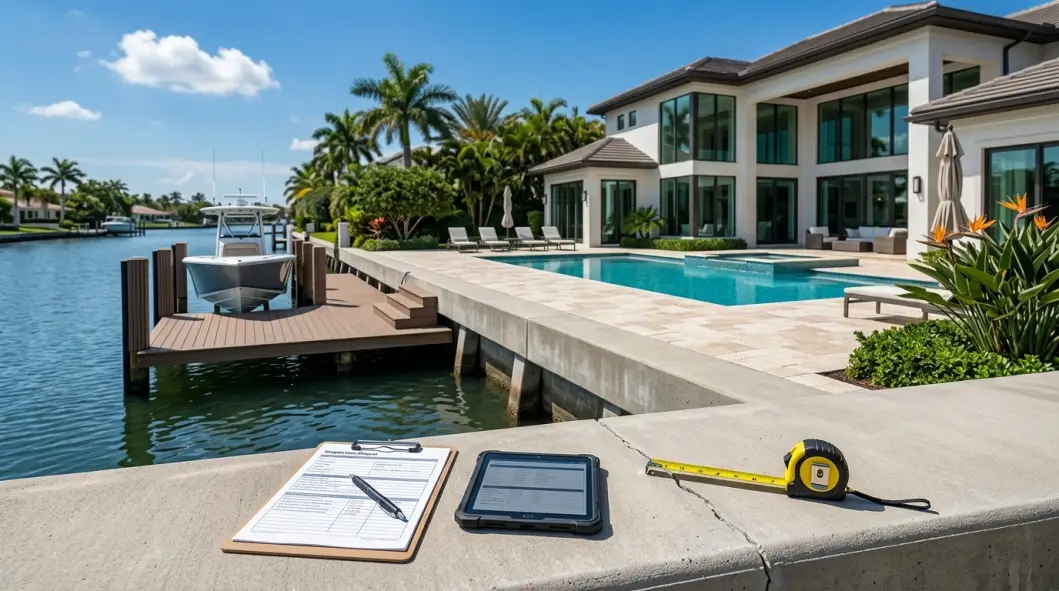
No matter what type of seawall you have, regular inspections are critical in boat‑heavy regions like Florida. Checking the wall after busy boating seasons, storms, or major high‑water events makes it far more likely you will catch early soil loss, seepage, or cracking before it turns into a major structural problem.
Frequently Asked Questions About Boat Wake Seawall Damage
Can boat wakes really damage my seawall over time?
Yes. Repeated boat wakes can gradually erode both the soil and the concrete. Studies on canals and sheltered waterways confirm that boat wakes in shallow, narrow channels can be one of the main forces driving shoreline change over time.
Why is seawall erosion from boat traffic worse in canals?
In canals, waves cannot spread out along a wide beach. They bounce between hard banks and hit each seawall several times. That focused energy speeds up canal seawall damage compared to many open‑coast sites where waves dissipate over a longer distance.
What are the first signs of boat wake seawall damage?
Common early signs include:
New or widening cracks in the cap or panels.
Soil gaps or trenches opening behind the wall.
Settling or soft spots in the yard near the seawall.
Rust stains from metal components.
Noticeable seepage through joints during high tide or heavy boat traffic.
Seeing more than one sign in the same area is a strong signal that soils are moving because of wakes and water pressure.
Does slow boat traffic still cause seawall erosion from boat wakes?
Yes. Even boats at moderate speeds can generate wakes that move sediment when traffic is frequent. The damage is cumulative. A single small wake does little, but thousands of passes over a season in a narrow canal can cause significant erosion and soil loss behind the wall.
Is canal seawall damage different from open‑water seawall damage?
In open water, storms and wind waves often dominate the wave climate. In canals and sheltered waterways, boat traffic is often the primary source of daily wave energy. That means canal seawall damage is tightly linked to boating patterns, peak traffic times, and the types of vessels that use the waterway.
How do you fix seawall erosion caused by repeated boat wakes?
The most effective repairs stabilize the soils and the structure together. Contractors often use polyurethane injection to fill hidden voids, seal water pathways, and re‑compact the backfill, then follow with joint sealing, cap repair, and tie‑back or anchor upgrades as needed. Ignoring the soil and focusing only on the concrete surface usually leads to recurring problems because wakes keep moving material behind the wall.
When should I schedule a professional seawall inspection?
Call a qualified seawall contractor or engineer if you notice new cracks, soil loss, yard settlement, or seepage during high tides or busy boat‑traffic periods. In high‑traffic canal communities, many experts also recommend periodic proactive inspections even if no symptoms are visible yet, especially for older seawalls that were not designed for today’s boating intensity.
📞 Call: 407-379-2585
📍 Serving all Florida regions