How Do Tree Roots Affect Concrete Slabs, Driveways, and Walkways in Florida?
If you own a home in Florida, tree roots may be damaging your concrete more than you realize.
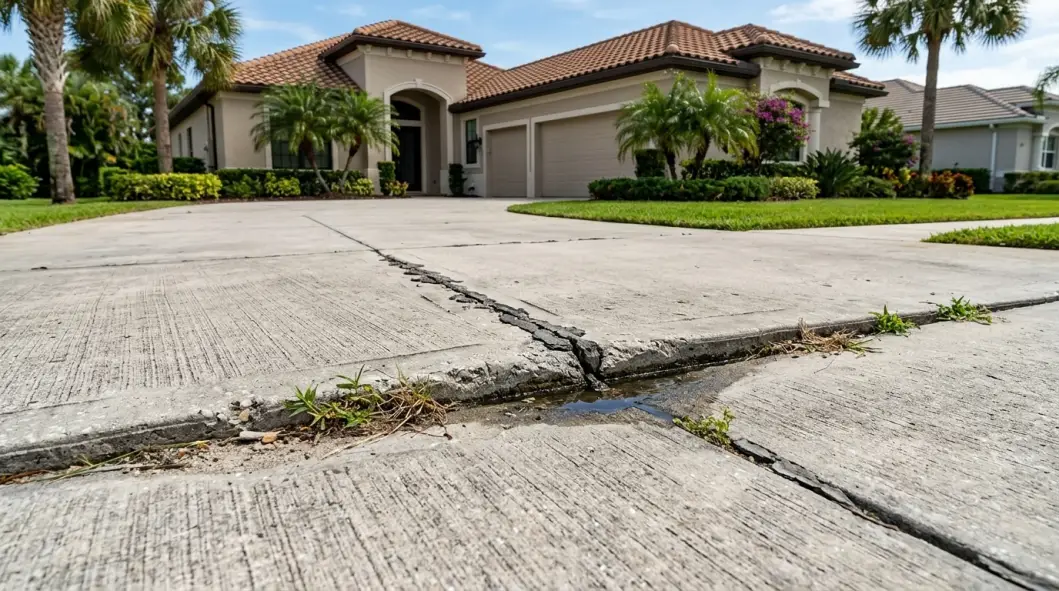
Many homeowners assume sunken concrete always comes from rain, erosion, or drainage issues. However, tree roots often change the soil beneath slabs, driveways, and walkways long before visible damage appears.
This guide answers the most important questions homeowners ask about tree roots and concrete damage in Florida.
As a result, you can spot the warning signs earlier, understand what is happening below the surface, and choose the right repair before the problem spreads.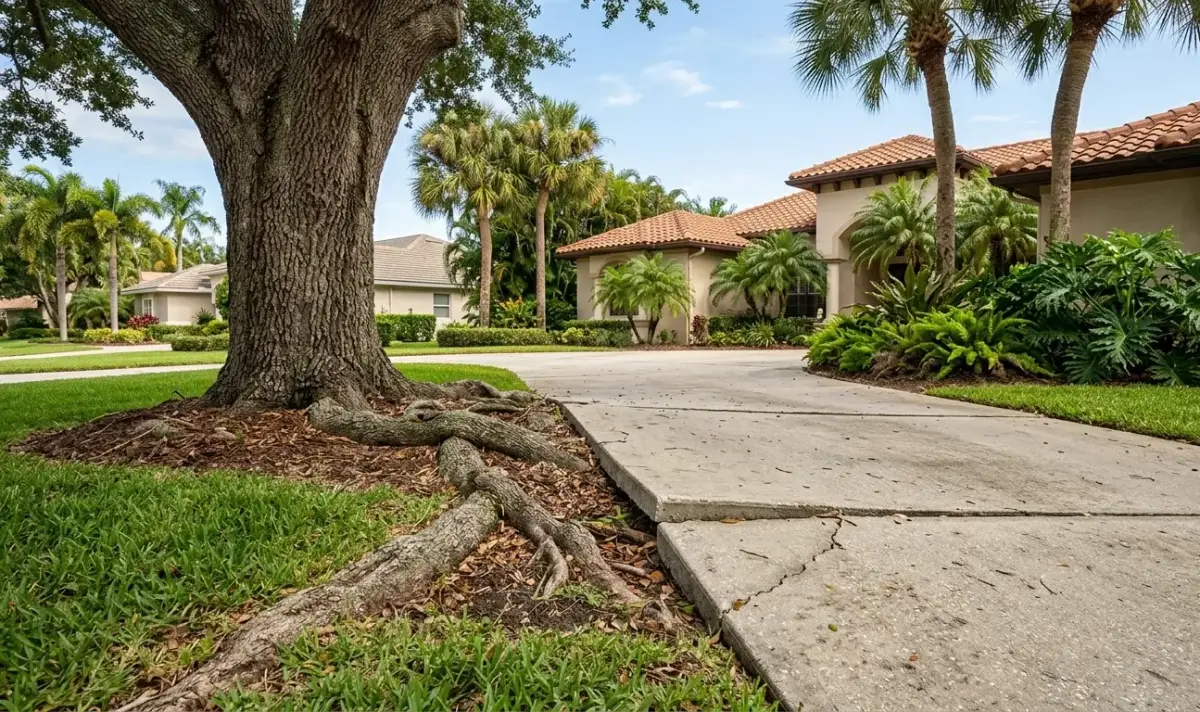
🌳 Can Tree Roots Really Damage Concrete?
Yes — and they can do it in more than one way.
Most people think roots damage concrete only by pushing upward. In reality, the bigger issue is often what the roots do to the soil below and around the slab.
Tree roots can:
Lift concrete from underneath.
Dry out and shrink supporting soil.
Displace soil near slab edges.
Create uneven pressure under driveways and walkways.
Make existing weak spots worse over time.
In Florida, moisture levels can change quickly, and many properties already deal with sandy or unstable soil. Because of that, root-related movement can become a serious concrete problem.
🧱 How Do Tree Roots Affect Concrete Slabs?
Tree roots affect concrete slabs by changing the support system below them.
As roots grow, they can expand into spaces under nearby concrete. Sometimes they lift slab sections directly. In other cases, they pull moisture from the surrounding soil, which can lead to shrinkage, separation, or uneven settlement.
Because of that movement, the slab may start to:
Crack.
Tilt.
Sink on one side.
Lift near edges.
Separate at joints.
In many cases, the root is only part of the problem. More importantly, the surrounding soil may already be shifting and losing support at the same time.
🚗 Why Do Tree Roots Damage Driveways So Often?
Driveways are especially vulnerable because they usually sit near lawn edges, tree lines, and landscaped areas.
As a result, they are often close to shallow root systems that spread outward looking for water and oxygen.
Over time, roots may grow beneath driveway edges or near expansion joints. Then homeowners may begin to notice:
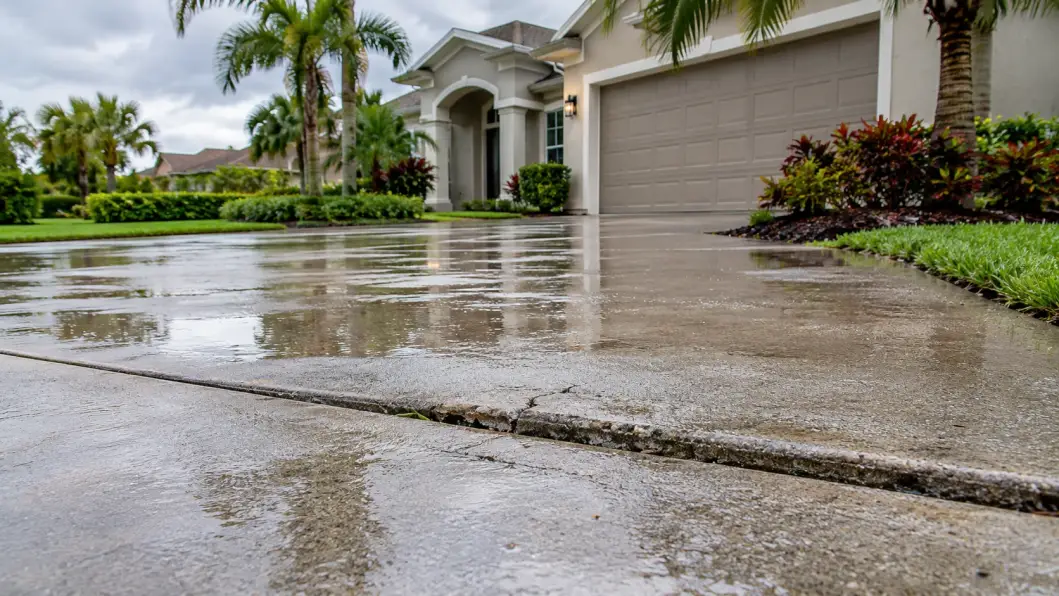
One slab panel sitting higher than another.
Cracks near the outer edge of the driveway.
Uneven transitions between sections.
Water pooling where the surface used to drain normally.
The longer this continues, the more likely the driveway becomes both a trip hazard and a structural repair issue.
🚶 Why Are Walkways and Sidewalks Commonly Affected?
Walkways are thinner and lighter than many other concrete surfaces. Therefore, they often react faster when roots begin to interfere with soil support.
Even a small amount of pressure or soil displacement can create:
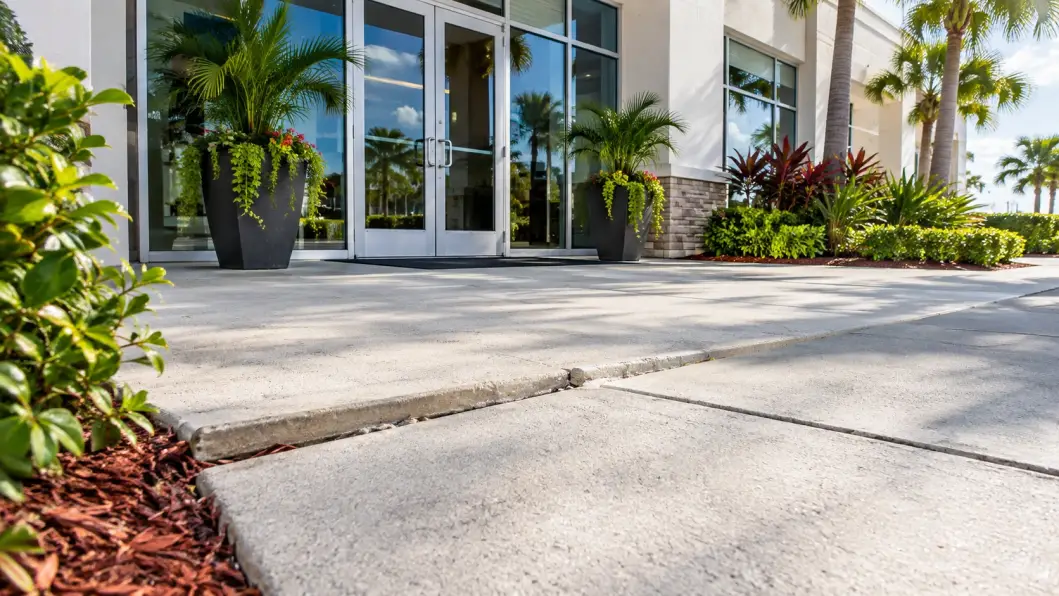
Raised sidewalk panels.
Cracked walkway sections.
Uneven step-offs.
Trip hazards near landscaping beds or tree wells.
For that reason, walkway damage caused by tree roots often appears earlier than damage in larger slabs.
🌴 Are Tree Roots More Aggressive in Florida?
Florida creates ideal conditions for active root growth.
Warm weather, long growing seasons, frequent irrigation, and tropical landscaping all encourage roots to spread aggressively.
In addition, many Florida properties have shallow-rooted trees planted close to driveways, pool decks, sidewalks, and patios. Because of that combination, root-related concrete movement is more common in Florida than many homeowners expect.
⚠️ What Are the Warning Signs That Tree Roots Are Affecting My Concrete?
Watch for these early signs:
Concrete lifting near a tree or landscape bed.
Cracks that seem to start from one edge and move inward.
Walkways that become uneven over time.
Driveway sections that no longer sit flush.
Pooling water in areas that used to drain correctly.
Soil separation near slab edges.
Repeated crack repair that keeps failing.
If more than one of these signs appears near a mature tree, root activity may be part of the problem.
❓ Is It Always the Roots Causing the Damage?
Not always.
Sometimes the roots are the direct cause. In other cases, they contribute to a larger soil problem. For example, roots may dry the soil, shift its density, or combine with drainage problems to create voids and uneven support.
That is why a proper inspection matters. If you only grind the concrete edge or patch the crack without understanding what the roots and soil are doing, the problem often returns.
🪵 Do Tree Roots Push Concrete Up or Make It Sink?
They can do both.
This is one of the most misunderstood parts of root-related concrete damage. On one hand, roots can push upward and lift the slab. On the other hand, they can dry the soil, reduce support, redirect water flow, and combine with erosion to make nearby sections sink.
Because of that, one part of a driveway may lift while another section settles. Without a proper diagnosis, the pattern can look confusing even though the real cause is below the surface.
💧 How Do Tree Roots and Water Problems Work Together?
Tree roots and water often create a combined problem.
Roots search for moisture. Meanwhile, water lines, sprinkler zones, downspouts, and irrigated landscape beds can attract roots toward the concrete. At the same time, root growth can redirect water movement or create weak spots where soil starts shifting.
This combination can lead to:
Washout near slab edges.
Moisture imbalance below concrete.
Voids forming under walkways.
Soft zones beside driveways.
Repeated settlement after storms.
In Florida, this mix of roots and water movement is often more damaging than roots alone.
🛠️ Can Concrete Be Repaired Without Removing the Tree?
Sometimes yes, but it depends on the severity of the root interference.
If the slab is still structurally recoverable, concrete lifting or stabilization may correct the movement without full replacement. However, if large structural roots are still actively lifting the slab, repair alone may not last unless the root issue is addressed too.
That is why the best repair plan often includes:
Identifying whether the roots are active.
Evaluating how much the slab has moved.
Checking for soil loss or voids.
Deciding whether trimming, root management, or slab adjustment is needed.
In other words, the goal is not just to improve the appearance of the surface. The goal is to stop the movement from continuing.
✂️ Should You Cut the Roots?
Not blindly.
Cutting roots may seem like the fastest fix, but it can create serious problems. For example, removing major roots can destabilize the tree, harm its long-term health, trigger new soil movement, or lead to future regrowth issues.
In some cases, root trimming may be part of the solution. In other situations, it creates a bigger risk than the concrete issue itself. That is why root-related repairs should always be approached carefully, especially near large or mature trees.
🧪 How Does SlabFix Repair Concrete Affected by Root-Related Soil Movement?
When roots contribute to slab settlement, lifting, or void formation, the repair should focus on the support below the concrete — not just the visible surface.
Depending on the condition of the slab, the process may include:
Inspecting the slab and surrounding tree area.
Identifying whether the slab is lifting, sinking, or both.
Locating voids or weak support zones.
Using polyurethane injection to restore support beneath recoverable concrete.
Stabilizing the slab to reduce movement and improve performance.
This type of repair works best when the slab itself can still be saved and the root issue has been evaluated properly. SlabFix already presents polyurethane-based concrete leveling and stabilization as a core service in Florida, which makes this explanation a strong fit for the site.
⏳ What Happens If You Ignore Tree Root Damage?
It usually gets worse.
Tree roots keep growing. Soil problems keep spreading. In addition, water continues finding weak points. What starts as a small crack or a slightly uneven walkway can turn into a bigger and more expensive issue.
Ignoring the problem can lead to:
Larger cracks.
More uneven slabs.
Safety hazards.
Drainage problems.
More difficult repairs later.
Damage spreading to nearby concrete sections.
As a result, early action usually gives you more repair options and a better long-term outcome.
🏠 Can This Affect Other Parts of the Property?
Yes.
Tree-root-related movement does not always stay limited to one walkway panel or driveway section. It can also affect:
Garage aprons.
Patios.
Pool decks.
Entry paths.
Sidewalks.
Concrete near landscape borders.
If one area is moving and mature trees are nearby, it is smart to inspect surrounding sections too.
✅ What Is the Best Fix for Root-Related Concrete Damage?
The best fix depends on the real cause.
If the slab is mostly intact and the main issue is lost support or uneven settlement, lifting and stabilization may be the best option. By contrast, if roots are actively pushing the slab upward, the repair plan may also need to include root management. Finally, if the slab is badly broken, replacement may be necessary.
The important point is simple: do not treat all root-related damage the same way. A good repair starts by diagnosing whether the concrete is lifting, sinking, losing support, or dealing with all three at once.
🔍 Questions Homeowners Commonly Ask
How do I know if tree roots are under my driveway?
Look for cracking, lifting near the edges, uneven slab joints, or damage that appears close to mature trees or landscape beds.
Can tree roots cause a concrete slab to sink?
Yes. Roots can dry the soil, displace support, or contribute to uneven moisture conditions that lead to settlement.
Should I replace concrete damaged by roots?
Not always. If the slab is still recoverable, lifting or stabilization may be possible.
Will the problem come back after repair?
It can, especially if the root issue or soil instability is never addressed.
Are walkways more vulnerable than driveways?
Often yes, because walkways are thinner and lighter, so they react faster to root pressure and soil movement.
📌 Final Thoughts: Tree Roots Cause More Than Surface Damage
Tree roots do not just crack concrete. They also change the soil, shift support, affect drainage, and create movement below the surface.
That is why the visible damage is often only part of the problem. If you catch it early, many root-related concrete issues can be diagnosed and repaired before they spread into larger structural or safety problems.
📞 Get Expert Help Before the Damage Spreads
At SlabFix, we help property owners identify the real cause of sinking, lifted, or uneven concrete and recommend repair solutions based on what is happening below the surface. SlabFix also emphasizes polyurethane concrete leveling and stabilization across its Florida service pages, which aligns well with this topic.
If you are seeing cracking, lifting, or settlement near trees, now is the time to inspect the problem before it gets worse.
📞 Call SlabFix Today: 407-379-2585
📍 Serving Orlando and Central Florida
💬 Free Inspection & Quote