Pool Deck Settlement In Florida: Why Polyurethane Leveling Beats Resurfacing for Long-Term Safety
Pool Deck Settlement In Florida: Why Polyurethane Leveling Beats Resurfacing for Long-Term Safety
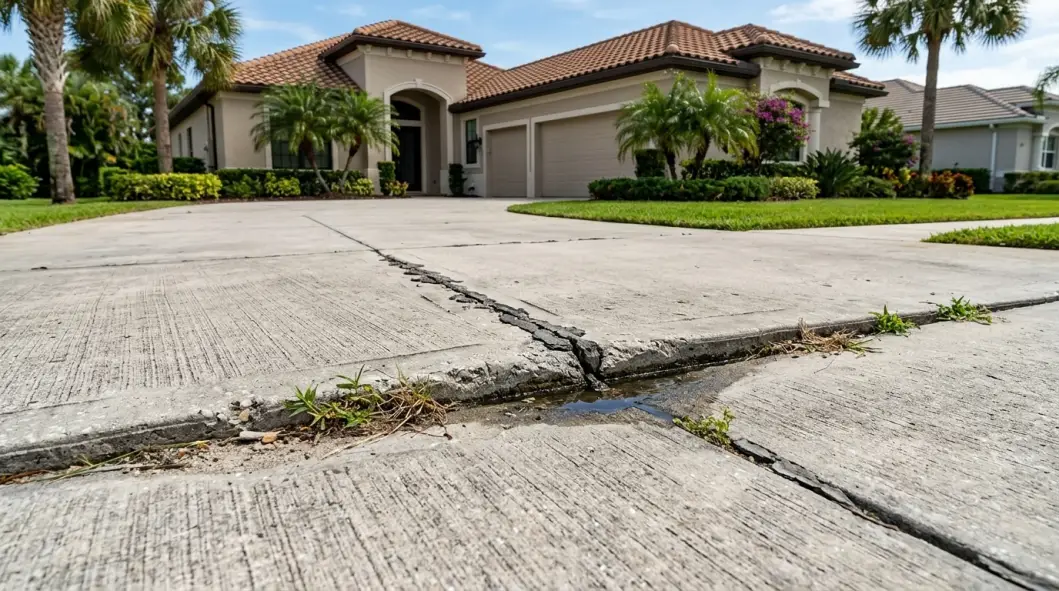
Pool deck settlement in Florida is more than an “ugly concrete” problem—it’s a safety issue that can create trip hazards, drainage problems, and ongoing movement that keeps coming back. If you’re dealing with pool deck settlement in Florida, the smartest fix is the one that restores support below the slab instead of only improving how the surface looks.
This guide explains why pool deck settlement in Florida happens, why resurfacing often fails when settlement is the real issue, and why polyurethane leveling is usually the better long-term safety solution for Florida homeowners.
Why pool deck settlement in Florida happens
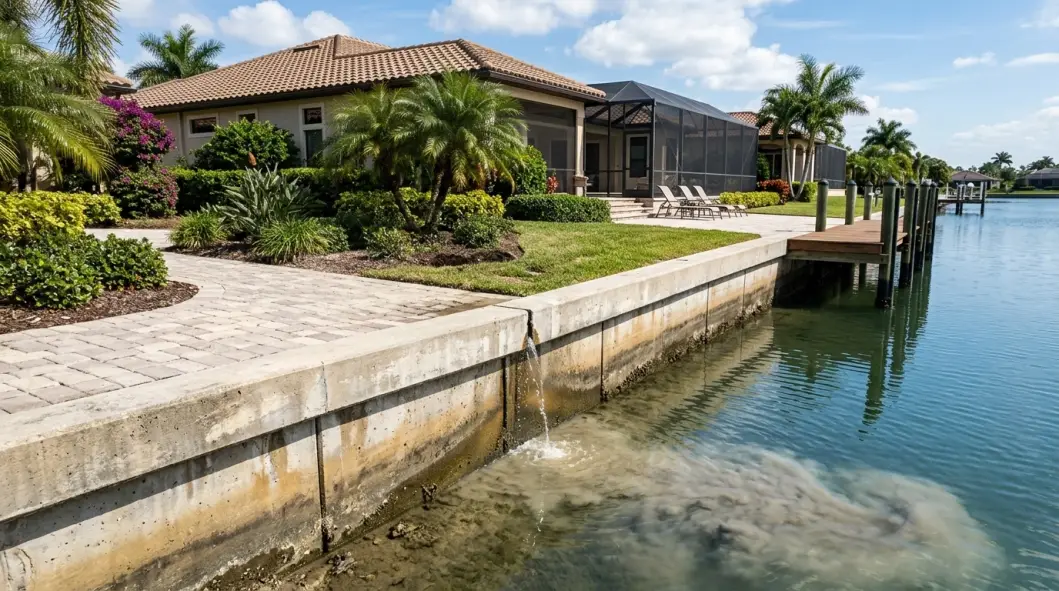
Pool deck settlement in Florida is typically caused by changes in the soil supporting the concrete, not by “bad concrete.” Florida conditions that commonly contribute to pool deck settlement in Florida include frequent rain, irrigation overspray, poor drainage, sandy or loose soils, and soil washout near the pool and deck perimeter.
When the soil loses density or gets eroded, voids can form under the deck. Once voids exist, pool deck settlement in Florida often accelerates because the slab is no longer supported evenly, so it drops, tilts, or separates at joints.
Warning signs of pool deck settlement in Florida
Pool deck settlement in Florida often shows up in patterns that homeowners can spot early. Common warning signs include:
Uneven pool deck slabs, especially near corners or edges.
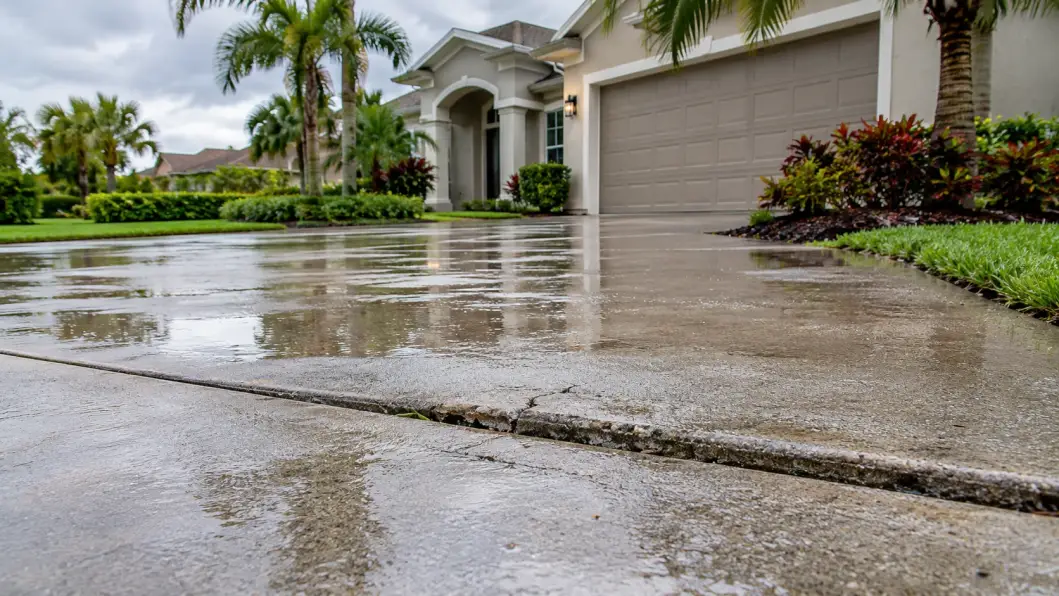
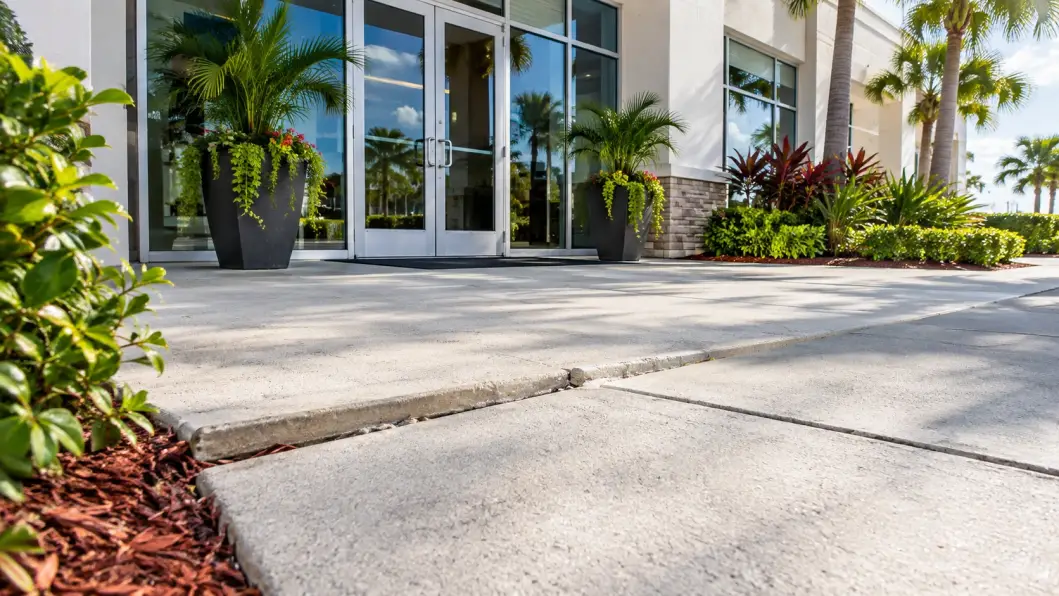
Trip hazards at control joints or slab seams.
Cracks that keep reappearing after patching.
Gaps between coping/pool shell and the deck.
Water pooling in new low spots after rain or after the pool is splashed out.
Deck sections tilting toward landscaping beds or drainage paths.
If you notice these signs, treat pool deck settlement in Florida as a support problem first—not a cosmetic problem.
Why resurfacing often fails for pool deck settlement in Florida
Resurfacing can improve appearance, texture, and minor surface wear, but it usually does not fix pool deck settlement in Florida when the slab has lost support underneath. In other words, resurfacing can make a settled deck look smoother while the underlying voids and weak soil remain.
When the cause of pool deck settlement in Florida is still active (voids, erosion, weak subgrade, water movement), resurfacing may crack again, delaminate, or telegraph old movement lines back through the new coating. This is why many “fixed” decks become problem decks again—because the root cause of pool deck settlement in Florida was never corrected.
Why polyurethane leveling beats resurfacing (long-term safety)
If the goal is long-term safety, polyurethane leveling is designed to address pool deck settlement in Florida at its source: loss of support beneath the concrete.
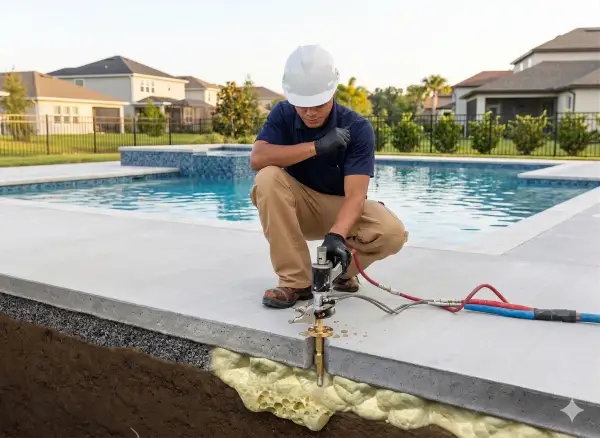
Polyurethane leveling works by drilling small holes and injecting expanding polyurethane foam beneath the slab to fill voids, stabilize weak zones, and lift the deck back toward level in a controlled way.
Key reasons polyurethane leveling beats resurfacing for pool deck settlement in Florida:
Restores support under the slab (not just the top surface).
Reduces trip hazards by correcting elevation differences.
Helps correct drainage by lifting low areas that hold water.
Minimal disruption compared with demolition and replacement.
Targets the settled zones instead of rebuilding the entire deck.
If your pool deck settlement in Florida is creating uneven panels, a resurfacing-only approach is usually the wrong first step. Level first, then resurface if you want a refreshed finish.
The right repair sequence for pool deck settlement in Florida
For most homes, the best results come from doing pool deck settlement in Florida repairs in the correct order:
Identify the cause of soil loss (drainage problems, irrigation leaks, downspouts dumping near the deck, washout areas).
Stabilize and lift the deck with polyurethane leveling where settlement occurred.
Seal joints/cracks as needed to reduce water intrusion pathways.
Consider resurfacing afterward (optional) to improve appearance and slip resistance.
This sequence prevents you from spending money on a beautiful new surface while the pool deck settlement in Florida continues underneath it.
When resurfacing is still a good idea
Resurfacing can still be a great upgrade when pool deck settlement in Florida is not the main issue. For example, resurfacing may be appropriate when the deck is basically level and stable but has:
Surface scaling or spalling.
Staining and discoloration.
Worn texture or poor slip resistance.
Minor hairline cracking with no ongoing movement.
But if the deck is uneven or sinking, treat pool deck settlement in Florida first—then decide whether resurfacing is worth it.
Get help with pool deck settlement in Florida
If you’re seeing trip hazards, uneven slabs, or recurring cracks, you may be dealing with pool deck settlement in Florida—not just surface wear. A professional evaluation can confirm where support has been lost and whether polyurethane leveling is the best path to long-term safety.
Frequently Asked Questions
Why is my pool deck sinking in Florida?
In Florida, pool decks often sink because the soil beneath the slab loses support over time due to erosion, poor drainage, irrigation overspray, loose sandy soils, or weak original compaction.
As that support disappears, voids can form under the deck, which leads to settlement, cracking, uneven panels, and movement that usually gets worse instead of stopping on its own.
Will resurfacing fix an uneven or sinking pool deck?
Usually not, if the real problem is settlement below the slab.
Resurfacing can improve the appearance of the concrete, but it does not rebuild the missing support underneath, so cracks, movement, and low spots often return when the soil problem is still active.
How do I know if polyurethane leveling is a better option than resurfacing?
If the deck is uneven, creating trip hazards, collecting water, or separating at joints, the issue is usually structural support loss rather than surface wear alone.
In that situation, polyurethane leveling is often the better first step because it fills voids, stabilizes weak zones, and lifts the slab in a controlled way instead of only covering the surface.
Is a sinking pool deck just cosmetic, or is it a safety problem?
A sinking pool deck is often a real safety problem, not just a cosmetic one.
Uneven slabs can create trip hazards, interfere with drainage, leave water pooling in low areas, and make the deck less safe for daily use around the pool.
Is polyurethane leveling a long-term fix or just a temporary patch?
Polyurethane leveling is designed as a structural support repair, not just a surface patch.
It works by filling gaps below the slab, stabilizing weak soil, and restoring support with a lightweight material that can perform well in moisture-prone Florida conditions with minimal disruption.
📞 Call SlabFix Today: 407-379-2585
📍 Serving Orlando and Central Florida
💬 Free Inspection & Quote