Seawall Tieback Failure: Warning Signs, Causes, and Repair Options for Florida Waterfront Properties
If your seawall has started to lean, bow, or crack, the problem may not be the concrete you see — it may be the tiebacks hidden behind the wall. In Florida’s coastal and canal environments, seawall tieback failure is one of the most common reasons a wall begins to move and lose stability.
This guide explains what seawall tiebacks are, why they fail, how to spot early warning signs, and which repair options make sense for Florida waterfront properties.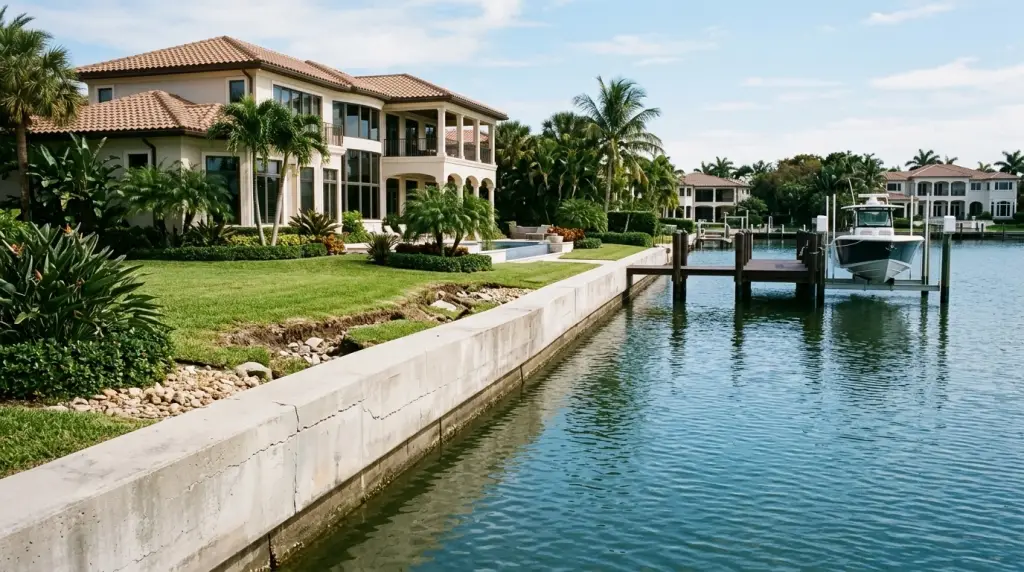
What Are Seawall Tiebacks and Why Do They Matter?
A seawall is more than a concrete or vinyl face. Behind the wall, tiebacks (or deadman anchors) connect the structure to solid ground further inland. These anchors help the seawall resist pressure from soil and water pushing against it.
When tiebacks work properly:
The wall stays upright and aligned.
Soil and water pressure are transferred safely into stable ground.
The seawall can handle tides, boat wakes, and storm conditions without excessive movement.
When tiebacks begin to fail, the wall loses that support and starts to show visible signs of distress.
Common Causes of Seawall Tieback Failure in Florida
Florida’s climate and soil conditions are hard on anchoring systems. Over time, several factors can combine to weaken seawall tiebacks:
Saltwater corrosion: Steel components exposed to saltwater and moist soils can rust and lose strength.
Soil loss and voids: Erosion behind the wall removes the soil that anchors the tiebacks in place.
Poor or blocked drainage: Trapped water increases hydrostatic pressure and adds extra force on the anchors.
Aging materials: Older seawalls may rely on outdated or undersized tiebacks that no longer handle modern loads.
Storm and boat‑wake loading: Repeated stress from hurricanes, storms, and heavy boat traffic fatigues metal and connections.
Any combination of these can gradually reduce tieback capacity until the wall begins to move.
Warning Signs That Your Seawall Tiebacks May Be Failing
Most seawalls do not fail overnight. They show early warning signs that property owners can spot if they know what to look for.
Key indicators include:
Leaning or bowing: The wall tilts toward the water or bulges in the middle instead of standing straight.
Horizontal cracks: Cracks near the waterline or cap suggest bending and shifting under load.
Separated joints: Gaps between panels or at corners show the wall is moving out of alignment.
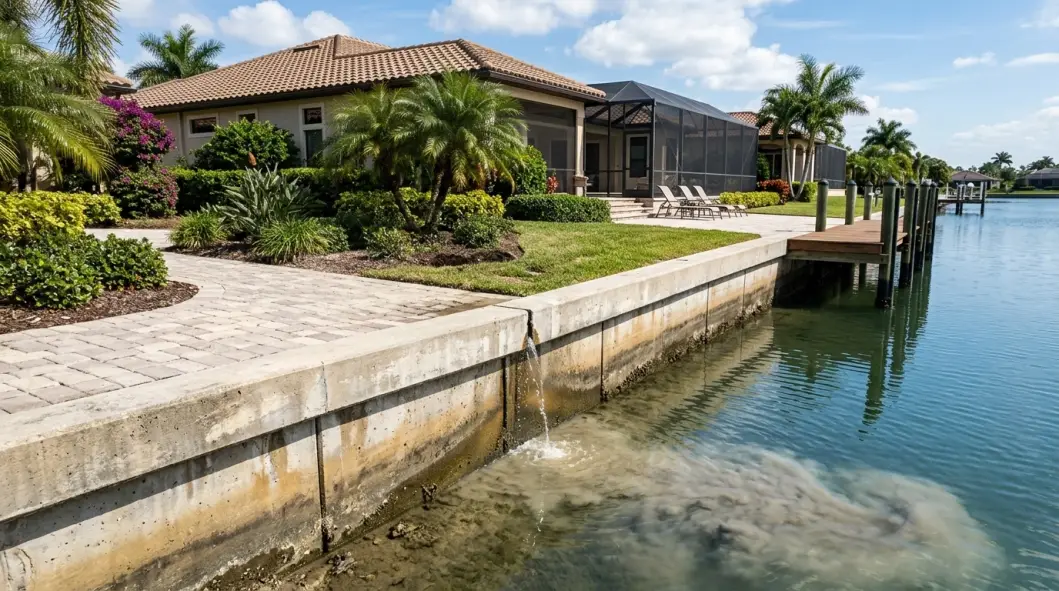
Rust stains or exposed metal: Brown streaks or visible tieback hardware indicate corrosion.
Soil loss behind the wall: Sinkholes, soft spots, or depressions in the yard suggest anchors and soil are no longer working together.
Recurring seepage: Water leaking through the wall or cap during high tide or storms often points to pressure and soil movement behind the structure.
If you see more than one of these signs, it’s very likely that seawall tieback failure or soil instability is playing a role.
Why Patching Cracks Alone Is Not Enough
It can be tempting to focus on the concrete face and simply patch cracks as they appear. But when a seawall is leaning or bowing, the core problem usually sits behind the wall — in the soil and tieback system.
Surface repairs alone:
Do not restore lost anchor strength.
Do not fill voids or replace missing soil.
Do not relieve excessive water pressure.
In some cases, patching without addressing these issues can trap more water, increase hydrostatic pressure, and accelerate movement. A lasting solution must look at the whole system: wall, soil, drainage, and anchors.
Repair Options for Seawall Tieback Failure
The right repair approach depends on how far the wall has moved, how severe the corrosion is, and how much soil has been lost. In Florida, common repair options include:
1. Soil Stabilization and Void Filling
Stabilizing the soil behind the seawall is often the first step. Techniques like polyurethane injection can:
Fill hidden voids.
Bind loose soils into a stronger matrix.
Cut off active leak paths.
By restoring support behind the wall, soil stabilization can reduce further movement and give other repair measures a solid foundation to work with.
2. Drainage and Pressure Relief Improvements
Trapped water behind a seawall is a major driver of tieback stress. Improving drainage can include:
Cleaning or adding weep holes.
Installing engineered filters that allow water out while keeping soil in.
Adjusting landscape and surface drainage so runoff doesn’t pool at the wall.
Better drainage reduces hydrostatic pressure and helps protect both the wall and the tiebacks.
3. Supplemental Anchor Systems
In some cases, existing tiebacks can be reinforced with new anchoring systems. Options may include:
Helical tieback anchors installed from the landward side.
New deadman anchors set in stable soil zones.
Upgraded hardware and connections where corrosion has taken a toll.
These systems are designed to pull leaning walls back toward the property and resist future loads more effectively than aging, undersized anchors.
4. Cap and Panel Repairs
Once the wall has proper support and drainage, targeted concrete repairs can restore the structural shell:
Injecting cracks with suitable materials.
Resurfacing damaged cap sections.
Rebuilding or replacing severely deteriorated panels.
These steps protect the internal repairs, help prevent new leak paths, and improve the appearance of the seawall.
5. Seawall Replacement When Repair Is Not Enough
If tieback failure is severe and the wall has rotated or broken beyond practical repair, full or partial replacement may be the safest option. This decision usually depends on:
Degree of lean or bowing.
Condition of the wall material.
Extent of soil loss and voids.
Age and design of the original seawall.
A professional assessment is essential to decide whether reinforcement is enough or replacement is the right long‑term solution.
How Florida Property Owners Can Reduce Tieback Problems
Prevention is always cheaper than repairing a major failure. Florida waterfront owners can reduce the risk of seawall tieback problems by:
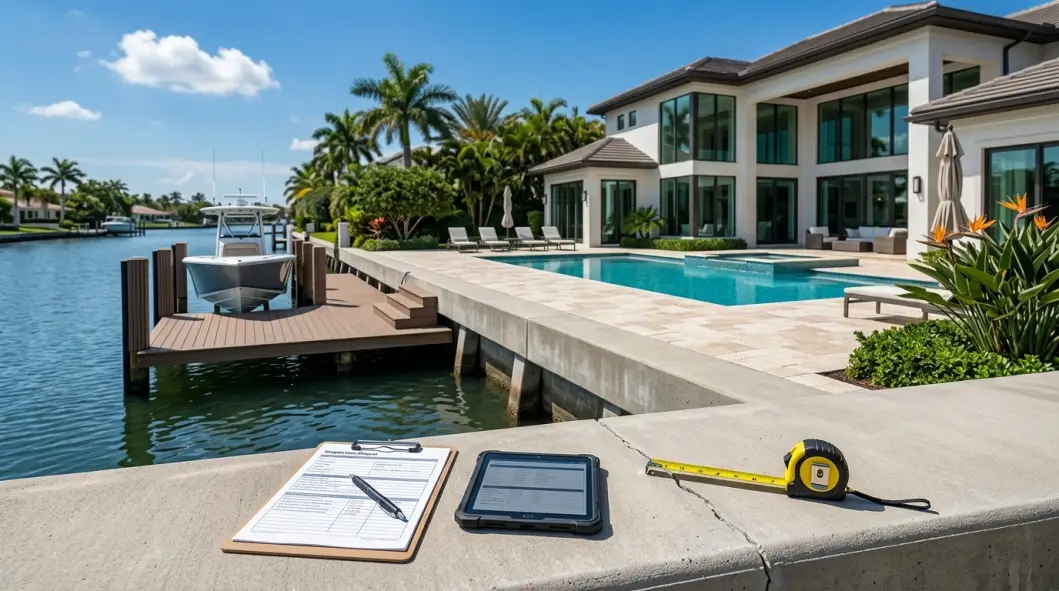
Scheduling regular inspections, especially before hurricane season.
Watching for early signs: lean, cracks, soil loss, rust, and seepage.
Keeping drainage systems clear and functioning.
Addressing minor soil loss and voids quickly, not waiting for large sinkholes.
Repairing cap cracks and joints so they don’t become long‑term leak paths.
The goal is to keep pressure, soil, and anchors in balance so the seawall can do its job without surprise movement.
Frequently Asked Questions
What is a seawall tieback?
A seawall tieback is an anchor system behind the wall that connects the structure to stable ground inland. It helps the wall resist pressure from soil and water.
How do I know if my seawall tiebacks are failing?
Common signs include leaning or bowing, horizontal cracks, separated joints, rust stains, exposed hardware, and soil loss behind the wall.
Can a leaning seawall be repaired?
In many cases, yes. Soil stabilization, improved drainage, and supplemental anchor systems can often stabilize a leaning wall without full replacement.
Is seawall tieback failure dangerous?
It can become dangerous if ignored. As anchors lose strength, the wall may move more, increasing the risk of structural damage and shoreline instability.
Do I need a professional to evaluate tieback problems?
Yes. Tiebacks are buried and structural. A qualified seawall contractor or engineer should evaluate movement, soil conditions, and anchor performance before any repair plan is chosen.
Does homeowners insurance cover seawall tieback failure?
Standard policies rarely cover damage from erosion, soil movement, or long‑term wear. Coverage for seawall repairs is limited and depends on your specific policy, so it’s important to review your documents and ask your agent.
📞 Call SlabFix today at 407-379-2585 to schedule a professional seawall inspection and learn more about the most effective solutions for your property.