Commercial Trip Hazards in Florida: How Uneven Concrete Creates Liability Risks for Property Managers
Uneven concrete at a commercial property can turn a simple sidewalk into a costly liability. For property managers, HOA boards, business owners, and facility directors in Florida, commercial trip hazards in Florida represent more than an appearance issue — they create real legal, financial, and safety risks.
A cracked entryway, sunken loading dock, or uneven walkway may seem minor until someone trips, falls, or files an insurance claim. This guide explains why trip hazards matter more for commercial properties than residential ones, how uneven concrete forms, what warning signs property managers should track, and how concrete leveling can reduce liability without major downtime.
Why Trip Hazards Matter More for Commercial Properties
Commercial and multi-family properties face higher foot traffic, stricter accessibility requirements, and greater exposure to premises liability claims than single-family homes.
A trip hazard at a retail store, office building, warehouse, church, school, apartment complex, or community amenity area can lead to:
Customer or tenant injuries. Even a minor fall can result in medical bills, lost work time, and potential legal action.
ADA accessibility concerns. Uneven surfaces at entrances, ramps, or walkways may violate accessibility standards.
Insurance claims and premium increases. Frequent incidents can affect coverage costs and insurability.
Reputation damage. Visible concrete damage can make a property look poorly maintained.
Higher repair costs over time. Small settlement issues often grow into larger slab failures if ignored.
For these reasons, proactive trip hazard management is essential for any Florida commercial property.
Common Locations for Commercial Trip Hazards
Trip hazards can form anywhere concrete meets foot or vehicle traffic. Property managers should pay special attention to these high-risk areas:
Sidewalks and Community Walkways
Public sidewalks, internal community paths, and pedestrian routes often develop uneven sections due to soil settlement, tree roots, drainage issues, or poor initial compaction.
Building Entryways and Ramps
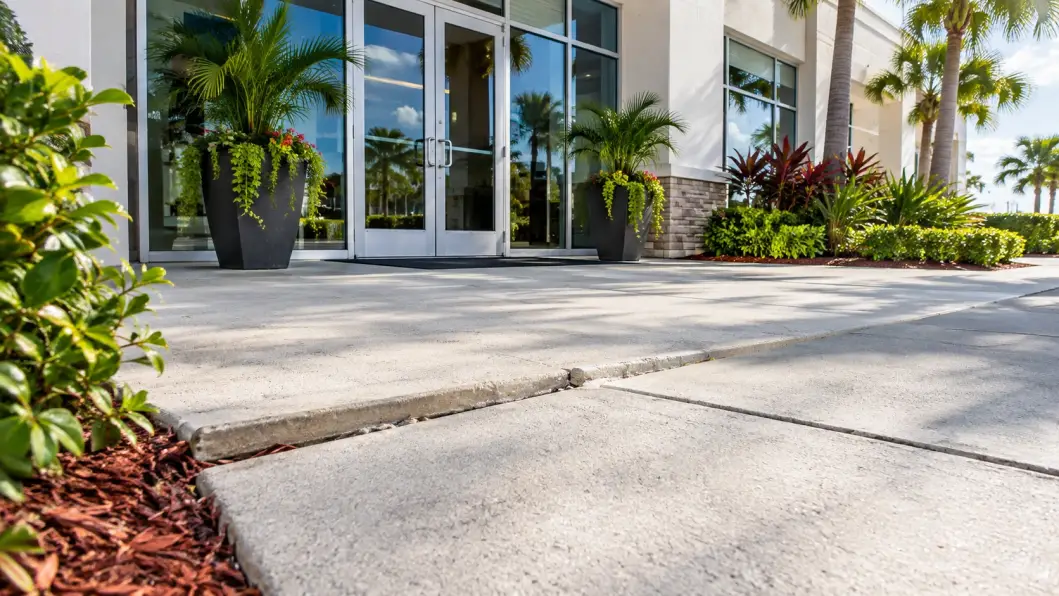
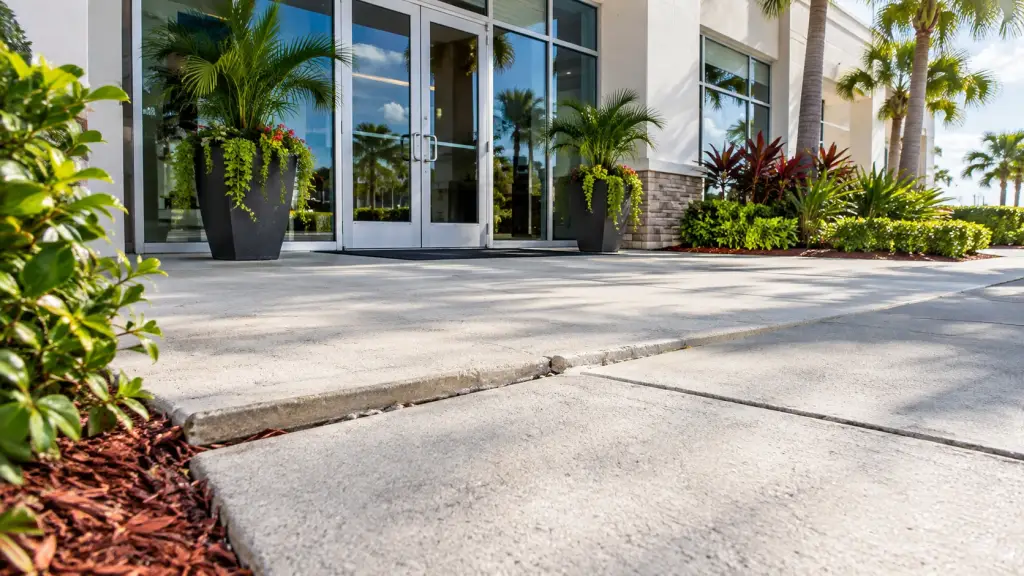
Entrances experience constant foot traffic, wheelchair use, carts, and deliveries. Even a small height difference between slabs can create a dangerous trip point.
Loading Docks and Delivery Areas
Forklifts, trucks, and heavy equipment place significant stress on concrete slabs. Settlement in these areas can create uneven transitions that affect safety and operations.
Parking Lots and Vehicle Areas
Cracked or sunken concrete in parking areas can damage vehicles, create pedestrian hazards, and indicate underlying soil problems.
Pool Decks and Amenity Areas
Community pools, clubhouses, and recreational spaces see heavy seasonal use. Uneven concrete around these areas increases slip and trip risks, especially when wet.
Stairs, Steps, and Transition Points
Any change in elevation requires careful attention. Uneven steps or poorly aligned transitions between surfaces can become serious hazards.
Understanding Florida Premises Liability
While this article does not provide legal advice, Florida premises liability generally holds property owners and managers responsible for maintaining safe conditions for visitors, tenants, customers, and invitees.
Key concepts include:
Duty of care. Property managers must maintain reasonably safe conditions.
Notice of hazard. Liability may depend on whether the property owner knew or should have known about the hazard.
Foreseeability. Courts may consider whether the hazard was predictable based on property conditions.
Comparative negligence. Florida law may reduce damages if the injured party shares some responsibility.
Because liability depends on specific facts, property managers should document inspections, repairs, and maintenance activities regularly.
ADA and Accessibility Concerns
The Americans with Disabilities Act (ADA) sets standards for accessible design in commercial properties. While specific requirements vary by property type and jurisdiction, uneven surfaces can affect accessibility in several ways:
Wheelchair users may struggle with height differences between slabs.
Mobility-impaired individuals face greater fall risks on uneven surfaces.
Ramps and accessible routes must maintain proper slopes and transitions.
Non-compliant properties may face complaints, fines, or legal action.
Concrete leveling can help restore proper elevations and transitions without full slab replacement, potentially improving accessibility while reducing costs.
How Uneven Concrete Forms at Commercial Properties
Understanding why concrete becomes uneven helps property managers prevent future problems.
Soil Settlement and Poor Compaction
If the soil beneath a slab was not properly compacted during construction, it can compress over time. This is especially common in Florida’s sandy soils.
Drainage Issues
Water pooling near foundations, walkways, or entryways can wash away supporting soil. Poor grading, clogged drains, or broken irrigation lines often contribute to this problem.
Tree Roots
Roots can lift, crack, or displace concrete slabs. When roots decay or are removed, they may leave voids that cause settlement.
Heavy Loads and Traffic
Forklifts, delivery trucks, garbage trucks, and heavy equipment place stress on concrete that residential slabs never experience.
Weather and Environmental Factors
Florida’s heavy rains, high water table, and humidity can accelerate soil movement and concrete settlement.
Age and Material Fatigue
Older concrete naturally develops wear, cracks, and settlement over time. Without maintenance, minor issues can become major hazards.
Warning Signs Property Managers Should Track
Regular inspections can help property managers identify trip hazards before they cause injuries or claims.
Watch for:
Height differences between slabs. Even 1/4 inch can be problematic in high-traffic areas.
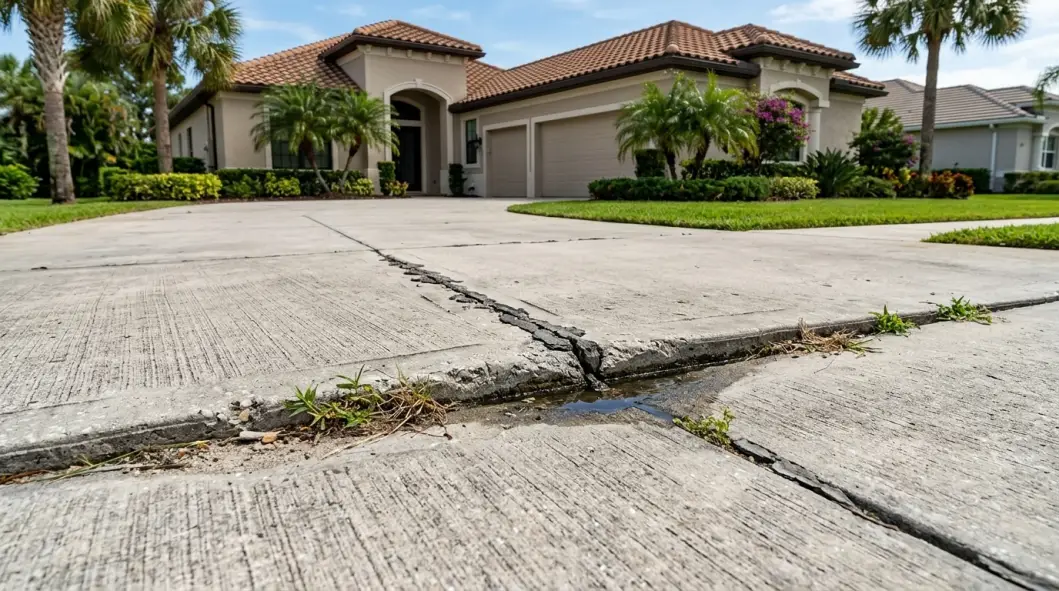
Cracks that create uneven edges. Cracks with one side higher than the other are particularly dangerous.
Sinking or tilted slabs. Visible settlement indicates soil loss or compaction issues.
Water pooling near concrete. Standing water suggests drainage problems that may worsen settlement.
Loose or hollow-sounding concrete. This may indicate voids beneath the slab.
Spalling or crumbling edges. Deteriorating concrete can create sharp edges and trip points.
Gaps between slabs or at transitions. Open joints can catch feet, wheels, or mobility devices.
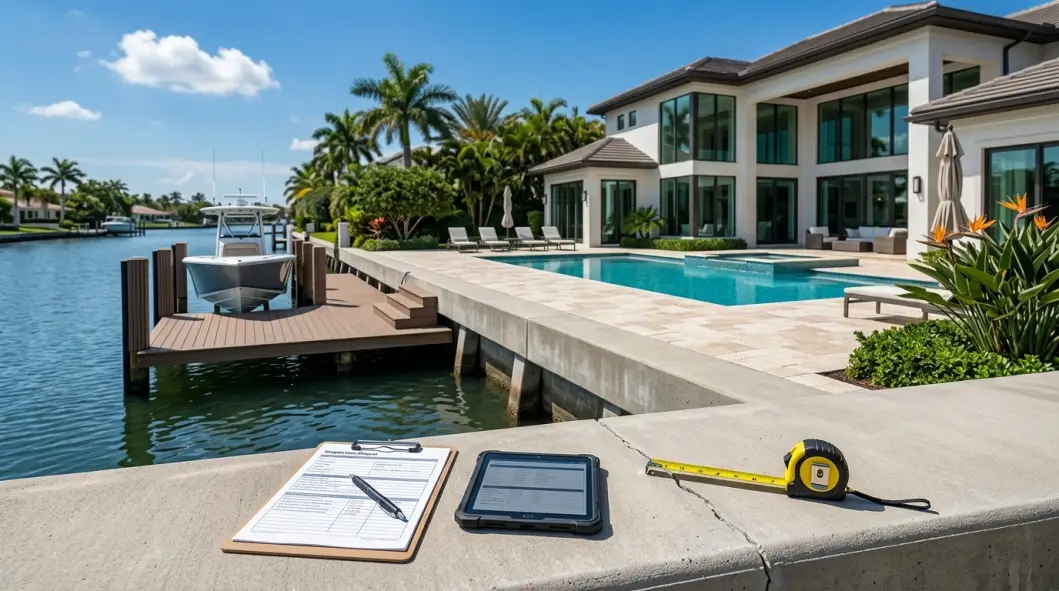
Document all findings with photos, measurements, and dates. This documentation can support maintenance decisions and liability defense if needed.
Concrete Leveling vs. Full Replacement
When trip hazards appear, property managers often face a choice: level the existing concrete or replace it entirely.
Concrete Leveling Advantages
Faster completion. Most projects finish in hours, not days.
Lower cost. Leveling typically costs less than full replacement.
Minimal disruption. Business operations can often continue during repairs.
Environmentally friendly. Less waste and fewer materials needed.
Preserves existing concrete. If the slab is structurally sound, leveling extends its life.
Full Replacement Considerations
Replacement may be necessary when:
Concrete is severely cracked or broken into multiple pieces.
The slab has extensive structural damage.
Underlying soil problems require major excavation.
The concrete is too damaged to lift safely.
A qualified contractor can evaluate whether leveling or replacement makes more sense for each area.
How SlabFix Reduces Downtime and Liability Exposure
SlabFix specializes in commercial concrete leveling solutions designed for Florida properties. Our approach helps property managers address trip hazards quickly and effectively:
Fast Response and Assessment
We understand that commercial properties cannot afford long closures. Our team provides prompt evaluations and clear repair recommendations.
Polyurethane Foam Injection
Our polyurethane foam injection process:
Fills voids beneath settled slabs.
Stabilizes weak soil.
Lifts concrete toward its original level.
Creates minimal disruption to daily operations.
Minimal Downtime
Most commercial leveling projects complete within hours. Properties can often reopen immediately after repairs finish.
Documentation Support
We provide detailed documentation of repair work, which can support maintenance records and liability management.
Long-Lasting Results
Polyurethane foam creates durable support that resists moisture and soil movement better than traditional methods in many Florida conditions.
Preventive Maintenance for Property Managers
Proactive maintenance can prevent trip hazards from developing or worsening.
Regular Inspections
Schedule quarterly or semi-annual walk-throughs of all concrete surfaces. Document conditions with photos and notes.
Drainage Management
Ensure gutters, downspouts, and landscape grading direct water away from concrete surfaces. Repair irrigation leaks promptly.
Tree Management
Monitor tree roots near walkways and entryways. Consider root barriers or strategic landscaping to protect concrete.
Prompt Repairs
Address small cracks, minor settlement, and drainage issues before they become major problems.
Vendor Relationships
Establish relationships with qualified concrete repair contractors who understand commercial property needs and can respond quickly to emergencies.
Frequently Asked Questions
What is considered a trip hazard in Florida?
While specific standards vary, height differences of 1/4 inch or more between concrete slabs are often considered potential trip hazards, especially in commercial settings.
Who is liable for sidewalk injuries in Florida?
Liability depends on property ownership, maintenance responsibilities, and specific circumstances. Property owners and managers generally have a duty to maintain safe conditions for visitors and invitees.
Can concrete leveling help with ADA compliance?
Yes. Concrete leveling can restore proper elevations and transitions at entrances, ramps, and walkways, potentially improving accessibility without full replacement.
How fast can commercial concrete leveling be completed?
Most commercial leveling projects complete within hours. Larger properties may require multiple days, but work can often be scheduled during off-hours to minimize disruption.
Is concrete leveling covered by insurance?
Coverage depends on your policy and the cause of damage. Some policies cover sudden events like storm damage, while others exclude gradual settlement. Check with your insurance provider.
How often should commercial properties inspect for trip hazards?
Quarterly inspections are recommended for high-traffic areas. Properties with older concrete or known drainage issues may benefit from more frequent checks.
What documentation should property managers maintain?
Keep records of all inspections, repairs, maintenance activities, vendor communications, and incident reports. Photos with dates and measurements provide valuable evidence.
Can SlabFix work around business operations?
Yes. We schedule commercial work during off-hours, weekends, or specific time windows to minimize disruption to your business or property operations.
Protect Your Property and Reduce Liability
Trip hazards at commercial properties create real risks for injuries, claims, and reputation damage. However, proactive management and timely repairs can significantly reduce these risks.
Concrete leveling offers property managers a fast, cost-effective solution that addresses the root cause of uneven concrete while minimizing downtime. By working with experienced contractors like SlabFix, you can maintain safer properties, reduce liability exposure, and protect your investment.
SlabFix provides commercial concrete leveling, polyurethane foam injection, and void filling services throughout Florida. Our team understands the unique needs of property managers, HOAs, and commercial owners. Contact SlabFix today for a professional assessment of your property’s concrete conditions and trip hazard risks.
📞 Call SlabFix today at 407-379-2585 to schedule a professional seawall inspection and learn more about the most effective solutions for your property.