Pool Cage Leveling Florida: Fix Uneven Slabs Under Screen Enclosures
A pool cage is one of the most valuable features of a Florida home. It protects your pool from debris, insects, and weather while creating a comfortable outdoor living space. However, when the concrete beneath your pool cage settles or becomes uneven, it can affect more than just the appearance of your pool deck. This is why pool cage leveling Florida services are essential for maintaining a safe, stable screen enclosure.
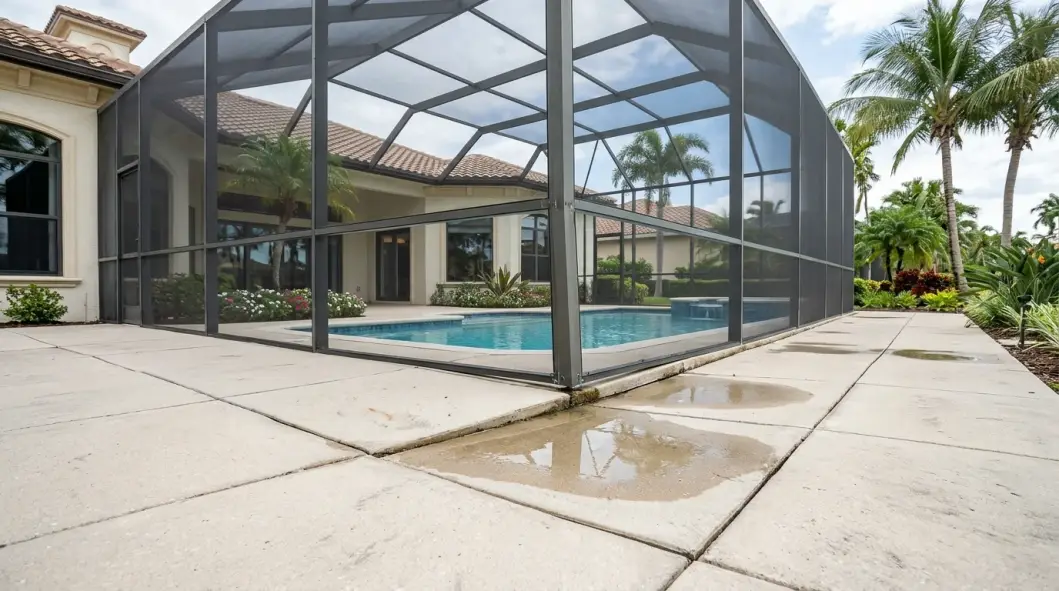
Uneven concrete under a pool cage can tilt the frame, damage screen panels, create gaps at the base, and lead to water pooling inside the enclosure. Over time, these issues can compromise the structural integrity of the entire screen enclosure and create safety hazards for your family and guests.
This guide explains why pool cages settle, how slab settlement affects screen enclosure stability, which warning signs to watch for, and how pool cage leveling Florida services can restore stability without removing your screen enclosure.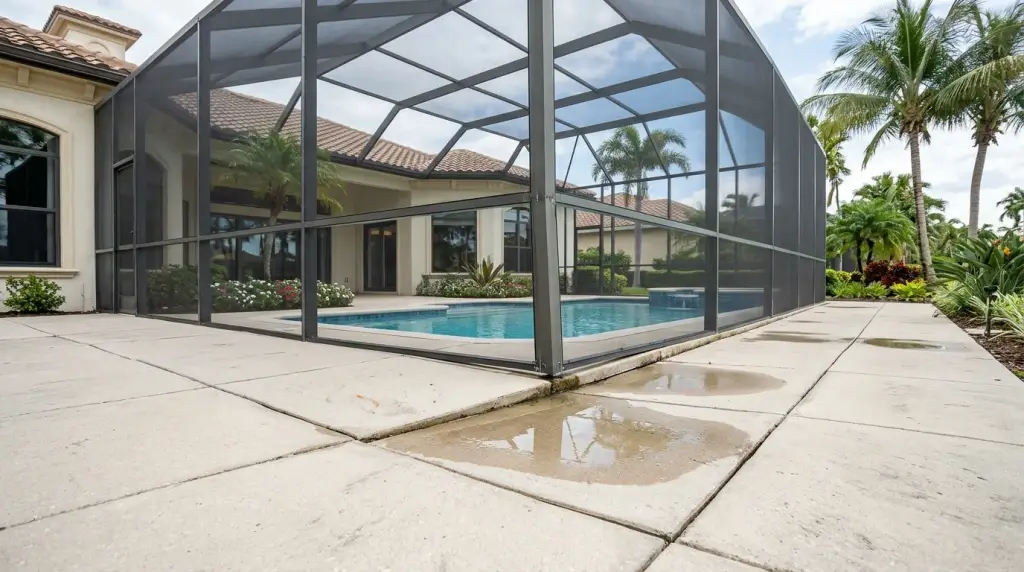
Why Do Pool Cages Settle in Florida?
Pool cages sit on concrete slabs that support the screen enclosure frame. When the soil beneath these slabs shifts, erodes, or compresses, the concrete settles unevenly. This settlement affects the entire screen enclosure structure.
Several factors contribute to pool cage settlement in Florida:
Soil Erosion and Washout
Florida’s sandy soils drain quickly but provide less structural support than clay or rocky soils. Heavy rain, irrigation leaks, and poor drainage can wash away fine soil particles beneath pool deck slabs.
As soil erodes, voids form beneath the concrete. The slab loses support and begins to settle unevenly, which affects the pool cage frame above it.
Poor Initial Compaction
If contractors did not properly compact the soil before pouring the pool deck slab, the ground can compress further over time. This is especially common in Florida, where sandy soils shift easily.
As the soil compresses, the slab settles and the pool cage frame loses its level foundation.
Drainage Problems
Water pooling near or under pool deck slabs accelerates soil erosion. Common drainage issues include:
Improper grading that directs water toward the pool area.
Clogged or missing drainage outlets.
Broken irrigation lines near the pool deck.
Roof runoff from the pool cage itself.
When water repeatedly saturates the soil beneath the slab, erosion accelerates and settlement worsens.
Tree Roots and Landscaping
Tree roots near pool decks can lift, crack, or displace concrete slabs. When roots decay or are removed, they may leave voids that cause settlement.
Landscaping changes can also alter water flow patterns around the pool area, contributing to soil erosion and slab movement.
Age and Material Fatigue
Older pool decks naturally develop wear, cracks, and settlement over time. Without maintenance, minor issues can become major structural problems that affect the entire screen enclosure.
How Slab Settlement Affects Screen Enclosure Stability
When the concrete beneath a pool cage settles, the effects ripple through the entire screen enclosure structure. This is why pool cage leveling Florida services focus on restoring the slab beneath the enclosure.
Frame Tilting and Misalignment
The pool cage frame sits on the concrete slab. When one section of the slab settles more than another, the frame loses its level foundation and begins to tilt.
This tilting can cause:
Doors that no longer close properly.
Screen panels that pull away from the frame.
Visible gaps between the frame and concrete.
Uneven roof lines on the enclosure.
Screen Panel Damage
As the frame tilts, screen panels experience uneven tension. This can cause:
Panels to tear or pull away from the frame.
Fasteners to loosen or fail.
Gaps where insects and debris enter.
Increased wind damage during storms.
Water Pooling Inside the Enclosure
When the slab settles unevenly, water may pool in low areas inside the pool cage instead of draining properly. This creates:
Slip hazards around the pool.
Mosquito breeding grounds.
Damage to pool equipment.
Further soil erosion beneath the slab.
Structural Stress on the Pool Cage
Over time, uneven settlement places stress on the pool cage frame, fasteners, and connections. This can lead to:
Cracks in the frame.
Loose or failing fasteners.
Increased vulnerability to wind damage.
Shortened lifespan of the entire enclosure.
Warning Signs Your Pool Cage Needs Concrete Leveling
Early detection can prevent minor settlement from becoming a major repair project. Watch for these warning signs around your pool cage:
Tilting or Uneven Frame
The pool cage frame no longer sits level.
One side appears higher or lower than the other.
Doors or gates no longer align properly.
Separated Screen Panels
Screen panels pull away from the frame.
Gaps appear between panels and frame sections.
Fasteners loosen or fail repeatedly.
Gaps at the Base
Visible gaps form between the concrete slab and the pool cage frame.
Soil or debris accumulates in these gaps.
Water or insects enter through the openings.
Water Pooling Inside the Enclosure
Water collects in low areas after rain instead of draining.
Puddles remain long after storms pass.
Certain areas of the pool deck stay wet longer than others.
Cracks or Uneven Concrete
Cracks appear in the pool deck slab.
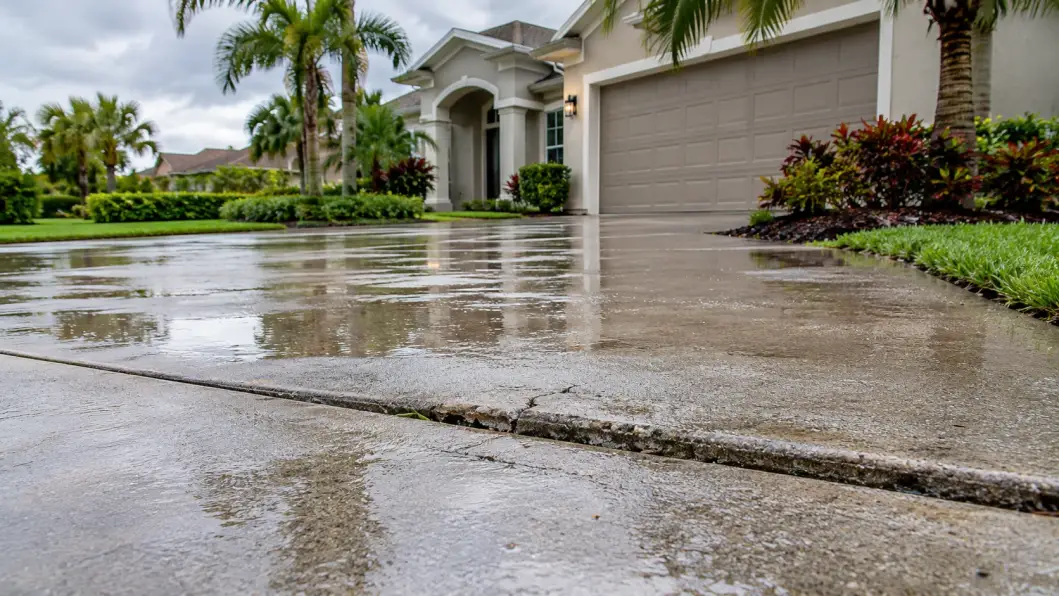
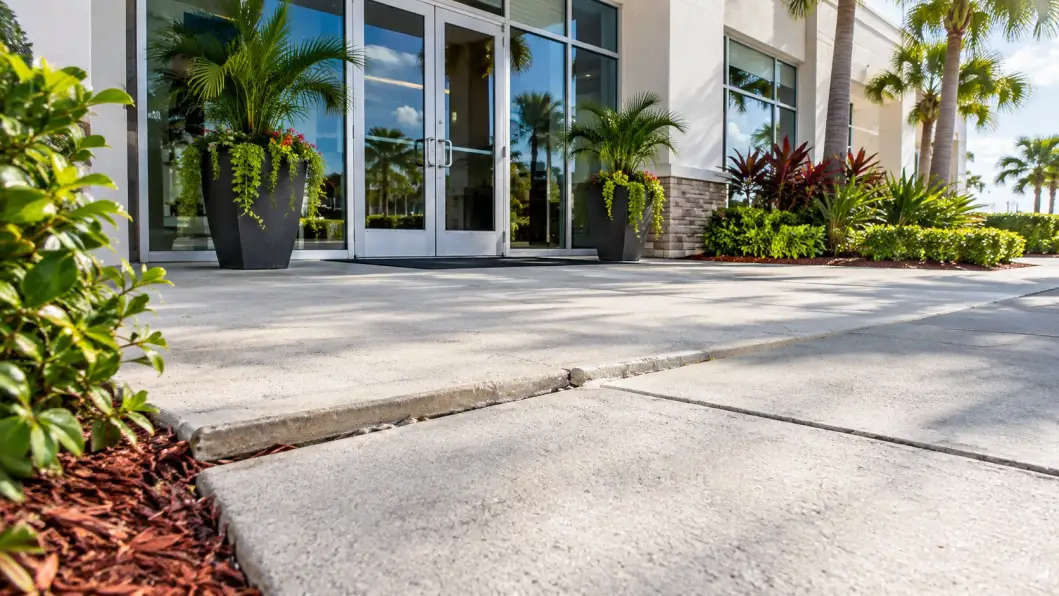
Existing cracks widen or show height differences.
Concrete sections become uneven or tilt.
Doors and Gates No Longer Align
Pool cage doors stick or no longer close properly.
Gates require force to open or close.
Latches no longer align correctly.
Pool Deck Leveling vs. Pool Cage Leveling
While related, these are two different aspects of the same problem.
Pool Deck Leveling
Pool deck leveling focuses on restoring the concrete slab itself. This involves:
Filling voids beneath the slab.
Stabilizing weak soil.
Lifting settled concrete sections.
Restoring proper drainage slopes.
Pool deck leveling addresses the foundation of the problem but may not fully resolve issues affecting the screen enclosure frame.
Pool Cage Leveling
Pool cage leveling addresses the interaction between the concrete slab and the screen enclosure frame. This involves:
Leveling the slab beneath the pool cage.
Ensuring the frame sits properly on the leveled concrete.
Addressing gaps between the frame and slab.
Restoring proper drainage inside the enclosure.
Pool cage leveling requires specialized knowledge of both concrete repair and screen enclosure construction.
Repair Options for Pool Cage Settlement
The right repair depends on the severity of settlement, condition of the concrete, and extent of screen enclosure damage. For most Florida homeowners, pool cage leveling Florida with polyurethane foam is the fastest and least disruptive solution.
Polyurethane Foam Injection
Polyurethane foam injection is the most common and effective repair method for pool cage settlement.
The process involves:
Drilling small access holes through the pool deck slab.
Injecting expanding polyurethane foam beneath the slab.
Foam fills voids and binds loose soil particles.
Slab lifts toward its original level as foam expands.
Access holes are patched, and the area is ready for use.
Benefits include:
Minimal disruption to the pool area.
Fast completion (often within hours).
Water-resistant foam that does not absorb moisture.
Long-lasting soil stabilization.
No need to remove the screen enclosure.
Void Filling and Soil Stabilization
When erosion has created significant voids beneath the slab, polyurethane foam can fill these cavities and restore support.
Benefits include:
Prevents further settlement.
Restores uniform support beneath the slab.
Reduces risk of future erosion.
Works in Florida’s sandy soil conditions.
Drainage Correction
Addressing the water source is essential for long-term stability.
Solutions may include:
Regrading soil to direct water away from the pool area.
Installing proper drainage systems around the pool deck.
Repairing broken irrigation lines.
Clearing clogged drainage outlets.
Extending downspouts away from the pool cage.
Screen Enclosure Repairs
In some cases, the screen enclosure itself may need repairs after the concrete is leveled.
Common repairs include:
Reattaching separated screen panels.
Replacing damaged screen material.
Tightening or replacing fasteners.
Adjusting doors and gates for proper alignment.
When Is Replacement Needed Instead of Leveling?
While leveling works for most pool cage settlement issues, replacement may be necessary in certain situations.
Replacement may be recommended when:
The concrete slab is severely cracked or broken into multiple pieces.
The pool cage frame has extensive structural damage.
Underlying soil problems require major excavation.
Previous leveling attempts have failed repeatedly.
The screen enclosure is old and nearing the end of its useful life.
A qualified contractor can evaluate whether leveling or replacement makes more sense for your specific situation.
How SlabFix Works Around Pool Cages Without Damaging Screens
SlabFix understands the unique challenges of working around pool cages and screen enclosures. Our pool cage leveling Florida approach protects your investment while restoring stability:
Careful Access Hole Placement
We strategically place access holes to avoid damaging screen panels, frame connections, or pool equipment.
Minimal Disruption
Our polyurethane foam injection process requires only small access holes, minimizing disruption to your pool area.
Fast Completion
Most pool cage leveling projects complete within hours, allowing you to enjoy your pool again quickly.
Screen Protection
We take precautions to protect screen panels and frame components during the repair process.
Drainage Assessment
We evaluate drainage conditions around your pool area and recommend improvements to prevent future settlement.
Documentation Support
We provide detailed documentation of repair work, which can support maintenance records and property value.
Preventive Maintenance for Pool Cage Stability
Proactive maintenance can prevent pool cage settlement from developing or worsening. Regular pool cage leveling Florida inspections can catch settlement early.
Regular Inspections
Schedule annual inspections of your pool deck and screen enclosure. Look for:
Cracks in the concrete.
Gaps between the frame and slab.
Water pooling inside the enclosure.
Screen panel damage or separation.
Tilting or misalignment of the frame.
Drainage Management
Ensure water drains away from the pool area properly. Address any pooling or drainage issues promptly.
Prompt Repairs
Address small cracks, minor settlement, and drainage issues before they become major problems.
Tree Management
Monitor tree roots near the pool deck. Consider root barriers or strategic landscaping to protect concrete.
Frequently Asked Questions
Can a pool cage be repaired without removing it?
Yes. Polyurethane foam injection allows contractors to level the concrete beneath a pool cage without removing the screen enclosure. Small access holes are drilled through the slab, and foam is injected beneath to fill voids and lift the slab.
Why is my pool cage frame tilting?
Pool cage frames tilt when the concrete slab beneath them settles unevenly. This can result from soil erosion, poor compaction, drainage issues, or tree root activity.
Does pool deck settlement affect screen enclosures?
Yes. When the pool deck slab settles, the screen enclosure frame loses its level foundation. This can cause the frame to tilt, screen panels to separate, and gaps to form at the base.
Can polyurethane foam lift concrete under a pool cage?
Yes. Polyurethane foam can fill voids, stabilize soil, and lift settled concrete beneath a pool cage. The process requires only small access holes and does not require removing the screen enclosure.
How long does pool cage leveling take?
Most pool cage leveling projects complete within hours. Larger or more complex projects may take longer, but the process is much faster than full slab replacement.
Will leveling damage my screen enclosure?
No. Experienced contractors take precautions to protect screen panels and frame components during the repair process. Access holes are strategically placed to avoid damage.
How can I prevent my pool cage from settling?
Maintain proper drainage around the pool area, address soil erosion promptly, repair cracks early, and schedule regular inspections of the pool deck and screen enclosure.
Is pool cage leveling covered by insurance?
Coverage depends on your policy and the cause of damage. Some policies cover sudden events like storm damage, while others exclude gradual settlement. Check with your insurance provider for specific coverage details.
Protect Your Pool Cage Investment
A settling pool cage affects more than just your pool deck. It can compromise the entire screen enclosure, create safety hazards, and reduce your property value. However, early intervention with polyurethane foam injection can restore stability without major disruption.
SlabFix provides professional pool cage leveling Florida services, polyurethane foam injection, and void filling throughout Florida. Our team understands the unique challenges of working around screen enclosures and pool areas. Contact SlabFix today for a professional assessment of your pool cage settlement issues.
📞 Call SlabFix today at 407-379-2585 to schedule a professional seawall inspection and learn more about the most effective solutions for your property.