Seawall Permit Florida: What You Need Before Repair
Planning maintenance or restoration work on a seawall in Florida? Understanding seawall permit Florida requirements can help property owners avoid unnecessary delays, compliance issues, and unexpected project costs. Florida regulations distinguish between routine maintenance, qualifying restoration activities, and major construction projects.
Not every seawall repair requires the same authorization. Certain activities may qualify for permit exemptions, while other projects may require local, state, or federal approval before work begins. Understanding these requirements is especially important when evaluating the condition of your waterfront property.
This guide explains when seawall permits may be required, which exemptions may apply, how the approval process works, and what Florida waterfront property owners should know before planning seawall repair or replacement.
Why Seawall Permits Matter in Florida
Florida’s coastal and waterfront properties are subject to specific construction and environmental regulations. Seawalls help protect shorelines, reduce erosion, and maintain the stability of waterfront properties.
Because these structures interact with waterways and coastal environments, certain construction, replacement, and modification activities may require regulatory approval.
Applicable permits and authorizations help ensure that:
- Construction activities comply with applicable building codes and regulations.
- Waterfront improvements do not unnecessarily damage marine ecosystems.
- Projects meet relevant structural and safety standards.
- Work complies with environmental protection requirements.
- Property owners maintain appropriate project documentation for future reference.
However, not every seawall maintenance or restoration activity requires a permit. Florida law provides specific exemptions for qualifying activities, and requirements depend on the nature, location, and extent of the proposed work.
Understanding the difference between exempt maintenance and regulated construction is essential before proceeding with a waterfront project.
When Does a Seawall Repair Require a Permit?
Florida regulations distinguish between routine maintenance, qualifying seawall restoration, and more extensive construction projects. The applicable requirements depend on the project’s scope, location, and potential environmental impact.
Minor Maintenance and Repairs That May Not Require a Permit
Certain maintenance and restoration activities may qualify for permit exemptions under Florida regulations.
Examples of activities that may qualify, depending on the applicable rules and project conditions, include:
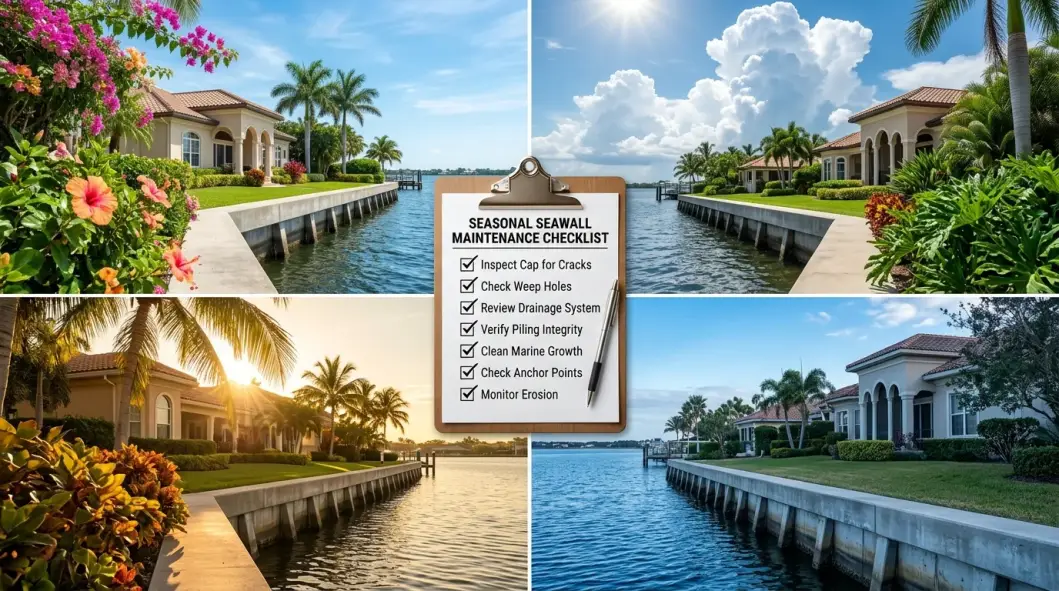
- Routine maintenance of existing seawall components.
- Cleaning existing drainage openings and weep holes.
- Certain qualifying repairs that do not substantially alter the existing structure.
- Eligible restoration activities involving an existing seawall.
Florida Administrative Code Rule 62-330.051 and Florida Statute 403.813 describe specific exemptions for certain seawall construction, replacement, repair, and restoration activities.
For example, qualifying seawall restoration may be exempt from certain environmental resource permitting requirements when the applicable conditions are satisfied. These conditions can include restrictions on the seawall’s location, the amount of backfilling, and the extent of restoration.
Importantly, an exemption under one regulatory program does not automatically eliminate local building requirements, state-owned submerged land authorization, or other applicable permits.
Structural Repairs and Modifications That May Require Authorization
More extensive seawall work may require permits or regulatory authorization depending on its scope and location.
Examples include:
- Tieback replacement or installation.
- Replacement of substantial portions of the seawall.
- Major cap reconstruction or modification.
- Soil stabilization or void filling behind the wall.
- Seawall drainage system modifications.
- Foundation or toe modifications.
These activities should be evaluated individually. Some specific seawall components, including certain batter piles, king piles, and seawall caps used exclusively for stabilization and repair, are addressed by Florida’s environmental permitting exemptions.
Property owners should not assume that every structural repair requires a state environmental permit or that every repair is automatically exempt. The applicable requirements must be confirmed for the specific project.
Seawall Replacement and New Construction
Complete seawall replacement and new waterfront construction generally involve additional regulatory considerations compared with routine maintenance.
Depending on the project, requirements may include:
- Local building permits.
- Environmental resource authorization.
- Coastal construction approvals, where applicable.
- Authorization for activities involving state-owned submerged lands.
- Federal authorization when regulated waters or wetlands are affected.
Florida Statute 403.813 provides specific exemptions for certain seawall activities, including qualifying construction and replacement in artificially created waterways and certain restoration projects.
However, these exemptions have limitations. For example, the restoration exemption under Section 403.813(1)(e) does not eliminate applicable permitting requirements under Chapter 161.
Property owners should therefore verify the applicable requirements before planning seawall replacement versus repair.
County Permits vs. State Permits (DEP/FDEP)
Florida seawall projects may fall under different regulatory authorities. The agencies involved depend on the location, type of work, and environmental characteristics of the property.
County and Municipal Requirements
Local building departments and municipal authorities oversee applicable construction, zoning, and building requirements.
Depending on the jurisdiction and project, local requirements may address:
- Local building codes.
- Structural and engineering requirements.
- Waterfront construction standards.
- Flood zone regulations.
- Setback and property boundary requirements.
- Local environmental protection rules.
Cities and counties throughout Florida may have different application procedures and exemption criteria. Property owners should contact the appropriate local building department to confirm which requirements apply.
State Permits (DEP/FDEP)
The Florida Department of Environmental Protection (FDEP) oversees environmental protection and certain activities involving Florida’s coastal and aquatic resources.
Depending on the project, FDEP authorization may be relevant when work affects:
- Submerged lands.
- Wetlands.
- Coastal resources.
- Marine habitats.
- Water quality.
- Protected shoreline areas.
Florida law also provides exemptions for certain qualifying activities, including some seawall restoration and construction projects.
Property owners should distinguish between routine maintenance, qualifying restoration, and activities involving substantial construction or environmental impacts.
Federal Permits
Some waterfront construction activities may also fall under federal jurisdiction.
The U.S. Army Corps of Engineers (USACE) regulates certain activities involving navigable waters, wetlands, and other federally regulated aquatic resources.
Depending on the project, federal authorization may be required for activities such as:
- Constructing structures in regulated waters.
- Dredging or filling certain aquatic areas.
- Modifying structures that affect federally regulated waterways.
- Performing work that impacts protected wetlands.
Not every seawall project requires federal authorization. Applicability depends on the location and nature of the proposed work.
Permit Requirements by Florida City
Permit requirements and application procedures vary throughout Florida. Local authorities may have additional requirements depending on the property’s location and the type of proposed work.
Miami and Miami-Dade County
- Waterfront projects may involve local building requirements and environmental regulations.
- Miami-Dade County has specific requirements for waterfront properties.
- Projects affecting Biscayne Bay, coastal resources, or submerged lands may require additional review.
Property owners should consult the relevant local building department and environmental authorities before proceeding.
Fort Lauderdale and Broward County
- Waterfront construction and significant seawall modifications may require local approvals.
- Broward County and local municipalities have regulations addressing waterway protection.
- Projects near the Intracoastal Waterway may involve additional environmental considerations.
Requirements can vary based on the specific waterway and property location.
Palm Beach County
- Waterfront projects may be subject to local construction and environmental requirements.
- Requirements vary between coastal and inland waterway properties.
- Projects near Lake Worth Lagoon may involve additional regulatory considerations.
The applicable requirements depend on the project’s scope and location.
Tampa and Hillsborough County
- Waterfront construction around Tampa Bay may involve local building requirements.
- Projects affecting protected waterways or aquatic resources may require additional authorization.
- Environmental review may apply to certain activities affecting Tampa Bay.
Property owners should verify requirements with the relevant local authorities before starting work.
Orlando and Central Florida
- Properties along lakes, rivers, and canals may be subject to waterfront construction regulations.
- Requirements vary depending on the waterway and local jurisdiction.
- Water management district or environmental approvals may apply to certain projects.
Although Orlando is not a coastal city, waterfront construction and shoreline modifications can still be subject to applicable regulations.
Important: These are general regulatory considerations, not a definitive list of permit requirements for each city. Always verify current requirements with the relevant authorities.
How Permits Affect Insurance and Property Value
Understanding whether previous seawall work was properly authorized can be important when maintaining or selling waterfront property.
Insurance Coverage
Insurance policies have different terms, exclusions, and documentation requirements. Unpermitted construction or modifications may create complications when:
- Filing certain property damage claims.
- Demonstrating compliance with applicable building requirements.
- Obtaining or maintaining insurance coverage.
- Documenting the condition and history of waterfront structures.
Property owners should review their insurance policies and discuss any concerns with their insurance provider.
Property Value and Resale
Seawalls are important components of waterfront properties. Their condition and maintenance history can influence buyer confidence and property assessments.
During a property sale, buyers, lenders, or inspectors may request:
- Documentation of previous seawall work.
- Records of inspections and maintenance.
- Available engineering reports.
- Copies of applicable permits or exemption documentation.
- Evidence of compliance with relevant regulations.
Maintaining accurate records can help reduce complications during a future property transaction.
Steps to Determine Whether Your Seawall Project Needs a Permit
Before starting maintenance, restoration, or construction work, property owners should understand the applicable requirements.
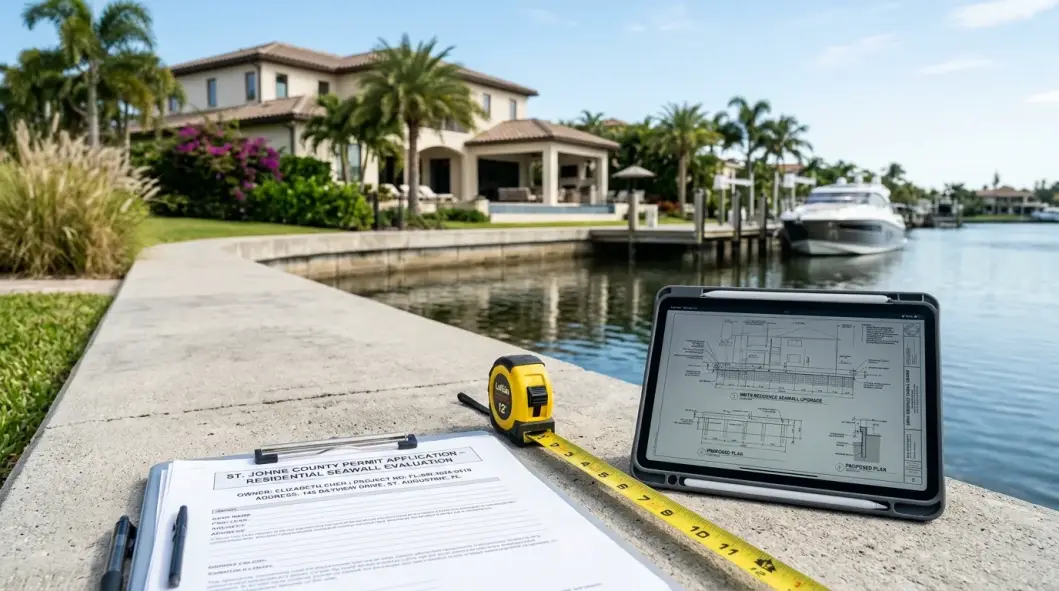
1. Assess the Existing Seawall
Start by understanding the condition of the seawall and identifying the proposed work.
Issues such as visible cracks, soil loss, leaning, structural movement, and water intrusion may require further professional evaluation.
2. Determine the Scope of Work
The type of work can significantly affect permitting requirements.
For example, routine maintenance may qualify for an exemption, while substantial reconstruction or structural modifications may require additional authorization.
3. Contact the Relevant Authorities
Contact the local building department and, where applicable, the Florida Department of Environmental Protection or other regulatory agencies.
Explain the proposed work and ask whether any permits or exemptions apply.
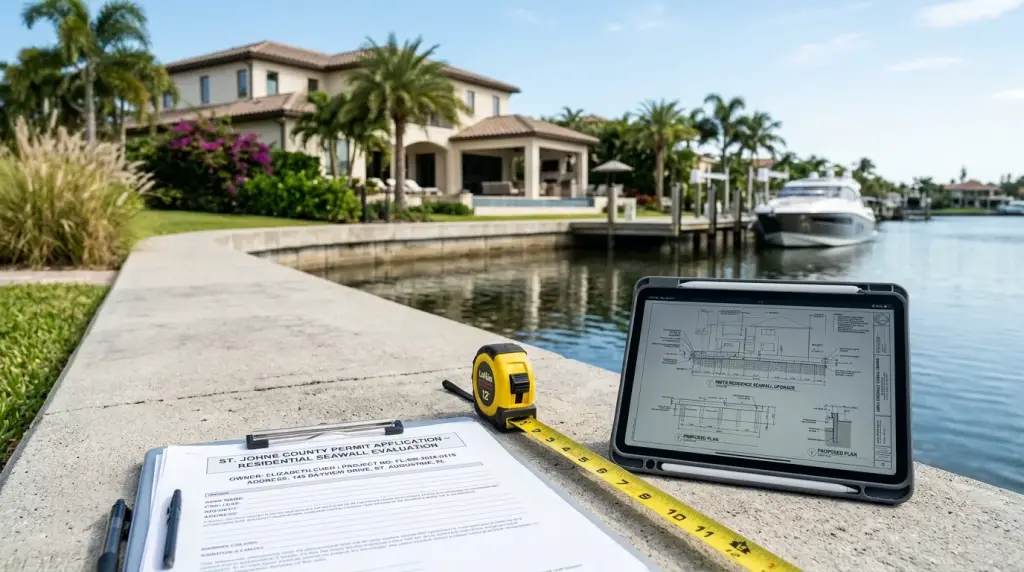
4. Prepare the Required Documentation
Depending on the project, authorities may request:
- Property surveys.
- Site plans.
- Engineering drawings.
- Structural assessments.
- Environmental documentation.
- Descriptions of the proposed construction activities.
5. Submit Applications When Required
If the project requires authorization, the appropriate applications and supporting documentation must be submitted to the relevant agencies.
Additional information or revisions may be requested during the review process.
6. Wait for Applicable Approvals
Do not begin work that requires authorization until the necessary approvals have been obtained.
Any conditions attached to an approval should be reviewed and followed.
7. Complete Required Inspections
Certain projects require inspections during construction or after completion.
Property owners should ensure that all applicable inspection and documentation requirements are satisfied.
How Long Does a Seawall Permit Take in Florida?
There is no single standard processing time for all seawall projects in Florida.
The timeline depends on several factors, including:
- The local permitting authority.
- The type and complexity of the project.
- Whether environmental authorization is required.
- The completeness of submitted documentation.
- Whether engineering plans or additional assessments are necessary.
- The current workload of the reviewing agencies.
Routine activities that qualify for an exemption may not require the same application process as major construction projects.
Projects involving multiple agencies, environmental assessments, or additional engineering reviews may take considerably longer.
For an accurate timeline, property owners should contact the relevant permitting authorities before scheduling construction.
Can You Start Work Before the Permit Is Issued?
If a project requires a permit or other authorization, work should not begin until the required approval has been obtained.
Proceeding without necessary authorization may result in:
- Financial penalties.
- Stop-work orders.
- Requirements to modify or remove unauthorized construction.
- Additional environmental or regulatory reviews.
- Complications when selling the property.
However, activities that qualify for a valid permit exemption may not require the same approval process.
Property owners should confirm whether their specific project is exempt before proceeding.
Who Is Responsible for Obtaining the Seawall Permit?
Responsibility for obtaining permits depends on the project, applicable regulations, and the agreement between the property owner and contractor.
Contractor Responsibilities
When hiring a contractor for authorized seawall construction or restoration work, property owners should clarify whether the contractor will:
- Determine applicable permit requirements.
- Prepare the necessary documentation.
- Submit permit applications.
- Coordinate with relevant authorities.
- Arrange required inspections.
- Provide copies of approvals and final documentation.
Always verify the contractor’s qualifications, licensing, and responsibilities before signing an agreement.
Property Owner Responsibilities
Property owners should also take an active role in understanding their obligations.
This includes:
- Confirming whether the proposed work requires authorization.
- Checking applicable local and state requirements.
- Reviewing the contractor’s qualifications.
- Keeping copies of permits and exemption documentation.
- Ensuring that work is performed within the scope of applicable approvals.
Clear communication between property owners, contractors, and regulatory authorities can help prevent unnecessary complications.
Frequently Asked Questions
Do I Need a Permit to Repair My Seawall in Florida?
Not necessarily. Certain maintenance and restoration activities may qualify for permit exemptions under Florida regulations. More extensive structural repairs, modifications, or reconstruction may require local, state, or federal authorization, depending on the project.
How Long Does a Seawall Permit Take in Florida?
Processing times vary depending on the local authority, project complexity, and whether additional environmental or engineering reviews are required. Contact the relevant permitting agency for an accurate estimate.
Can I Repair My Seawall Without a Permit?
Some qualifying maintenance and restoration activities may be exempt from permitting requirements. However, property owners should confirm that the specific work qualifies for an exemption before proceeding.
Does Seawall Restoration Qualify for a Permit Exemption in Florida?
Certain seawall restoration activities may qualify for exemptions under Florida Statute 403.813 and applicable administrative rules. These exemptions have specific conditions and limitations and do not automatically eliminate every local, state, or federal requirement. Some restoration activities may still require authorization under Chapter 161.
Does a Seawall Permit Affect My Insurance?
Permitting and compliance documentation may be relevant to insurance coverage and claims. However, coverage depends on the individual policy, its exclusions, and the circumstances of the damage.
Who Is Responsible for Obtaining the Seawall Permit?
Responsibility depends on applicable regulations and the agreement between the property owner and contractor. Property owners should clarify who handles permitting before work begins.
What Documents Do I Need for a Seawall Permit?
Depending on the project, documentation may include property surveys, site plans, engineering drawings, structural assessments, and environmental information.
Can I Get a Retroactive Permit for Unpermitted Seawall Work?
In some circumstances, property owners may be able to seek after-the-fact authorization. However, approval is not guaranteed and may involve additional inspections, engineering documentation, penalties, or corrective work.
It is best to contact the relevant authority to understand the available options.
Understand Your Property’s Repair Requirements
Understanding Florida’s construction and maintenance requirements before starting a project can help protect your property and prevent unnecessary complications.
Permit exemptions, local building regulations, and environmental requirements can vary significantly depending on the type and location of the proposed work.
Property owners should always verify the applicable requirements with the relevant authorities before proceeding.
If you have questions about concrete repair, leveling, or other services offered by SlabFix, contact our team to discuss your property repair needs.
Call SlabFix today at 407-379-2585 to discuss your concrete repair and property maintenance needs.