Buying a Waterfront Home in Florida? How to Inspect the Seawall Before You Buy
Buying a waterfront home in Florida can feel like a dream come true. However, the seawall that protects your property may also become one of the most expensive repairs you ever face if you do not evaluate it carefully before closing.
A seawall inspection in Florida can help you avoid unexpected costs, structural surprises, and erosion problems that may not be obvious during a quick walkthrough. This guide explains why a seawall inspection Florida matters, what a professional inspection covers, which red flags you should never ignore, and how to use the inspection report to protect your investment.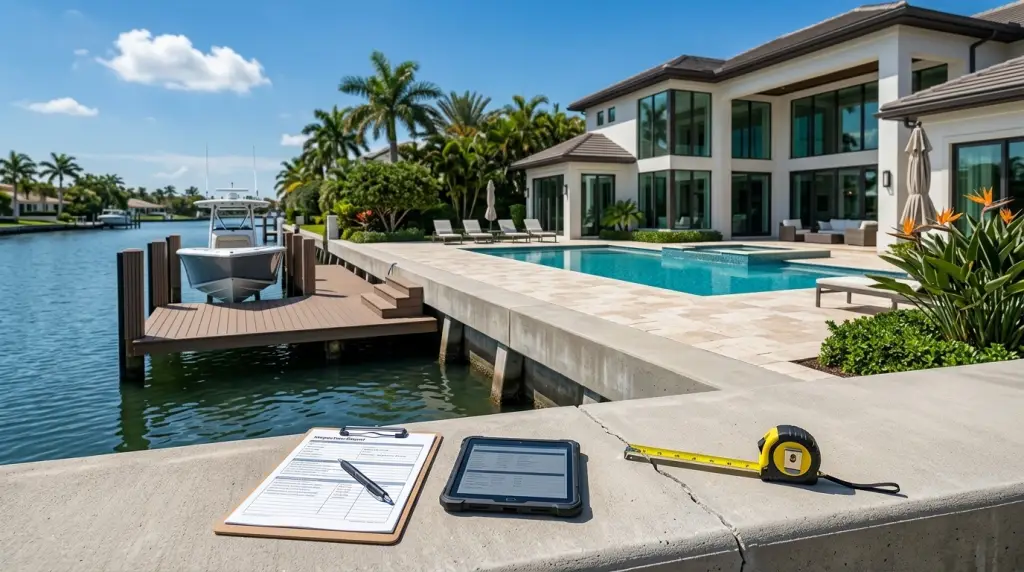
Why a Seawall Inspection Matters Before a Waterfront Purchase
Waterfront properties in Florida face constant exposure to tides, storm surge, groundwater, saltwater, boat wakes, heavy rain, and sandy soils. Over time, these forces can weaken seawalls, erode backfill, and damage drainage systems.
A home inspector may note visible seawall defects, but a specialized seawall inspection goes deeper. It focuses on the structural condition, drainage performance, soil stability, and potential repair needs of the seawall itself.
A thorough seawall inspection Florida can help you:
Identify hidden erosion, voids, or soil loss behind the wall.
Evaluate seawall alignment, cracks, joint conditions, and cap integrity.
Understand whether the wall needs minor repairs, stabilization, or full replacement.
Avoid inheriting a major repair bill shortly after closing.
Use documented findings to negotiate price, request repairs, or request a seller credit.
Make an informed decision about whether to proceed with the purchase.
Buying a waterfront home without a seawall inspection can be risky. Repair or replacement costs can reach tens or even hundreds of thousands of dollars, depending on the wall’s length, material, access, and structural condition.
What a Professional Seawall Inspection Includes
A qualified seawall contractor or marine specialist typically evaluates both the visible and hidden aspects of the seawall system.
Seawall Alignment and Structural Condition
The inspector checks whether the wall stands plumb, leans, bows, or shows signs of rotation. Even a small lean can indicate pressure from saturated soil, failed tiebacks, or erosion behind the wall.
The inspector may also look for:
Horizontal, vertical, or diagonal cracks.
Panel separation or misalignment.
Damaged or missing cap sections.
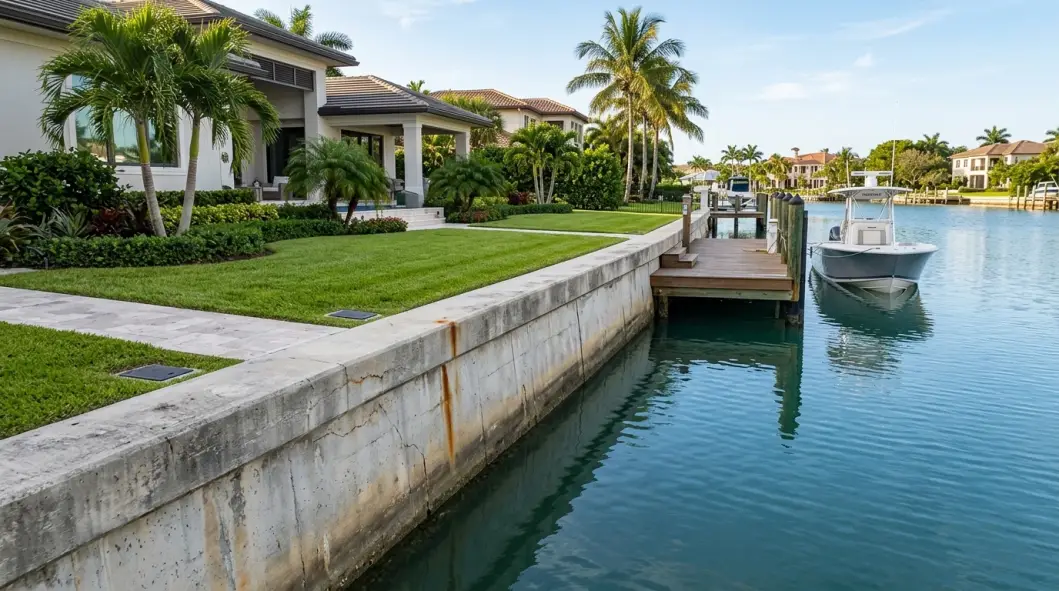
Rust stains or exposed reinforcement.
Signs of previous repairs or patching.
Cap and Panel Condition
The seawall cap helps protect the top of the wall from water intrusion. Cracks, gaps, or missing sections can allow rainwater and irrigation to enter the backfill area.
The inspector evaluates:
Cap cracks and joint openings.
Separation between the cap and panels.
Deteriorated concrete or spalling.
Evidence of water staining or sediment migration.
Joints, Seams, and Openings
Open joints between panels can allow soil to wash out during tides, rain, or high-water events. The inspector looks for:
Widened or misaligned joints.
Gaps below the cap.
Open seams or damaged panel connections.
Signs of soil or sand escaping through joints.
Drainage and Weep Holes
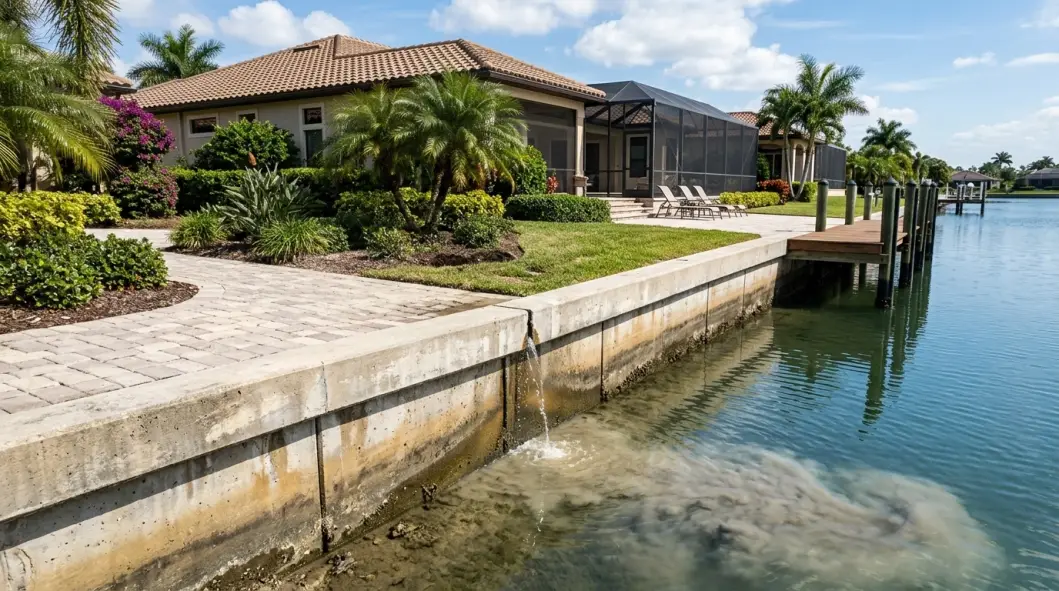
Proper drainage reduces hydrostatic pressure behind the seawall. The inspector checks whether weep holes and drainage outlets function correctly and whether they appear clogged, damaged, or missing.
Poor drainage can lead to:
Increased pressure on the wall.
Water seeping through cracks or joints.
Soil washout behind the wall.
Accelerated erosion and void formation.
Backfill and Soil Conditions
The soil behind the seawall supports the structure and nearby hardscape. Inspectors look for:
Soft or spongy ground.
Low spots or depressions.
Sinkhole-like openings.
Settling pavers, patios, or pool decks.
Evidence of soil loss or voids.
Toe Scour and Undermining
Toe scour occurs when water erodes soil at the base of the seawall. Inspectors may evaluate:
Erosion at the waterline.
Undermining beneath the wall.
Rock armor or toe protection conditions.
Signs of wave or current damage.
Tiebacks and Anchoring Systems
Many seawalls rely on tiebacks to resist soil and water pressure. While tiebacks are often hidden, inspectors may look for indirect signs of failure, such as:
Wall rotation or leaning.
Cap movement or cracking.
Panel separation.
Rust stains or exposed hardware.
In some cases, a structural or coastal engineer may be needed to evaluate tieback performance directly.
Documentation and Reporting
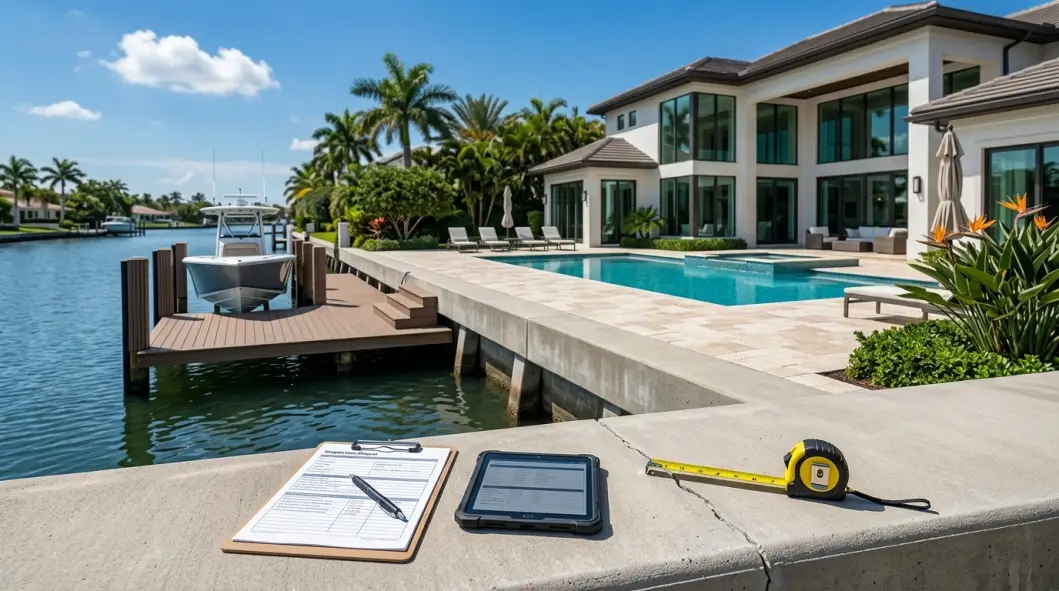
A professional seawall inspection usually includes:
Photographs of defects and overall conditions.
A written summary of findings.
Repair recommendations or further evaluation needs.
An estimated repair scope when possible.
This documentation can become a powerful tool during negotiations.
Red Flags to Watch for During a Property Showing
Even before scheduling a formal seawall inspection Florida, you can spot warning signs during a property tour.
Watch for:
Leaning or bowing seawall sections. Even a slight tilt can indicate movement.
Cracks in the cap or panels. Wide or growing cracks may signal structural stress.
Open joints or gaps. These can allow soil to escape behind the wall.
Rust stains on concrete. This may indicate internal corrosion.
Soft or sinking ground behind the wall. This can mean soil loss or voids.
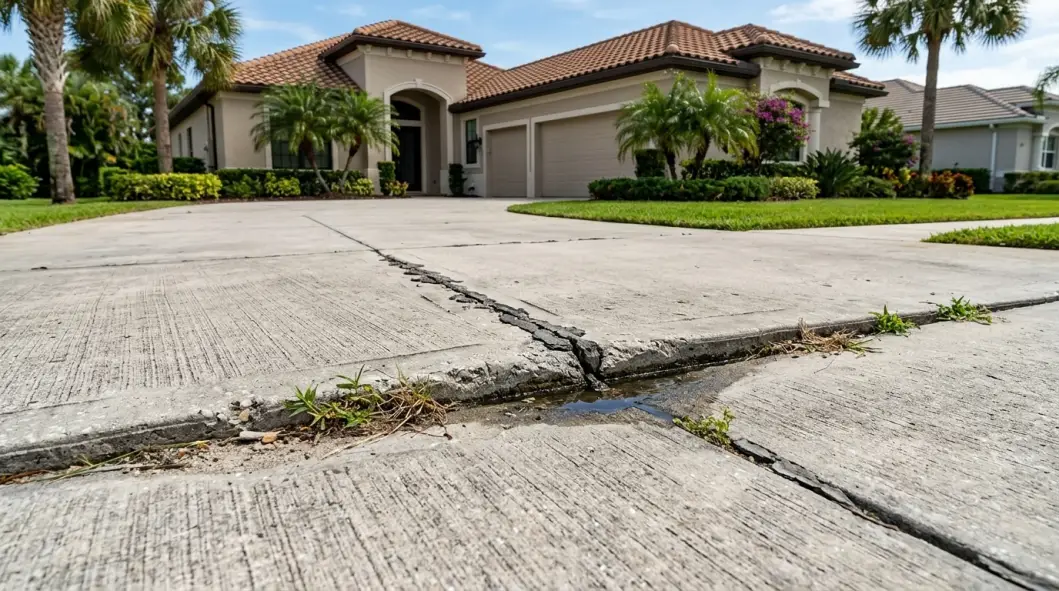
Sinkholes or depressions. These often appear near failing seawalls.
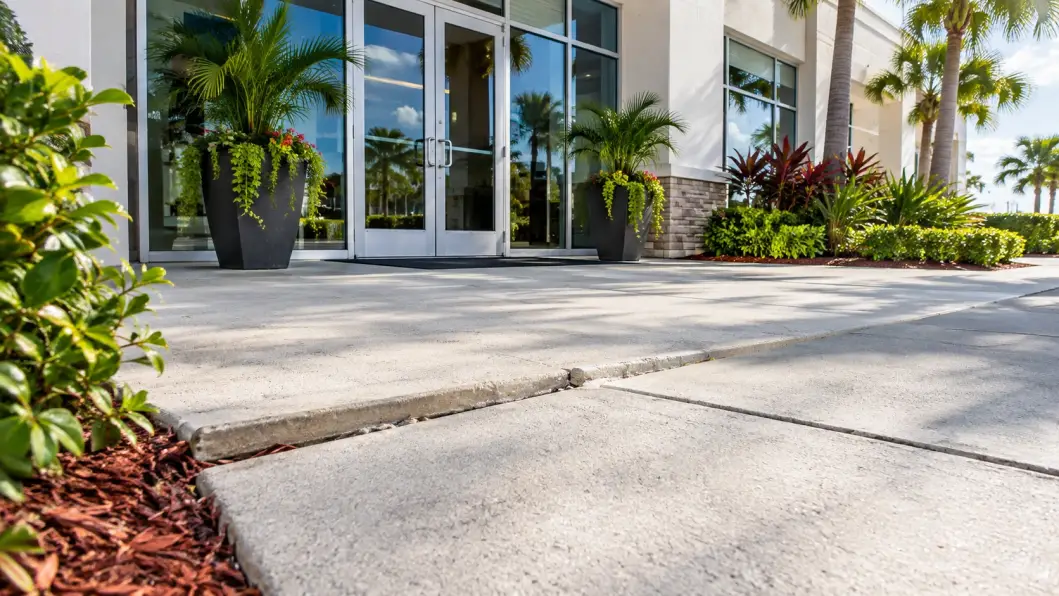
Sinking pavers or uneven patios. Settlement near the waterfront can point to erosion.
Water seeping through the wall. Especially if the water carries sand or sediment.
Missing or damaged weep holes. Poor drainage increases pressure behind the wall.
Evidence of previous emergency repairs. Patching may hide larger issues.
If you notice any of these signs, request a professional seawall evaluation before making an offer or include a seawall inspection contingency in your contract.
Questions to Ask the Seller About the Seawall
Before purchasing, ask the seller specific questions about the seawall’s history and condition.
Consider asking:
How old is the seawall?
Has the seawall ever been repaired or replaced?
Do you have records, permits, or engineering reports for past work?
Have you noticed leaning, cracks, or soil loss?
Has the property experienced flooding or storm damage?
Do you know of any drainage issues behind the wall?
Are there any warranties on previous seawall repairs?
Has a seawall inspection been performed recently?
Have you noticed water seeping through the wall or sand washing out?
Are there any known tieback or anchoring issues?
The seller’s answers can help you decide whether to proceed, negotiate, or request additional inspections.
Home Inspector vs. Seawall Specialist: What Is the Difference?
A general home inspector can identify visible defects, but they may not have the specialized training or equipment to evaluate seawalls thoroughly.
A seawall specialist or marine contractor can:
Assess structural alignment, drainage, and soil conditions.
Identify hidden erosion, voids, or tieback concerns.
Recommend appropriate repair methods.
Provide cost estimates or repair scopes.
In complex cases, a structural or coastal engineer may be necessary to evaluate tiebacks, design repairs, or assess major structural concerns.
When to Involve an Engineer
A structural or coastal engineer may be needed when:
The seawall shows significant leaning or rotation.
Cracks are wide, growing, or structurally concerning.
There is evidence of tieback failure.
Soil loss or voids appear extensive.
The wall has experienced major storm damage.
The property has a history of repeated seawall repairs.
An engineer can provide an independent evaluation and design recommendations for complex repairs.
How to Use a Seawall Inspection Report in Your Purchase
A professional inspection report can help you make informed decisions during the buying process.
You can use the findings to:
Request repairs before closing. Ask the seller to complete specific repairs.
Negotiate a lower price. Use repair estimates to justify a reduced offer.
Request a seller credit. Ask for a credit at closing to cover repair costs.
Walk away from the deal. If the seawall condition poses too much risk.
Always review the inspection report with your real estate agent and, if needed, a seawall contractor to understand the full scope and cost of recommended repairs.
How Much Does a Seawall Inspection Cost in Florida?
Seawall inspection costs vary depending on the property size, seawall length, access conditions, and whether engineering evaluation is needed.
In general:
A basic seawall inspection by a qualified contractor may range from a few hundred dollars.
A detailed inspection with engineering evaluation may cost more.
Some contractors apply the inspection fee toward future repair work.
Always ask what the inspection includes, whether you receive a written report, and whether the contractor offers repair services or only evaluation.
Frequently Asked Questions
Should I inspect a seawall before buying a house in Florida?
Yes. A seawall inspection Florida can reveal hidden erosion, structural issues, drainage problems, and costly repair needs before you close on the property.
How much does a seawall inspection cost in Florida?
Costs vary based on seawall length, access, and whether engineering evaluation is needed. Basic inspections may start in the low hundreds, while detailed evaluations with engineering input can cost more.
Can a home inspector inspect a seawall?
A home inspector may note visible defects, but a seawall specialist or marine contractor has the expertise to evaluate structural conditions, drainage, soil loss, and repair needs more thoroughly.
What are red flags when buying a waterfront home?
Watch for leaning walls, cracks, open joints, rust stains, soft ground, sinkholes, sinking pavers, water seepage, and damaged drainage systems.
Does a seawall inspection include tiebacks and soil erosion?
A qualified seawall inspection evaluates visible signs of tieback issues and soil erosion. However, hidden tiebacks may require engineering assessment or specialized testing.
Can I negotiate the price based on a seawall inspection?
Yes. Use the inspection report and repair estimates to negotiate a lower price, request repairs, or ask for a seller credit before closing.
What if the seller refuses to allow a seawall inspection?
Consider this a potential red flag. A seawall inspection protects your investment. If the seller refuses, you may want to reconsider the purchase or include an inspection contingency in your contract.
Protect Your Investment With a Seawall Inspection
Buying a waterfront home in Florida offers incredible lifestyle benefits, but it also comes with unique responsibilities. A seawall may protect your property today, but without proper maintenance and inspection, it can become a costly liability tomorrow.
A professional seawall inspection Florida gives you the information you need to make a smart purchase decision. Whether you negotiate repairs, adjust your offer, or walk away from a risky property, the inspection can save you from unexpected expenses and structural surprises.
SlabFix provides professional seawall inspection and repair services throughout Florida. Our team evaluates seawall alignment, drainage, soil conditions, and structural integrity to help buyers, sellers, and property managers make informed decisions. Contact SlabFix today to schedule a seawall inspection before you buy your next waterfront property.
📞 Call SlabFix today at 407-379-2585 to schedule a professional seawall inspection and learn more about the most effective solutions for your property.