Luxury Waterfront Living: How Yacht Owners Protect Their Private Docks, Shorelines, and Marine Investments
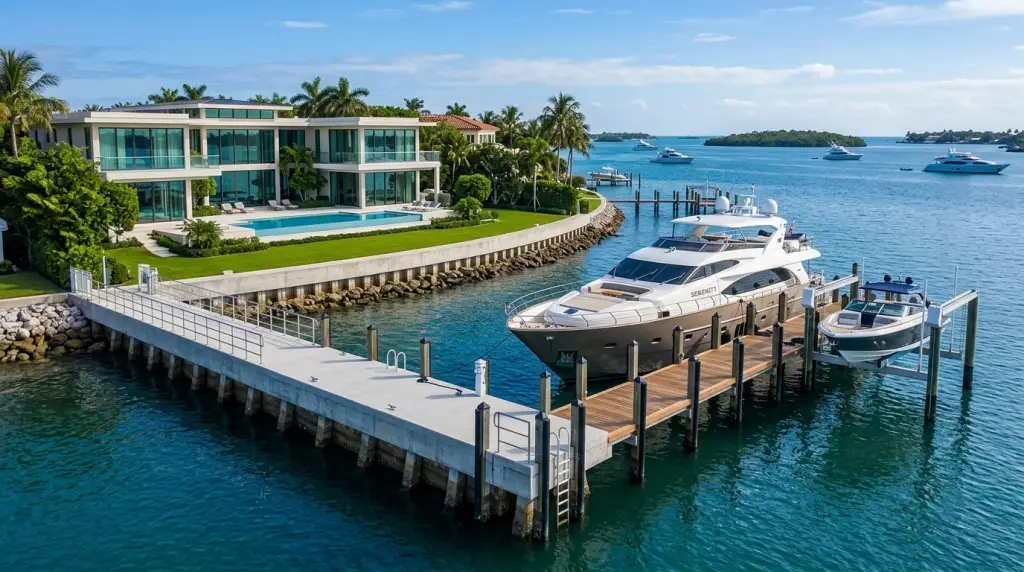
Luxury waterfront living is not just about the view. It is about protecting high-value marine assets from erosion, storm surge, and structural failure. For yacht owners, a private dock, seawall, and boat lift are critical infrastructure that support safe vessel access and preserve property value.
This guide explains why yacht owners invest in stable waterfront infrastructure, how erosion threatens private docks, and what maintenance and design choices separate long-term durability from costly emergency repairs.
Why Yacht Owners Invest in Stable Waterfront Infrastructure
High-net-worth waterfront homeowners understand a simple truth: the cost of protecting a private dock is far lower than replacing it. The same is true for preserving safe yacht access when shoreline failure begins.
Stable waterfront infrastructure delivers:
Reliable access for boarding and tendering.
Protection for expensive boat lifts, pilings, and dock hardware.
Lower long-term maintenance costs by preventing accelerated erosion.
Higher property value through documented structural integrity.
For owners with large vessels, even minor dock misalignment or piling instability can create docking hazards and force expensive re-leveling.
How Erosion Affects Private Docks and Yacht Access
Erosion is the silent enemy of luxury waterfronts. It does not just weaken the shoreline. It also undermines the ground supporting your private dock, seawall, and boat lift.
Common erosion impacts on yacht properties include:
Soil washout behind seawalls, which creates voids and allows docks or piers to tilt or settle unevenly.
Piling instability, which reduces holding strength and makes docks less secure in storms.
Uneven dock surfaces, which create tripping hazards and add stress to dock hardware.
Reduced water depth near shore, which can complicate yacht access.
Private yacht dock maintenance starts with one key idea: erosion control is not optional. It is part of protecting marine investments.
Protecting Boat Lifts, Piers, and Marina Areas
Boat lifts are among the most vulnerable assets on a waterfront property. A failing seawall or eroding shoreline can cause lifts to tilt, overload hardware, or collapse.
Key strategies for protecting lifts and piers include:
Stabilize soil behind seawalls before installing or upgrading boat lifts.
Use deep-driven pilings that reach stable soil layers, not just surface sand.
Install drainage and weep systems to relieve hydrostatic pressure behind bulkheads.
Schedule regular inspections of lift brackets, piling connections, and dock hardware for corrosion and movement.
For owners with multiple berths or a small marina area, marina seawall protection becomes even more important. One failing section can affect multiple lifts and compromise the entire docking system.
Seawall Failures That Can Damage Expensive Marine Equipment
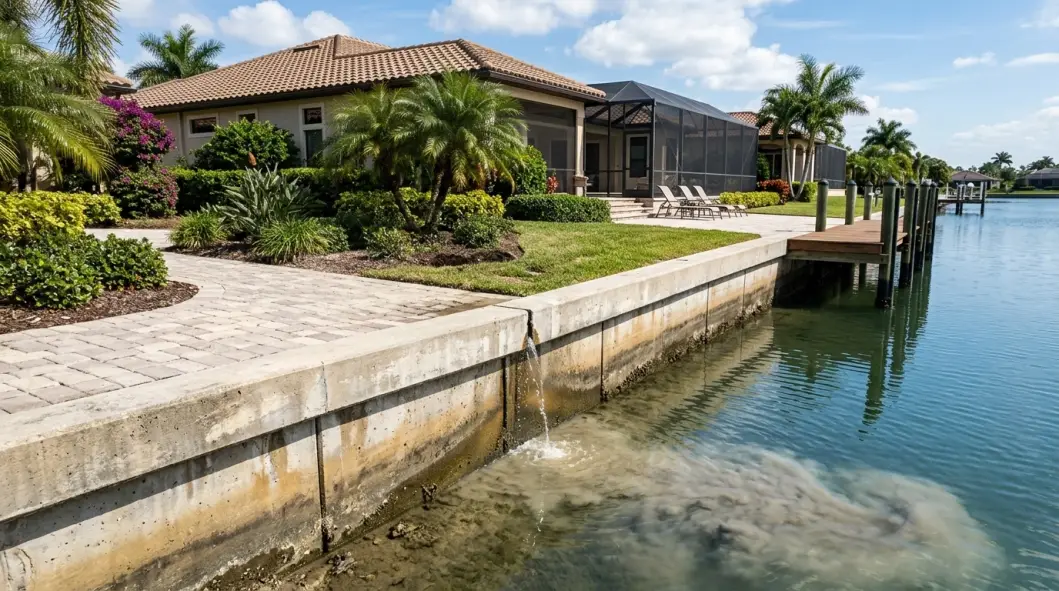
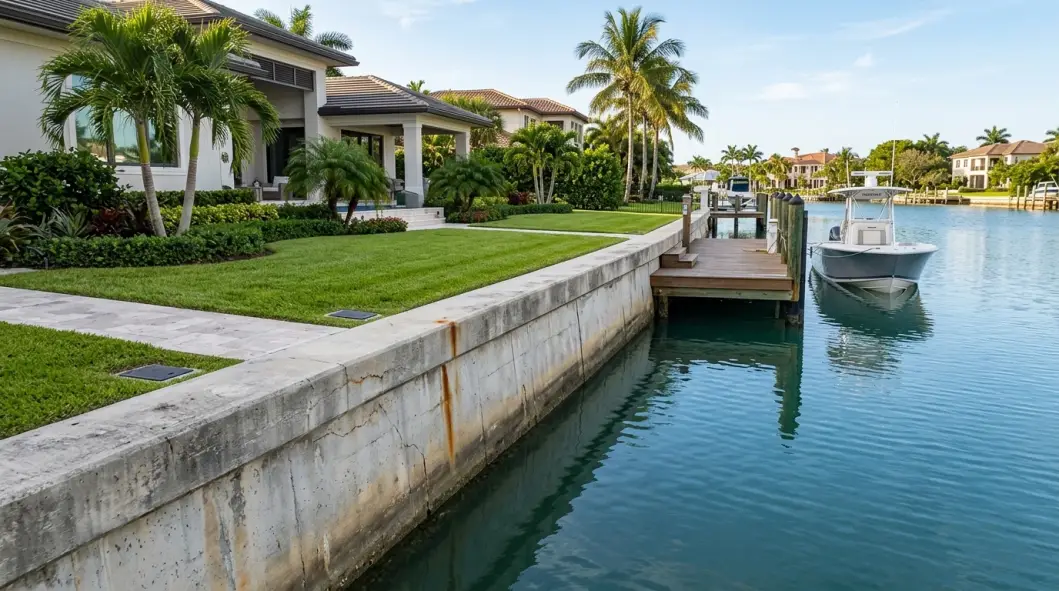
Seawall failures are rarely subtle. They often show up as cracks, leaning panels, or soil depressions near the waterline. By then, serious damage may already be underway.
Common seawall failure scenarios that threaten marine investments include:
Cracked cap beams, which allow water to infiltrate behind the wall and accelerate soil loss.
Tilted or separated panels, which shift load away from the design axis and create stress points.
Void formation behind bulkheads, which creates hidden instability and can lead to sudden collapse under storm loads.
Corroded tiebacks and anchors, which reduce the wall’s ability to hold back soil in saltwater environments.
A single seawall failure can damage boat lifts, tear dock hardware from pilings, and force expensive emergency repairs during peak boating season.
Designing a Waterfront Property for Long-Term Durability
Luxury waterfront home maintenance starts at the design stage. Owners who plan for durability from day one avoid the cycle of short-term fixes and repeated reconstruction.
Design principles for long-term waterfront durability include:
Integrating seawall and dock design so the seawall, dock, and lift systems work as one waterfront structure.
Using marine-grade materials such as corrosion-resistant hardware, stainless or galvanized fasteners, and concrete mixes designed for saltwater exposure.
Planning for drainage and runoff so surface water does not pour directly behind seawalls or under dock approaches.
Including access for maintenance so technicians can inspect and maintain without damaging landscaping.
A well-designed waterfront treats the shoreline as a system: seawall, soil, dock, and drainage all work together.
Maintenance Checklist Before Storm Season
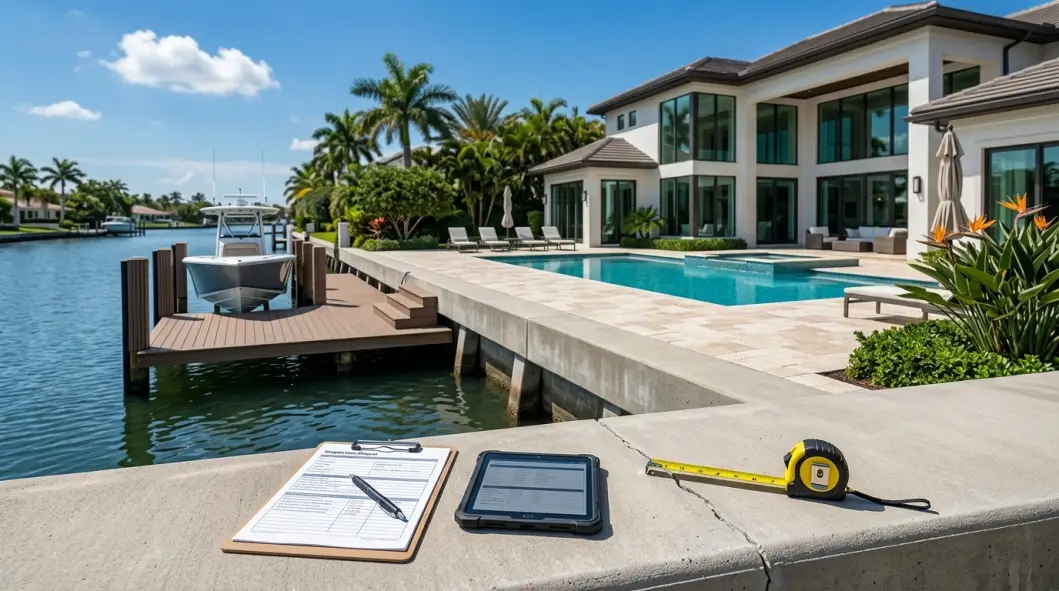
Smart yacht owners treat pre-storm maintenance like a haul-out checklist. It should be structured, documented, and non-negotiable.
Seawall and Shoreline
Inspect cap beams, panels, and joints for new cracks or movement.
Look for soil depressions, sinkholes, or soft spots along the shoreline.
Check weep holes, filters, and drainage outlets for blockages.
Document changes with photos and notes for insurance or engineering review.
Docks, Pilings, and Boat Lifts
Verify piling alignment and look for signs of leaning or rotation.
Inspect lift brackets, cables, and hardware for corrosion or wear.
Confirm that all dock sections are level and securely fastened.
Test lift operation under load and listen for unusual stress or binding.
Drainage and Landscaping
Clear gutters, downspouts, and surface drains that discharge near the seawall.
Ensure landscape grading directs water away from the shoreline, not toward it.
Remove debris, overhanging branches, or loose objects that could become projectiles in high winds.
Frequently Asked Questions
Does homeowners insurance cover seawall damage in Florida?
Often, no. Most policies only cover seawalls for limited causes such as vehicle impact or vandalism, and they usually exclude flood, erosion, and long-term wear.
Does flood insurance cover seawall repair?
Standard flood insurance does not cover docks, bulkheads, piers, or seawalls. Private flood policies often follow similar rules.
Is my seawall considered an “other structure” on my home policy?
Many insurers classify seawalls and retaining walls as other structures, but this varies. You need to confirm in writing whether the limit includes the seawall.
What seawall damage is usually not covered by insurance?
Gradual erosion, soil movement, settling, lack of maintenance, and flood or storm surge are usually excluded.
Can I buy extra seawall insurance coverage?
Sometimes. Some carriers offer higher other-structures limits or special endorsements for certain non-flood events.
How can I protect my seawall if insurance will not pay?
Schedule regular inspections, fix small cracks early, and address soil loss and voids before they become structural failures.
Long-Term Waterfront Property Protection for Yacht Owners
For luxury waterfront homeowners, the goal is not just to survive the next storm. It is to preserve decades of value and enjoyment. That means treating private yacht dock maintenance, marina seawall protection, and waterfront property protection as ongoing investments, not one-time projects.
Owners who prioritize early intervention, soil stabilization, and quality design spend less on emergency repairs and more on what matters: safe, reliable access to their yachts and the lifestyle that comes with them.
📞 Call SlabFix today at 407-379-2585 to schedule a professional seawall inspection and learn more about the most effective solutions for your property.