Water Seeping Through Your Seawall at Low Tide? What It Means and How to Stop Soil Loss
Seeing water seep through a seawall at low tide can feel confusing. After all, the water level is lower, so why is water still coming through the wall? In many cases, the answer is simple: groundwater and water trapped in the soil behind the seawall are draining toward the lower water level.
However, water seeping through a seawall can also signal a more serious problem. If the escaping water carries sand, soil, or muddy sediment with it, your property may be losing backfill behind the wall. Over time, that soil loss can create hidden voids, soft spots, sinking pavers, cracked pool decks, and even seawall movement.
This guide explains why water seeping through seawall problems happen, how to tell the difference between normal drainage and active erosion, and which repair options can protect your Florida waterfront property.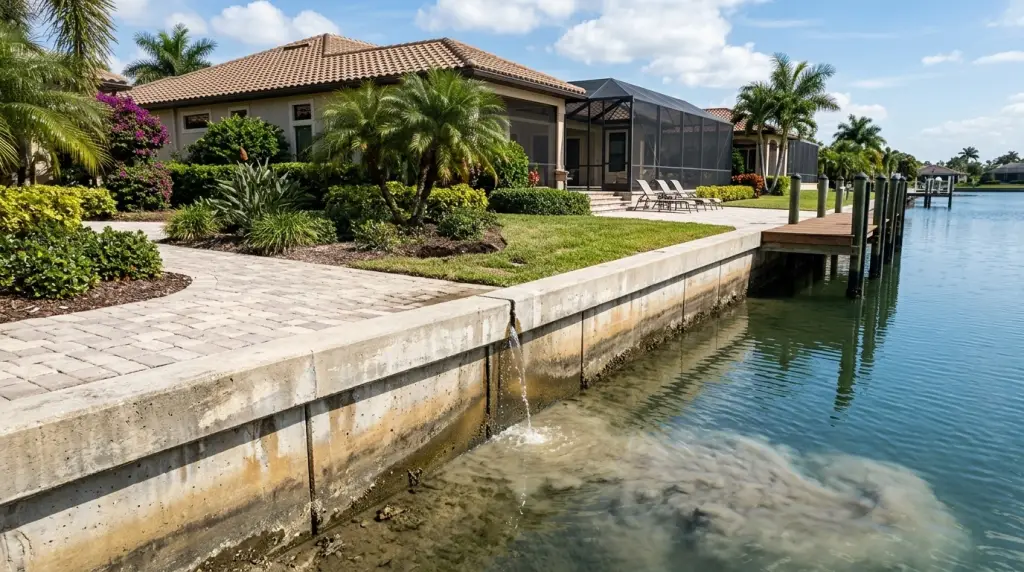
Is Water Seeping Through a Seawall Normal?
Some water movement through or around a seawall can be normal. A properly designed seawall needs a way to relieve groundwater pressure behind the wall, especially when the tide drops.
For example, functioning weep holes may allow water behind the seawall to drain into the canal, lake, river, or bay. This controlled drainage reduces hydrostatic pressure, which is the force created when water builds up in the soil behind the wall.
However, not every instance of water seeping through seawall areas is harmless.
You should investigate the issue when the water:
Flows through cracks, open joints, or damaged panel seams rather than designated drainage points.
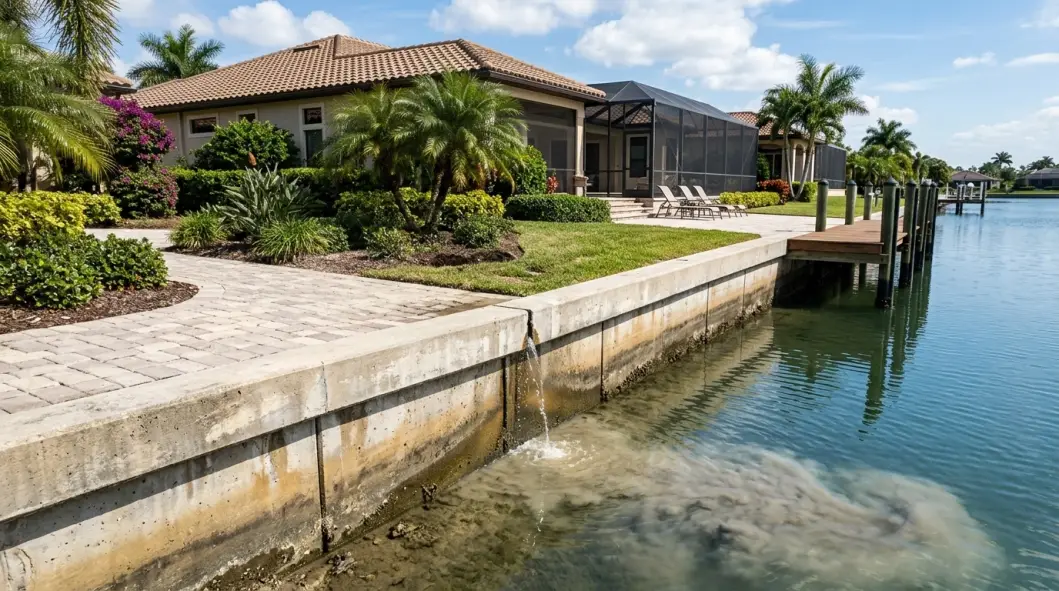
Carries sand, soil, silt, or muddy sediment into the waterway.
Appears to increase after rainfall, storms, irrigation, or high-tide events.
Creates new soft spots, depressions, or sinkholes behind the seawall.
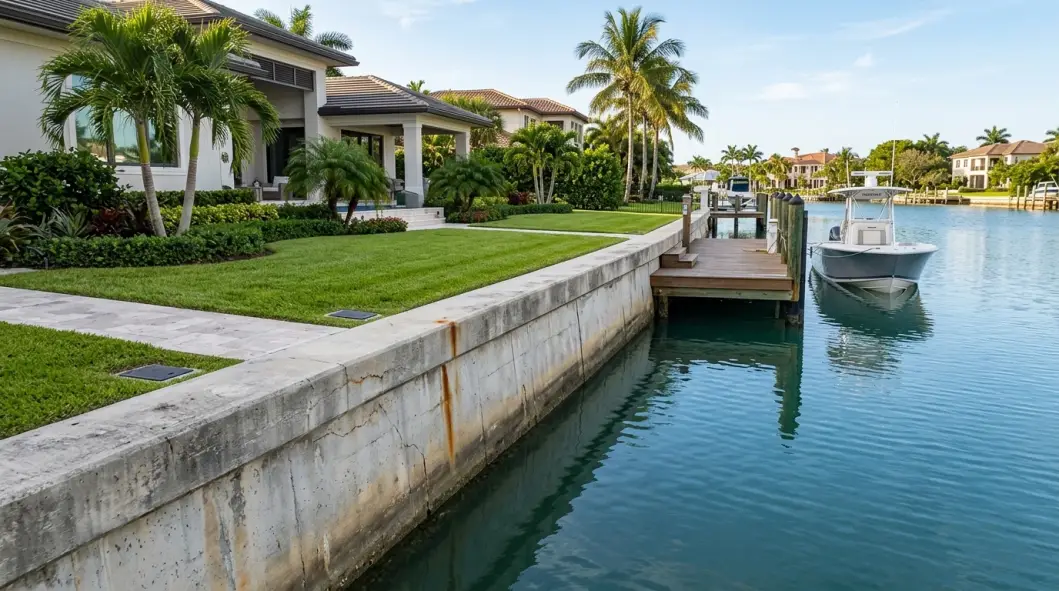
Occurs with cracking, bowing, leaning, rust stains, or cap damage.
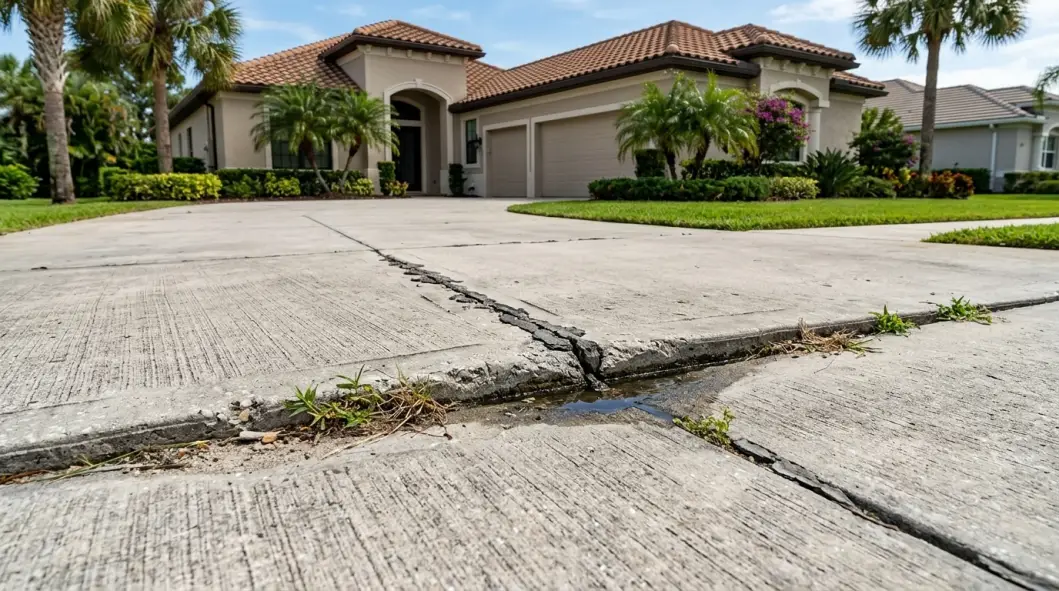
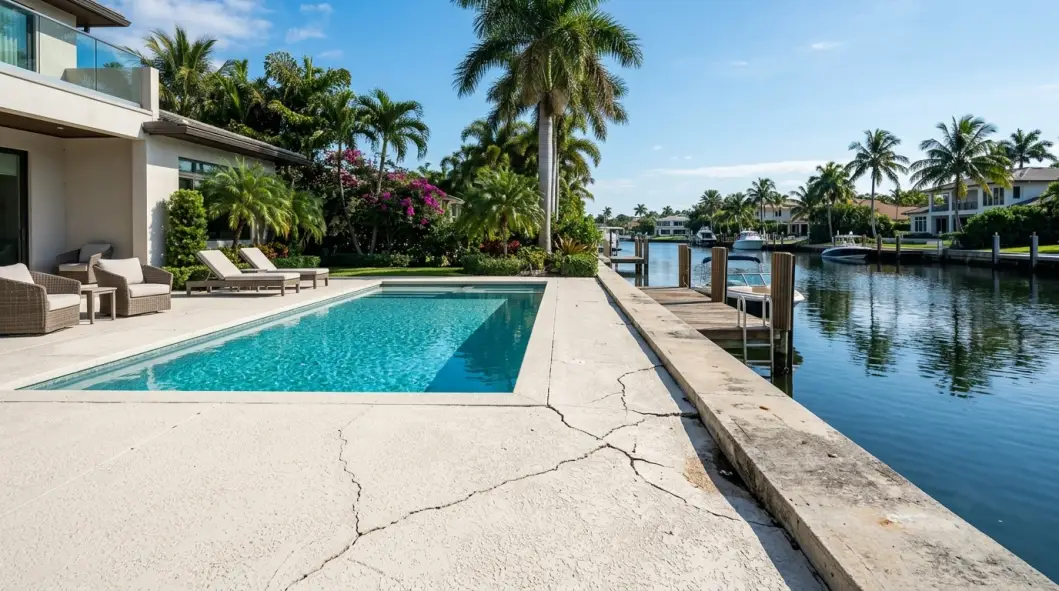
Causes nearby pavers, patios, pool decks, or walkways to settle.
In short, clear water draining from functional weep holes may be part of the wall’s drainage system. On the other hand, water escaping through random openings can create an erosion path that removes valuable soil from behind the seawall.
Why Does Water Seep Through a Seawall at Low Tide?
Low tide can expose a problem that remains hidden when water levels are high. As the canal or bay water drops, groundwater behind the seawall often moves toward that lower elevation.
If the wall has open joints, cracks, failed filter material, or damaged drainage components, the water may follow those openings instead of exiting through a controlled path.
This process can lead to water seeping through seawall panels, caps, joints, and other weak points.
Groundwater Drains Toward Lower Water Levels
At low tide, the water level on the canal side drops. Meanwhile, the soil behind the seawall may still hold moisture from rain, irrigation, high groundwater, or previous tide conditions.
Because water naturally moves toward lower pressure, it can travel toward the canal. A well-functioning drainage system allows it to escape safely while retaining the soil behind the wall.
However, if weep holes clog, fail, or lack proper filtration, water may force its way through cracks and joints instead.
Open Seawall Joints Create Escape Paths
Concrete seawalls often include joints between panels or sections. Over time, these joints can widen because of aging, movement, erosion, settlement, storm activity, or corrosion.
Once a joint opens, it may allow water to move through the wall. More importantly, it can allow fine sand and backfill to move with that water.
This is one of the most common causes of water seeping through seawall problems that eventually produce soil loss behind the structure.
Cracks in the Cap or Wall Face Let Water In
Cracks in a seawall cap can allow rainfall, irrigation water, and surface runoff to enter the backfill area behind the wall. Water can also enter through cracks in the panels or where the cap separates from the wall.
As water moves through these openings, it may weaken the soil and create channels beneath the surface. Therefore, a small crack can become more serious if it allows repeated water flow and sediment loss.
Failed Filter Fabric Allows Soil to Escape
Many seawall systems use filter fabric behind the wall. This material should allow water to pass through while holding soil in place.
When filter fabric tears, deteriorates, shifts, or was not installed correctly, fine sand can wash through the wall with draining water. The seawall may still look solid from the water side, but the soil behind it can slowly disappear.
As a result, voids may grow without obvious warning until the ground begins to sink.
Clogged or Damaged Weep Holes
Weep holes help relieve water pressure behind a seawall. They provide controlled routes for groundwater to exit, especially during low tide.
If weep holes clog with sediment, debris, biological growth, or damaged filter material, water may build pressure behind the wall. It then looks for another way out, often through cracks, joints, or gaps.
For that reason, a water seeping through seawall issue may point to poor drainage even when the visible leak appears small.
Soil Piping and Internal Erosion
Soil piping occurs when flowing water carries fine particles through small openings or channels in the soil. Over time, this water movement can create a larger underground path and remove more backfill.
Engineering guidance describes internal erosion and piping as processes in which seepage can detach soil particles at an exit point and progressively move material from within the soil mass.
Behind a seawall, this can mean that water escapes through an open joint, crack, or drainage failure while repeatedly pulling fine sand with it. The result can be hidden voids that grow farther inland from the seawall.
Clear Water vs. Water Carrying Soil
Not every seawall leak looks the same. The appearance of the water can help you understand whether you may have a simple drainage issue or active backfill loss.
Clear Water From a Weep Hole
Clear water exiting through a designated weep hole can indicate that the drainage system is relieving pressure as intended.
Still, you should watch for changes. If the flow becomes stronger, cloudy, muddy, or carries visible sand, the drainage system may no longer be holding soil in place.
Cloudy, Sandy, or Muddy Water
Cloudy water may contain fine sand, silt, or soil particles from behind the seawall. This is more concerning because it can indicate active erosion.
Look closely for:
A cloudy plume in the water near the wall.
Sand collecting at the base of the seawall.
Water that looks brown, gray, or muddy.
A visible stream of sediment leaving an open joint.
Small piles of washed-out material near the seawall face.
When water carries soil out through the wall, the property loses the material that supports the seawall, landscaping, patios, pool decks, and nearby concrete.
Water Flowing From Random Cracks or Gaps
Water should not consistently flow through random panel joints, cracks in the cap, gaps below the cap, or damaged sections of the wall.
These openings can act as erosion pathways. Even if the flow looks small, tidal movement and rainfall can repeat the process many times over the year.
Therefore, do not judge the problem only by the amount of water you see on one day. The key question is whether water is escaping through a controlled drainage point or through a defect that can carry soil away.
Warning Signs of Soil Loss Behind a Seawall
Water seepage often affects more than the seawall itself. As soil washes out, the damage can spread inland across the property.
Watch for these signs:
Soft or spongy soil behind the wall.
Low spots or depressions in the lawn or landscaping.
Sinkhole-like openings near the seawall.
Sinking pavers along patios, walkways, or pool areas.
Cracks in a pool deck or concrete patio near the waterfront.
Uneven sidewalks or walkways leading toward the wall.
Standing water in areas that previously drained well.
Gaps below concrete slabs or along seawall-adjacent hardscape.
Leaning, bowing, or cracked seawall panels.
Rust stains or damaged cap sections.
These signs can indicate void formation or structural movement. Florida seawall repair specialists commonly associate soil loss behind seawalls with open joints, cracks, failed filter fabric, drainage issues, wave action, storm surge, and water pressure behind the wall.
How Soil Loss Spreads Across a Waterfront Property
Soil loss usually starts in a hidden area behind the seawall. However, it rarely stays there.
A typical progression may look like this:
Water begins to escape through a crack, joint, failed drain, or damaged filter system.
The water carries fine soil particles toward the waterway.
A small void forms behind the seawall.
The void grows as tides, rain, irrigation, and groundwater continue moving through the same path.
Surface soil settles into the void.
The yard develops soft spots, low areas, or sinkholes.
Nearby pavers, patios, sidewalks, or pool decks lose support.
Concrete slabs crack, settle, or become uneven.
The seawall loses lateral soil support and may begin to bow, lean, or separate.
This is why water seeping through seawall problems deserve early attention. A leak that looks minor on the canal side may already be affecting soil conditions on the land side.
Why Caulk Alone May Not Solve the Problem
Property owners often want to seal the visible crack immediately. While sealing an opening can be part of the repair, caulk alone may not stop the underlying issue.
For example, a simple surface seal will not:
Fill voids that have already formed behind the wall.
Replace backfill soil that has washed away.
Repair damaged or missing filter fabric.
Restore clogged or failed drainage paths.
Correct hydrostatic pressure behind the wall.
Fix a leaning wall or failed tieback system.
Stop water from finding another weak point nearby.
If a contractor seals a visible crack without identifying the water path and soil condition behind the wall, the leak may return elsewhere.
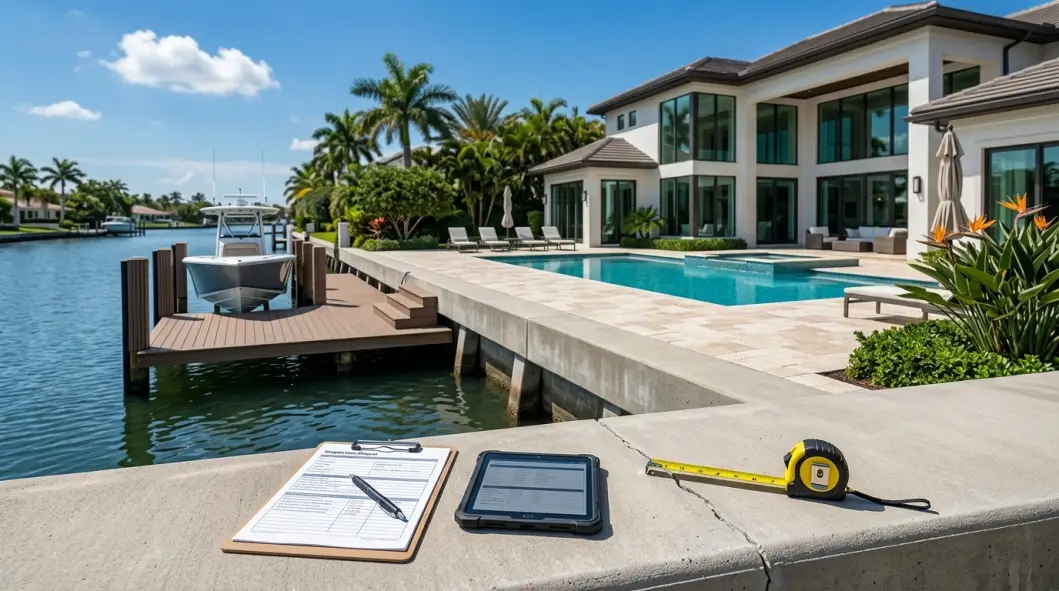
Therefore, a professional inspection should identify both parts of the problem:
Where water enters and escapes.
What has happened to the soil behind the seawall.
A durable repair plan should close the unwanted escape route, restore controlled drainage, and stabilize or replace lost support soil where needed.
Seawall Repair Options for Water Seepage
The right repair depends on the seawall’s material, age, alignment, drainage condition, amount of soil loss, and overall structural stability. A qualified contractor should inspect the property before recommending a repair method.
Joint and Crack Sealing
When open joints, cracks, or cap gaps allow water and soil to escape, technicians can clean and seal these areas with materials suited to marine conditions.
This repair can reduce uncontrolled water flow. However, crews should first determine whether soil loss or voids already exist behind the wall.
Drainage and Weep Hole Restoration
Weep holes and drainage systems should release water while keeping backfill in place. If these elements clog or fail, crews may clean, repair, or improve the drainage system.
Depending on the seawall design and site conditions, the work may involve restoring drainage outlets, adding filtration, or addressing water that pools behind the wall.
Proper pressure relief reduces the force pushing against the seawall. It also helps direct water through intended drainage routes rather than through damaging cracks and joints.
Filter Fabric Repair or Replacement
When failed filter fabric allows sand to move through the wall, repairs may require access to the backfill area. The goal is to restore a filtering layer that permits water flow but retains soil.
The exact approach depends on the wall construction, accessibility, extent of erosion, and whether the wall needs structural work at the same time.
Polyurethane Void Filling and Soil Stabilization
Where erosion has formed voids, polyurethane injection may help fill accessible cavities, bind loose soil, and restore support behind the seawall.
Technicians inject the material through small access points. The foam expands to fill available voids and can improve stability in appropriate soil conditions.
However, polyurethane does not replace an engineered structural repair when the seawall has severe rotation, major panel failure, or failed tiebacks. In those cases, the property may need supplemental anchors, waler systems, panel repair, or replacement.
Cap and Panel Repairs
If cracks in the cap or wall panels create water paths, repair crews may need to restore those structural components. This can include crack repair, cap reconstruction, panel stabilization, or localized replacement.
Addressing cap and panel damage helps reduce future water intrusion and protects the repair work behind the wall.
Toe Scour Protection
Sometimes, soil escapes from beneath the seawall rather than through the wall face. Waves, currents, boat wakes, and water movement can erode soil at the base of the wall. This condition is called toe scour.
Depending on the site, contractors may use protective measures such as rock armor or other engineered toe protection to reduce ongoing undermining.
Supplemental Tiebacks or Seawall Replacement
If soil loss has caused the wall to lean, bow, or lose structural support, the repair may require more than sealing and void filling.
A contractor or engineer may recommend:
Supplemental tiebacks or anchors.
Waler beams to distribute support.
Panel and cap reconstruction.
Partial seawall replacement.
Full replacement when the wall has extensive structural damage.
The right decision depends on whether the existing wall remains structurally serviceable.
When Should You Call a Professional?
Call a seawall repair professional promptly if you notice:
Water carrying sand or muddy sediment through the wall.
A visible stream coming through cracks or panel joints.
New yard depressions, sinkholes, or soft ground.
Sinking pavers, patios, pool decks, or sidewalks.
Widening cracks in the cap or panels.
A seawall that leans, bows, or moves.
Repeated water pooling behind the wall.
Sudden changes after a storm, king tide, heavy rainfall, or boat-wake event.
You should also request a structural or coastal engineering evaluation when the wall shows significant leaning, major cracking, widespread panel separation, extensive erosion, or signs of tieback failure.
Early action can protect more than the seawall. It can also help preserve the soil, concrete, landscaping, pool area, and structures behind it.
What to Do While You Wait for an Inspection
Do not attempt a DIY structural repair. However, you can take useful steps while you arrange a professional assessment.
Document the leak. Take photos and videos during low tide, especially if water carries visible sand or sediment.
Photograph the land side. Record soft spots, dips, cracked pavers, settling concrete, or areas of standing water behind the wall.
Keep people away from unstable areas. Avoid placing heavy furniture, equipment, vehicles, or large planters near soft ground and suspected voids.
Do not fill sinkholes with loose soil only. Loose soil may simply drop into an active void. It can also hide a problem that needs proper assessment.
Check visible drainage areas carefully. Remove surface debris from accessible drains, but do not force tools into weep holes or modify the seawall without professional guidance.
Monitor changes after rain and tides. Note whether the leak worsens after rainfall, irrigation, high tides, or storms. This information can help identify the water source.
Frequently Asked Questions
Is it normal for water to seep through a seawall at low tide?
Clear water draining through designated weep holes can be normal. However, water flowing through cracks, open joints, or random gaps may signal a drainage or erosion problem.
Does water seeping through a seawall mean soil loss?
Not always. However, cloudy water, sand, sediment, soft ground, sinkholes, or settling pavers can indicate that water is carrying backfill soil away.
Why does my seawall leak more at low tide?
Low tide lowers the water level on the canal side. Groundwater behind the seawall can then flow toward that lower level through weep holes, joints, cracks, or other openings.
Can I seal a leaking seawall with caulk?
Caulk may seal a small surface opening, but it will not repair voids, lost soil, failed drainage, damaged filter fabric, or structural seawall movement. A professional should identify the source first.
Can polyurethane foam stop seawall leaks?
Polyurethane foam can help fill voids and stabilize soil in suitable conditions. However, crews must also seal active erosion paths and restore drainage. Foam alone cannot repair a severely damaged or leaning seawall.
What should I do if sand is washing out through my seawall?
Document the problem, keep people away from soft ground, and schedule a professional inspection promptly. Sand loss can create voids behind the seawall and lead to settlement or structural damage.
Can a seawall leak affect my pool deck or patio?
Yes. Soil loss can spread inland from the seawall. As voids expand, nearby pavers, patios, walkways, and pool decks can lose support, crack, or sink.
Protect the Soil Behind Your Seawall
Water movement through a seawall may look minor, especially during low tide. However, if water escapes through damaged joints or cracks and carries soil with it, the problem can steadily undermine your waterfront property.
The most effective solution addresses the complete system: locate the water pathway, stop uncontrolled soil loss, restore drainage, fill voids, stabilize weakened soil, and repair structural damage where needed.
SlabFix provides Florida seawall repair solutions that address erosion, voids, soil loss, concrete settlement, and polyurethane soil stabilization. If you notice water seeping through seawall panels, cloudy discharge, sinking ground, or damage near your waterfront, contact SlabFix for a professional assessment before the problem spreads.
📞 Call SlabFix today at 407-379-2585 to schedule a professional seawall inspection and learn more about the most effective solutions for your property.