Concrete Expansion Joint Failure in Florida: Signs, Causes, and Repair Options
Concrete is strong and durable, but it is not completely rigid. In Florida, intense heat, frequent rain, sandy soil, and changing moisture conditions cause concrete to expand, contract, and move over time.
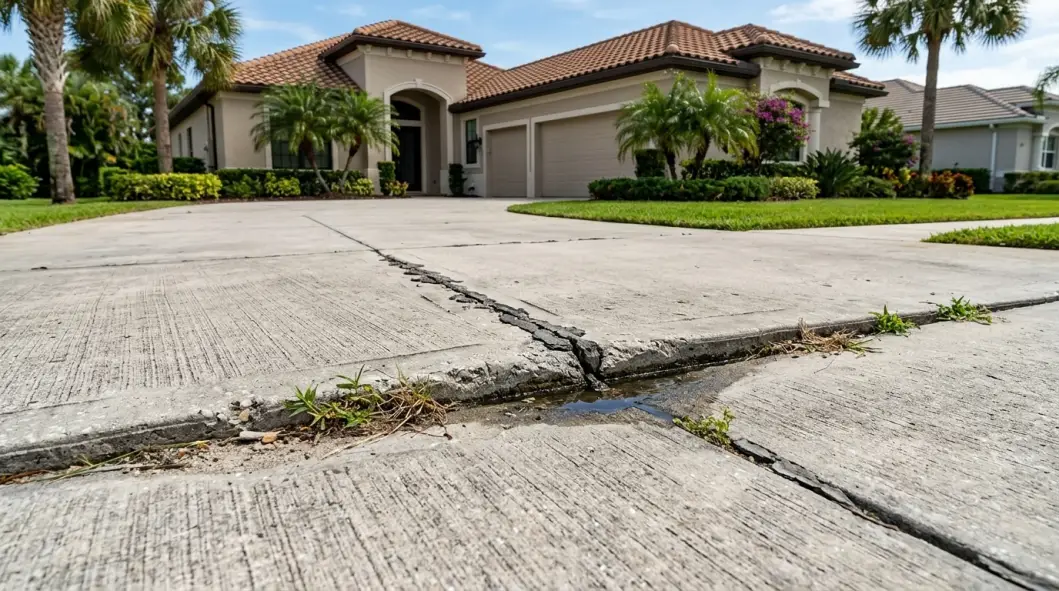
That is why expansion joints are installed in concrete surfaces. These joints create controlled spaces between slabs, allowing them to move without pushing against nearby structures or cracking unpredictably. However, when an expansion joint fails, it can become a pathway for water intrusion, soil erosion, slab settlement, and additional concrete damage.
Therefore, understanding the early warning signs is important for homeowners and property managers. In this guide, we explain why expansion joints fail, how to identify the damage, and when professional concrete expansion joint repair is the right solution.
What Is a Concrete Expansion Joint?
A concrete expansion joint is a planned gap between two sections of concrete. It allows adjacent slabs to expand and contract as temperatures and moisture conditions change.
Expansion joints are commonly found in:
Sidewalks and walkways.
Patios.
Garage floors.
Warehouse slabs.
Commercial parking areas.
Concrete placed next to foundations, walls, or columns.
Without an expansion joint, expanding concrete can push against a building, pool coping, garage wall, or neighboring slab. As a result, the concrete may crack, lift, spall, or separate.
Typically, an expansion joint contains a flexible filler or sealant. In many applications, a backer rod is installed below the sealant to control its depth and improve movement. When the sealant remains flexible and properly bonded, it helps prevent water and debris from entering the gap.
Over time, however, the sealant can dry out, crack, shrink, or pull away from the concrete. When that happens, professional concrete expansion joint repair may be needed to protect the surrounding slab.
Why Expansion Joints Fail in Florida
Expansion joint failure usually develops gradually. Nevertheless, Florida’s climate can accelerate the process because outdoor concrete is exposed to ultraviolet radiation, heavy rain, irrigation, humidity, and frequent temperature changes.
Intense Heat and UV Exposure
Florida concrete surfaces can become extremely hot under direct sunlight. Consequently, the concrete expands during the day and contracts as temperatures fall.
This repeated movement places stress on the joint sealant. Over time, ultraviolet exposure can make older sealants brittle, chalky, or detached from the concrete edges. Once the sealant loses flexibility, it cannot absorb normal slab movement effectively.
Water Intrusion and Poor Drainage
Water is another major cause of expansion joint failure. When a joint is open or damaged, rainwater, irrigation, and surface runoff can enter below the slab.
As water moves beneath the concrete, it may:
Soften the supporting soil.
Wash soil away from beneath the slab.
Create hidden voids.
Cause uneven settlement.
Widen nearby cracks.
Increase the risk of trip hazards.
For that reason, concrete expansion joint repair is not only a cosmetic service. Properly sealing the joint can help reduce water intrusion and protect the soil beneath the concrete.
Sand, Dirt, and Debris
Expansion joints need room to compress and expand. However, sand, mulch, leaves, pebbles, and other debris can fill the gap and restrict movement.
When the joint becomes packed, the slabs may transfer pressure to their edges instead of moving freely. This can lead to:
Chipped concrete edges.
Spalling.
Cracks beside the joint.
Slab lifting.
Uneven transitions between slabs.
Therefore, even a joint that appears only dirty may need cleaning and inspection before the damage grows.
Aging Fiberboard or Joint Filler
Older concrete surfaces often contain fiberboard, wood-based filler, or outdated joint materials. These materials may shrink, rot, absorb moisture, or break apart after years of exposure.
Once the filler deteriorates, the joint becomes open. As a result, water, soil, weeds, and debris can enter the gap and damage the slab edges.
Soil Movement and Settlement
Florida’s sandy soils can shift when they become saturated, dry out, erode, or were not compacted correctly before the concrete was poured.
If one slab settles more than the adjacent slab, the expansion joint may widen or become uneven. At the same time, cracks may develop because the concrete no longer has uniform support.
In these cases, concrete expansion joint repair may require more than new sealant. If settlement or hidden voids are present, concrete leveling and soil stabilization may also be necessary.
Signs Your Expansion Joint Is Failing
Most expansion joint problems are visible during a routine inspection. Therefore, property owners should examine driveways, patios, walkways, pool decks, and garage floors at least once a year.
Cracked, Hardened, or Missing Sealant
A healthy sealant should remain flexible and bonded to both sides of the joint. If it appears brittle, split, loose, shrunken, or completely missing, the joint is no longer properly protected.
This is one of the clearest signs that concrete expansion joint repair may be necessary.
Widening Gaps Between Slabs
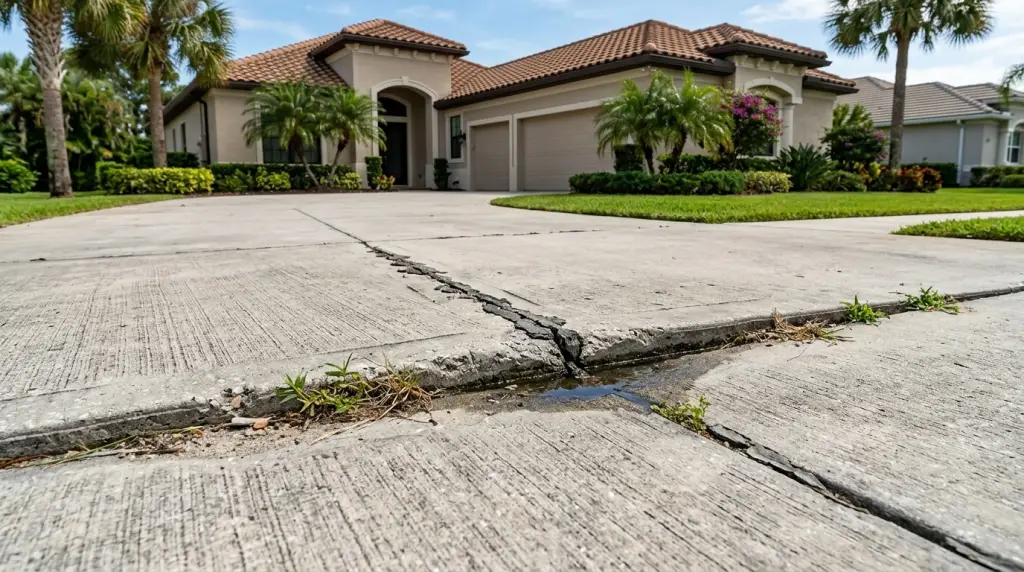
A widening gap can indicate that the filler has failed, the concrete has moved, or the soil beneath one side has settled.
Although a small gap may seem harmless, it can allow water and debris to enter. In turn, this can accelerate erosion and damage beneath the slab.
Chipped or Crumbling Edges
When joint material fails, the concrete edges may begin to chip, flake, or break apart. This condition is known as spalling.
Furthermore, spalling near an expansion joint can indicate that the joint is allowing water to reach the concrete edges or that debris is preventing normal movement.
Cracks Beside the Joint
Expansion joints are designed to control movement. If cracks form parallel to the joint or extend outward from it, the joint may no longer be absorbing movement correctly.
Possible causes include failed sealant, trapped debris, improper joint depth, or soil settlement beneath the slab.
Water Pooling Near the Joint
Water that repeatedly pools near an expansion joint may indicate poor drainage, a low section of concrete, or settlement beneath the slab.
Over time, this water can weaken the soil below and increase the likelihood of sinking or uneven concrete. Therefore, drainage should be checked as part of any concrete expansion joint repair assessment.
Weeds Growing Through the Joint
Vegetation growing through an expansion joint usually means the filler has failed and soil has entered the opening.
In addition, roots can hold moisture in the joint and prevent the concrete from moving normally. Removing the vegetation without replacing the failed joint material will usually provide only a temporary improvement.
How Failed Joints Damage Concrete
A damaged expansion joint can become the starting point for more extensive concrete problems. The process often develops in several stages:
The sealant cracks, shrinks, or separates.
Water and debris enter the joint.
Soil beneath the concrete becomes weak or eroded.
The slabs lose consistent support.
Cracks and spalling develop near the joint.
One section begins to sink or lift.
Trip hazards and drainage problems become more noticeable.
Consequently, a small joint failure can eventually become a larger driveway, sidewalk, patio, pool deck, or garage floor repair.
Professional concrete expansion joint repair is most effective when completed before water intrusion and soil movement affect the surrounding slab.
Common Areas Where Expansion Joints Fail
Expansion joint damage can occur on almost any concrete surface. Still, some locations are especially vulnerable because of heavy loads, water exposure, or frequent movement.
Driveways
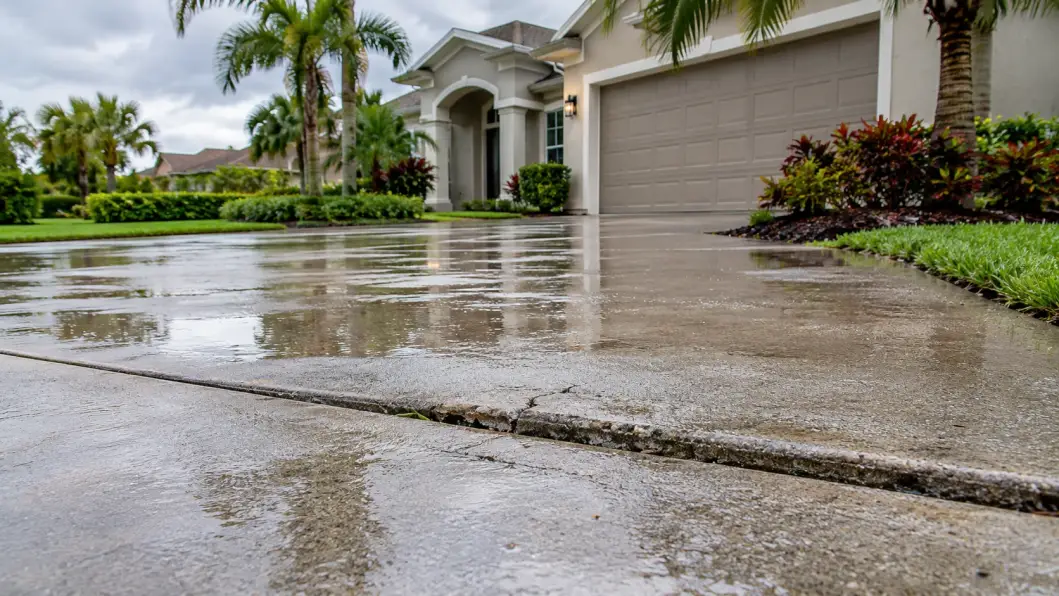
Driveways experience vehicle weight, direct sunlight, rain, irrigation, and roof runoff. When the joints fail, water may enter below the slab and contribute to cracking, settlement, or uneven edges near the garage.
Pool Decks
Pool decks are exposed to water, chemicals, humidity, and intense heat. In addition, movement around the pool coping can place extra stress on deck joints.
If a joint fails, water may migrate beneath the deck and contribute to cracking, settlement, or separation near the pool edge.
Patios and Walkways
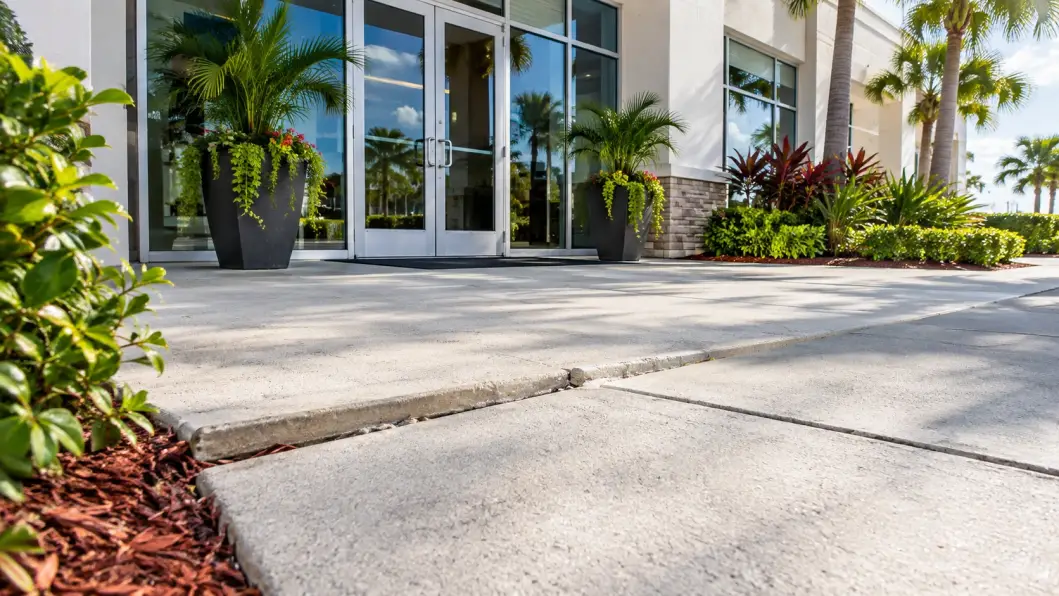
Patios and sidewalks are often affected by landscaping, irrigation, tree roots, and soil movement. As a result, open joints can become trip hazards or pathways for water to undermine the concrete.
Garage Floors
Garage floors experience vehicle loads, moisture, cleaning chemicals, and temperature changes. A damaged joint can allow moisture below the slab and may cause cracking along the floor edges.
Commercial Concrete
Parking lots, loading areas, warehouse floors, ramps, and commercial walkways experience repeated traffic and heavy loads. Therefore, failed joints can create uneven surfaces, maintenance problems, and liability risks.
Concrete Expansion Joint Repair Options
The best repair method depends on whether the problem is limited to the sealant or whether settlement, voids, and concrete damage have already developed.
Remove Failed Sealant and Debris
First, the old sealant, filler, dirt, weeds, sand, and loose material must be removed. The joint should be cleaned back to sound concrete.
This preparation matters because new material will not bond reliably to dirty, loose, or contaminated surfaces.
Repair Damaged Concrete Edges
If the concrete along the joint has chipped or deteriorated, the damaged edges may need to be rebuilt before the sealant is installed.
By restoring the edges first, the repair team can create a cleaner joint profile and improve the long-term performance of the new sealant.
Install a Backer Rod
A backer rod is a flexible foam material placed below the sealant. It controls sealant depth and helps the sealant move properly.
Additionally, the backer rod prevents the sealant from bonding to the bottom of the joint. This allows the sealant to stretch and compress more effectively.
Apply Flexible Polyurethane Sealant
For many exterior horizontal joints, a self-leveling polyurethane sealant is suitable. It flows into the joint and remains flexible as the concrete moves.
For vertical or sloped surfaces, a non-sag polyurethane sealant may be more appropriate. The correct product depends on the joint location, width, moisture exposure, movement, and traffic conditions.sakrete+3
Concrete Leveling and Void Filling
If water has washed soil away from beneath the slab, resealing the joint alone may not solve the problem.
In that situation, polyurethane foam injection can help fill hidden voids, stabilize weak soil, and lift settled concrete when the slab remains suitable for repair. After the slab is properly supported, the expansion joint can be cleaned and resealed.
This combined approach is particularly useful for damaged driveways, sidewalks, patios, and pool decks with both joint failure and settlement.
Can You Repair an Expansion Joint Yourself?
Minor maintenance may be possible when the joint is shallow, the concrete is level, and no settlement is present. For example, a homeowner may be able to clean a narrow joint and replace a small section of flexible sealant.
However, professional evaluation is recommended when you notice:
Uneven concrete slabs.
Large or widening cracks.
Significant spalling.
Repeated water pooling.
Soft soil beside the concrete.
Hollow-sounding areas.
Gaps near a foundation or pool.
Repeated failure after previous repairs.
In these situations, the visible joint may only be a symptom of a deeper issue. Therefore, a professional inspection can determine whether the area needs sealant replacement, concrete leveling, void filling, drainage correction, or structural repair.
How to Prevent Future Joint Failure
Regular maintenance can extend the life of expansion joints and protect the surrounding concrete.
Inspect Joints Every Year
Walk around the property at least once a year. Afterward, inspect the concrete again following major storms or periods of heavy rain.
Look for missing sealant, cracks, debris, weeds, chipped edges, stains, and uneven slabs.
Keep Joints Clean
Remove mulch, sand, leaves, weeds, and other debris before they become compacted inside the joint. A clean joint can move more freely and drain more effectively.
Control Water Around Concrete
Make sure gutters, downspouts, irrigation systems, and landscape grading direct water away from concrete slabs.
In addition, avoid allowing sprinklers to spray continuously onto expansion joints, driveway edges, or pool deck seams.
Repair Small Problems Early
A small gap in the sealant is much easier to repair than a settled slab. For that reason, early concrete expansion joint repair can help reduce water intrusion and prevent more extensive damage.
Monitor Settlement
If concrete begins to sink, separate, or develop trip hazards, do not assume that crack filler alone will solve the issue.
Instead, check for possible voids, drainage problems, soil erosion, or inadequate support beneath the slab.
Frequently Asked Questions
What causes concrete expansion joints to fail?
Concrete expansion joints commonly fail because of aging sealant, UV exposure, water intrusion, trapped debris, soil settlement, and repeated concrete movement.
Can failed expansion joints cause concrete cracks?
Yes. When a joint cannot absorb movement properly, stress can transfer into the surrounding slab and cause cracking, chipping, or spalling.
How often should concrete expansion joints be replaced?
There is no universal replacement schedule. Inspect the joints annually and replace the sealant when it becomes cracked, hard, detached, shrunken, or missing.
What is the best sealant for concrete expansion joints?
Flexible polyurethane sealant is commonly used for exterior concrete joints. The correct product depends on whether the joint is horizontal, vertical, sloped, exposed to traffic, or frequently wet.sakrete+2
Can water under an expansion joint cause settlement?
Yes. Water can weaken or wash away soil beneath the slab, creating voids that lead to cracked, sinking, or uneven concrete.
Can polyurethane foam repair settlement near an expansion joint?
In suitable situations, polyurethane foam injection can fill voids, stabilize weak soil, and lift supported concrete. However, the slab and surrounding conditions should be evaluated first.
Should I repair an expansion joint near my foundation?
Yes. Water entering a joint next to a home can contribute to drainage issues and soil movement near the foundation. Therefore, the area should be assessed before the damage worsens.
Restore and Protect Your Concrete
A failed expansion joint may look like a narrow gap, but it can allow water, debris, soil movement, and cracking to spread through your concrete surface.
Fortunately, early action can protect your driveway, patio, pool deck, walkway, garage floor, or commercial slab from more extensive damage. The right repair may involve sealant replacement, concrete edge repair, drainage improvements, leveling, or void filling.
SlabFix provides professional concrete expansion joint repair, concrete leveling, polyurethane foam injection, and void-filling solutions for Florida properties. If you notice open joints, cracking, chipped edges, pooling water, or sinking concrete, contact SlabFix for an assessment and a repair plan that addresses the cause—not just the visible crack.
📞 Call SlabFix today at 407-379-2585 to schedule a professional seawall inspection and learn more about the most effective solutions for your property.