What Is a Seawall Tie Rod and How Does Corrosion Affect Waterfront Stability?
A seawall may look like a simple concrete barrier along the water, but its real strength depends on more than the panels you can see. Behind many concrete seawalls is a hidden anchoring system designed to resist the enormous pressure of soil, groundwater, tides, and storm conditions.
One of the most important parts of that system is the seawall tie rod.
When tie rods corrode, loosen, or fail, a seawall can begin to lean, bow, crack, and lose the support that protects your waterfront property. For Florida homeowners, understanding this hidden component can make the difference between an early repair and a much more expensive seawall replacement.
This guide explains what a seawall tie rod is, why corrosion is such a serious concern in Florida, the warning signs to watch for, and how professional seawall repair Florida services can help stabilize a failing wall before the damage spreads.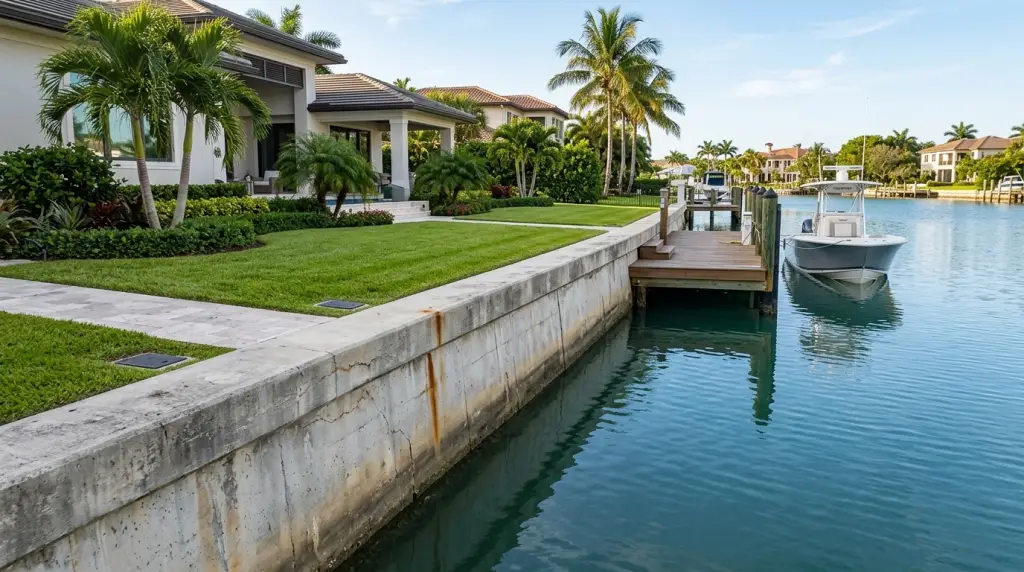
What Is a Seawall Tie Rod?
A seawall tie rod, also called a tieback rod or anchor rod, is a structural steel rod that connects the seawall face to an anchor system buried farther inland.
Think of it as the hidden support cable that keeps the seawall from rotating or falling toward the water.
A typical tieback system includes:
The seawall panels or wall face
A concrete cap or waler beam
Steel tie rods that extend behind the wall
A buried anchor, often called a deadman
Stable soil that holds the anchor in place
The seawall is constantly resisting pressure from the soil and water behind it. Tie rods transfer that pressure away from the wall and into the buried anchor system. Without properly functioning tie rods, the wall must fight those forces on its own — and eventually, it can begin to move.
For this reason, seawall repair Florida projects often include a careful review of tieback condition when there is visible leaning, cap rotation, cracking, or soil loss near the waterfront.
Why Are Tie Rods So Important for Waterfront Stability?
A seawall does not only hold back water. In many cases, the greater force is actually coming from the landward side of the wall.
Backfill soil, saturated ground, heavy rain, high water tables, pool decks, patios, landscaping, and nearby structures can all create pressure behind the seawall. Tie rods help control that force and keep the wall aligned.
When tie rods are strong and properly tensioned, they help the seawall:
Stay vertical and resist outward movement
Reduce the risk of bowing or rotation toward the canal
Support the concrete cap and wall panels
Protect the yard from soil loss and settlement
Maintain the integrity of nearby decks, pavers, pools, and structures
When they fail, the seawall may gradually tilt toward the water. In more serious cases, individual panels can separate, the cap can crack, and the soil behind the wall can begin to sink.
That is why a leaning wall is never something to ignore. It may be one of the clearest signs that the hidden anchoring system is no longer doing its job.
Why Seawall Tie Rods Corrode in Florida
Florida is one of the most challenging environments for steel seawall components. Saltwater, brackish canals, high humidity, frequent rainfall, groundwater, and storm exposure all create conditions that accelerate corrosion.
Corrosion occurs when steel reacts with moisture and oxygen. In coastal areas, salt makes that process faster and more aggressive.
Saltwater and Brackish Water Exposure
Saltwater is especially damaging to unprotected steel. Even if the tie rod is buried, moisture and salt can reach the metal through the soil, cracks in the cap, open joints, or groundwater movement.
Over time, the steel may lose thickness and strength. What once was a heavy structural rod can gradually weaken until it can no longer resist the pressure behind the seawall.
Constant Moisture in Coastal Soil
Tie rods often sit in damp soil for years. In Florida, that soil may stay wet for long periods because of high water tables, tidal movement, poor drainage, or heavy rain.
The longer steel stays exposed to moisture, the higher the risk of oxidation and corrosion. This is especially concerning for older seawalls that may have original steel tiebacks with limited corrosion protection.
Cracks and Cap Damage
Cracks in the seawall cap can create direct pathways for water to reach embedded steel. Once water enters the concrete, corrosion can spread from the cap reinforcement to tie rod connections.
Rusting steel expands as it deteriorates. That expansion can push against the surrounding concrete and cause cracking, spalling, or crumbling along the cap.
Poor Drainage and Hydrostatic Pressure
Drainage problems create two major risks:
Water pressure builds behind the wall.
Wet soil keeps tie rods and anchors exposed to moisture for longer periods.
Blocked weep holes, failed drainage systems, and poor yard grading can all increase the pressure against the wall while also speeding up deterioration of hidden components.
A complete seawall repair Florida strategy should address drainage and soil conditions, not only visible cracks on the wall face.
Warning Signs of Seawall Tie Rod Corrosion
Tie rods are usually buried, so you may not be able to see the corrosion directly. Instead, homeowners need to watch for changes in the seawall, cap, yard, and nearby hardscape.
Here are the most common warning signs.
A Seawall Leaning Toward the Water
A seawall that leans, bows, or rotates toward the canal may be losing tieback support. As the rods corrode or lose tension, the wall becomes less able to resist pressure from the soil behind it.
Even a modest lean should be professionally evaluated. Movement tends to become more serious over time, especially after heavy rain, storms, or high-water events.
Rust Stains on the Concrete
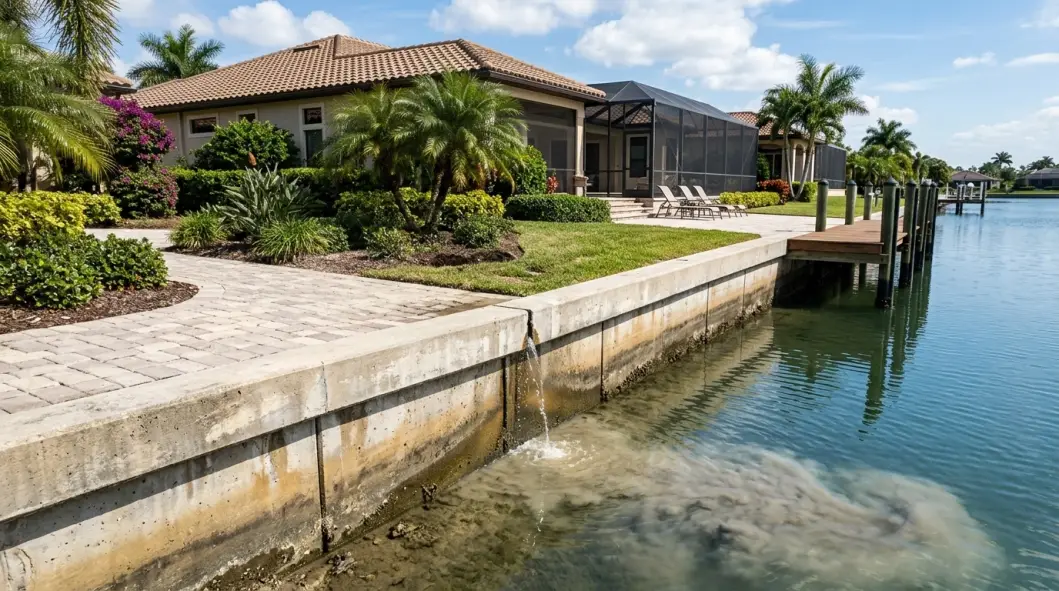
Orange, brown, or reddish streaks on concrete panels or along the cap can indicate corrosion inside the structure. These stains are often more than a cosmetic issue.
They may point to deteriorating embedded steel, cap reinforcement, or tie rod connections. If rust staining appears alongside cracks or wall movement, schedule an inspection as soon as possible.
Cracks in the Seawall Cap
Horizontal cracks, cracks running parallel to the wall, or crumbling concrete along the cap may indicate that the wall is rotating or that internal steel is corroding.
A damaged cap can also allow more water into the system, creating a cycle of corrosion, cracking, and additional seawall movement.
Panel Separation or Open Joints
When a seawall shifts, the panels may begin to separate. You may see widening joints, uneven transitions, gaps beneath the cap, or openings where water and soil can travel.
Once water starts moving through these openings, it may carry fine soil particles out through the wall. This process can create voids behind the seawall and reduce support for the tieback system.
Sinkholes, Low Spots, or Soft Soil Behind the Wall
Soil loss behind a seawall is often a hidden problem until the ground begins to settle. Watch for:
Soft or spongy ground
Low spots in the lawn
Sinking pavers
Depressions near the wall
Gaps under patios or pool decks
Small sinkhole-like openings
These signs can indicate that water is washing soil out through joints, cracks, or drainage failures. The soil supporting the tieback anchors may be weakening at the same time.
How Tie Rod Corrosion Affects Your Entire Property
A corroded tie rod does not only affect the seawall itself. It can create a chain reaction that spreads inland across your property.
The typical progression often looks like this:
Tie rods begin to corrode or lose tension.
The seawall starts to lean or rotate outward.
Cracks and joints open, allowing water and soil to move.
Voids develop behind the wall as backfill washes away.
The yard begins to settle into those voids.
Patios, pavers, driveways, pool decks, and nearby slabs lose support.
Repair costs increase as more of the property becomes affected.
This is why effective seawall repair Florida work must focus on the full system. Repairing only one crack on the visible wall may not solve the deeper anchor, drainage, or soil problem causing the movement.
Can a Corroded Seawall Tie Rod Be Repaired?
In many cases, yes. The best solution depends on the age of the seawall, severity of the corrosion, extent of wall movement, soil conditions, and overall structural condition of the panels and cap.
A professional inspection may recommend one or more of the following options.
Tie Rod Replacement
When existing tie rods are severely corroded, excavation may be needed to access and replace them. New rods can restore the connection between the seawall and its buried anchor system.
This option may be appropriate when the wall is still structurally sound but the original tieback components have lost capacity.
Supplemental Helical Tiebacks
Helical tiebacks are engineered anchors installed into stable soil farther inland. They can provide added resistance and help prevent further wall movement.
In some cases, supplemental tiebacks may reduce the need for extensive excavation or full seawall replacement. The final design should be based on the wall’s condition and, when required, engineering recommendations.
Waler Beam Installation
A waler is a structural beam installed along the seawall to help distribute loads across multiple panels. It can work with new tiebacks to stabilize a wall that is bowing, rotating, or showing localized movement.
This approach may be used when the original cap or upper wall connection needs additional structural support.
Soil Stabilization and Void Filling
If erosion has created voids behind the seawall, replacing or stabilizing the lost soil is essential. Polyurethane foam injection can be used in appropriate situations to fill voids, bind loose soil, and improve support behind or beneath affected concrete areas.
However, foam injection should not be treated as a substitute for tieback replacement when the anchoring system itself has failed. The right solution may require both structural anchoring and soil stabilization.
Drainage Improvements
Restoring proper drainage is one of the most important ways to reduce future stress on the seawall.
A repair plan may include:
Clearing or repairing weep holes
Improving yard drainage
Sealing joints and cap cracks
Installing filter fabric where appropriate
Reducing water pressure behind the wall
Drainage protects the repaired system by allowing water to exit while helping keep valuable backfill soil in place.
When Does a Seawall Need Replacement Instead of Repair?
Not every seawall can be saved with new tie rods or supplemental anchors. Replacement may be the safer option if the structure has widespread damage.
Replacement may be recommended when:
The wall has a severe lean or major rotation
Panels are cracked through or badly displaced
The cap is extensively damaged or failing
Tie rods and reinforcement have widespread corrosion
Toe scour has undermined the base of the wall
Soil loss is extensive and structural support has been compromised
Multiple repairs have already failed or the wall is near the end of its useful life
A qualified seawall repair Florida contractor can help determine whether stabilization is realistic or whether replacement provides the safer long-term solution.
How to Protect Your Seawall From Future Corrosion
You cannot eliminate Florida’s coastal conditions, but you can reduce the chance that small issues turn into major structural problems.
Inspect the Wall Regularly
Walk your seawall several times a year and after major storms. Look for cracks, rust stains, cap damage, settling soil, open joints, and changes in alignment.
Take photos from the same locations over time. This makes it easier to spot gradual movement.
Keep Drainage Systems Working
Remove debris from visible weep holes and make sure stormwater does not collect behind the wall. Persistent standing water can increase hydrostatic pressure and keep buried steel exposed to moisture.
Repair Cracks and Joints Early
Minor cracks can become water pathways. Sealing cracks and open joints early may help reduce water intrusion and soil migration before major voids develop.
Watch the Yard, Not Just the Wall
The condition of your yard can reveal hidden seawall problems. New low spots, soft soil, sinking pavers, or cracks in a nearby pool deck may point to erosion behind the wall.
Schedule a Professional Assessment
If you see any signs of leaning, active cracking, rust staining, or settlement, schedule an expert inspection. Early seawall repair Florida intervention can preserve more options and help avoid a larger replacement project later.
Frequently Asked Questions
What is a seawall tie rod?
A seawall tie rod is a steel anchor rod that connects the seawall to a buried inland anchor. It helps stop the wall from leaning or rotating toward the water.
What causes seawall tie rod corrosion?
Saltwater, brackish groundwater, high humidity, wet soil, cracked concrete, and poor drainage can all accelerate corrosion of steel tie rods.
Can a corroded seawall tie rod cause a wall to lean?
Yes. When tie rods corrode or fail, the seawall loses important structural restraint and may begin to lean, bow, crack, or rotate toward the canal.
Are rust stains on a seawall serious?
Rust stains can be an early warning of corrosion in embedded steel, reinforcement, or tie rod connections. They should be inspected, especially if they appear with cracks or movement.
Can a leaning seawall be repaired?
Many leaning seawalls can be stabilized with tieback replacement, helical anchors, drainage improvements, soil stabilization, or a combination of methods. Severe damage may require replacement.
Does polyurethane foam fix failed tie rods?
Polyurethane foam can fill voids and stabilize loose soil, but it does not replace a failed structural tie rod. If the anchoring system has failed, new tiebacks or engineered anchors may be necessary.
How often should a Florida seawall be inspected?
A visual check several times per year is recommended, along with a professional inspection at least annually or after a major storm, new cracks, rust staining, soil loss, or visible movement.
Protect Your Waterfront Before Damage Spreads
A seawall tie rod may be hidden underground, but its condition can affect your entire waterfront property. Corrosion can slowly weaken the anchoring system, allowing the wall to lean, soil to wash away, and nearby concrete surfaces to settle.
If your seawall has rust stains, cap cracks, open joints, sinking soil, or visible movement, do not wait for the damage to become a full structural failure.
SlabFix provides professional seawall repair Florida solutions designed to address soil loss, voids, water intrusion, concrete settlement, and waterfront stabilization. Contact our team for an assessment and find out what is happening behind your seawall before a small warning sign becomes a larger repair project.
📞 Call SlabFix today at 407-379-2585 to schedule a professional seawall inspection and learn more about the most effective solutions for your property.