Why Does Concrete Sink After Heavy Rain? Florida Drainage, Soil Loss, and Repair Options
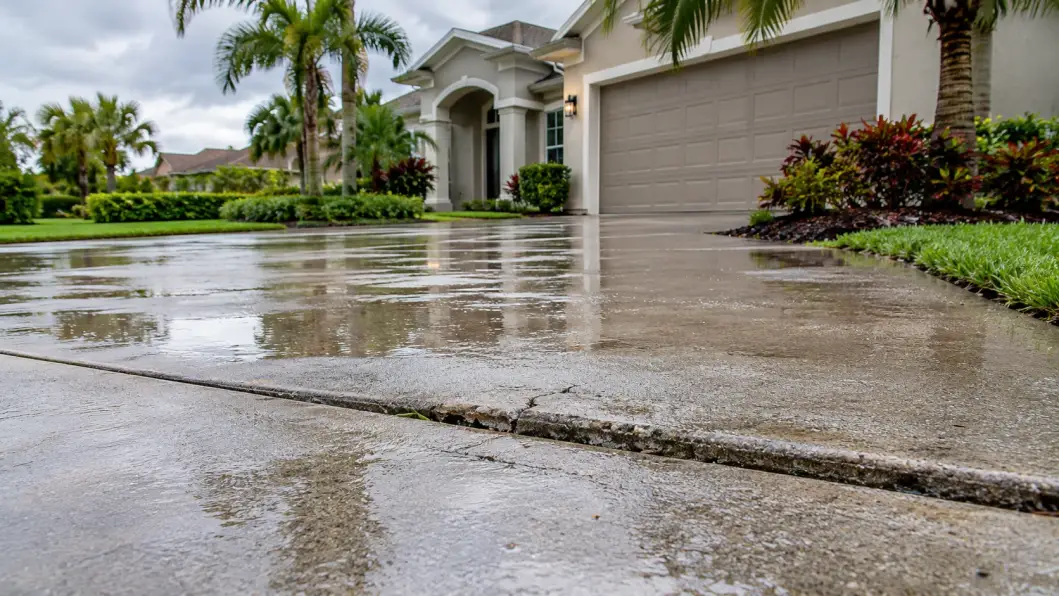
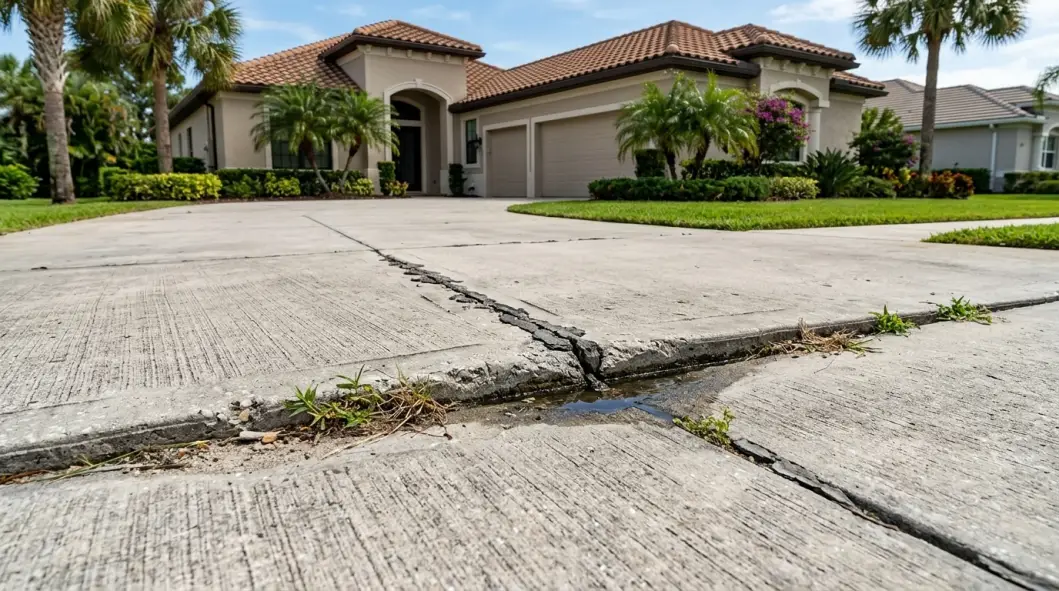
Heavy rain in Florida can transform a dry yard into a flooded landscape within hours. For many homeowners and property managers, the storm passes — but new problems appear in the concrete. Driveways sink, sidewalks become uneven, patios drop, and pool decks develop trip hazards.
If you notice concrete sinking after rain in Florida, you are not alone. This common problem occurs when heavy rainfall washes away supporting soil, creates voids beneath slabs, or exposes drainage failures. Understanding why this happens and how to fix it can save you from costly concrete replacement and prevent further damage to your property.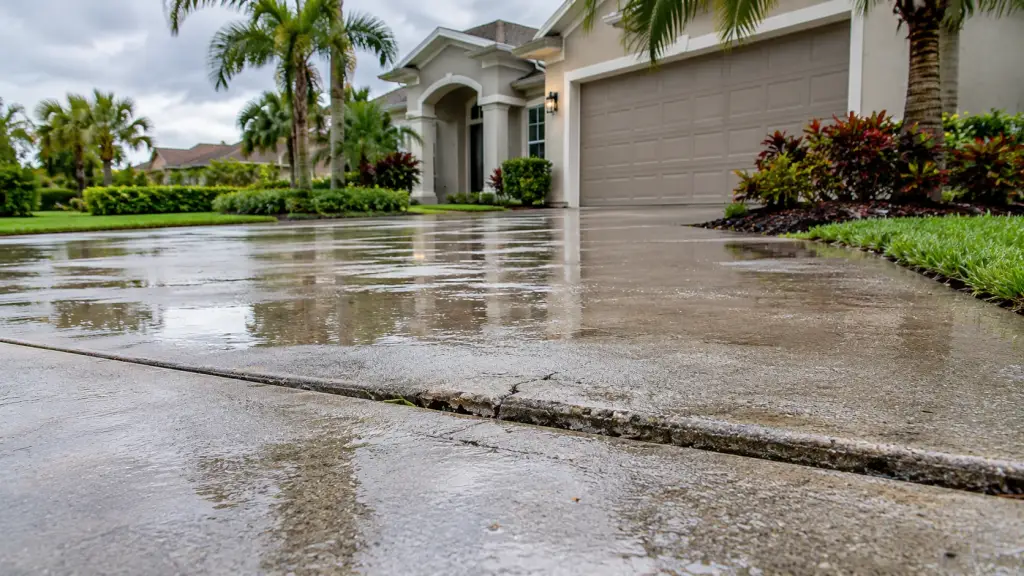
Why Heavy Rain Accelerates Concrete Settlement in Florida
Florida’s unique combination of sandy soil, high water table, frequent storms, and intense rainfall creates perfect conditions for concrete settlement after heavy rain.
Sandy Soil and Poor Compaction
Florida’s sandy soils drain quickly but provide less structural support than clay or rocky soils. When contractors pour concrete over poorly compacted sand, the soil can compress further when saturated with water.
Heavy rain saturates the soil beneath concrete slabs, reducing its load-bearing capacity. This can cause the slab to settle into the softened ground, especially if the original compaction was inadequate.
High Water Table Effects
Florida’s high water table means groundwater sits close to the surface in many areas. During heavy rain, the water table can rise rapidly, saturating soil that normally stays relatively dry.
When groundwater levels fluctuate frequently, soil beneath concrete can shift, compress, or wash away. This movement creates voids that allow concrete slabs to sink.
Intense Rainfall Patterns
Florida storms can dump several inches of rain in a short period. This intense rainfall overwhelms drainage systems, creates surface runoff, and saturates soil faster than it can absorb water.
The combination of volume and speed creates significant hydrostatic pressure beneath concrete slabs. This pressure can push water through weak points, carry soil particles away, and create voids that lead to settlement.
How Drainage Failures Contribute to Concrete Sinking
Poor drainage is often the root cause of concrete sinking after rain in Florida. When water cannot escape properly, it finds paths of least resistance — often beneath your concrete slabs.
Clogged or Missing Weep Holes
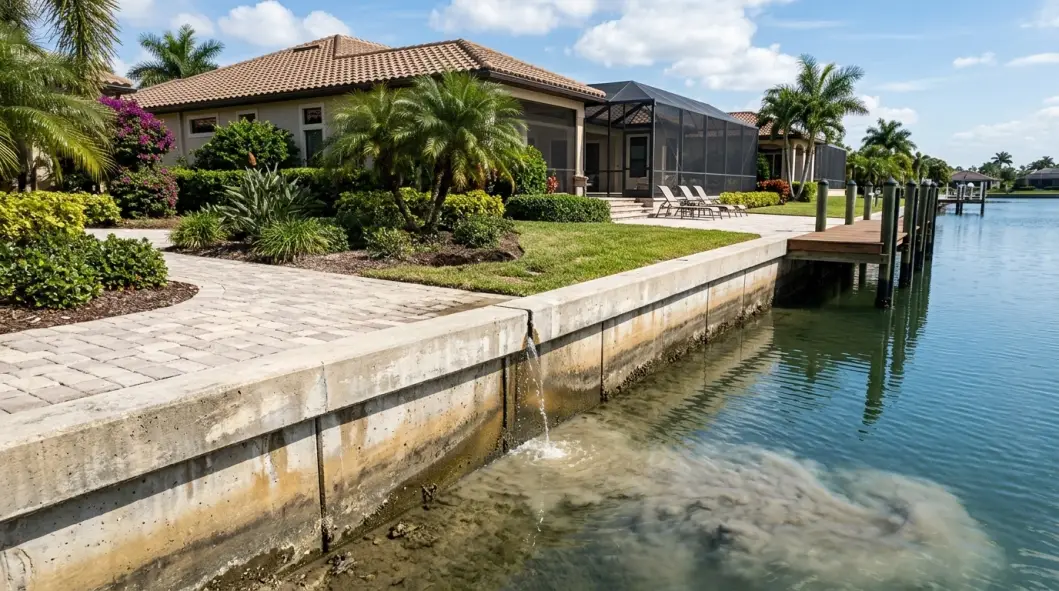
Seawalls, retaining walls, and some concrete structures include weep holes to relieve water pressure. When these drain holes clog with debris, sediment, or biological growth, water builds pressure behind or beneath the concrete.
This trapped water can force its way through cracks, joints, or weak points, carrying soil particles and creating voids.
Improper Grading and Slope
Concrete should slope away from buildings and drain toward appropriate outlets. When grading is incorrect or settles over time, water pools near foundations, walkways, or driveways instead of flowing away.
Standing water near concrete increases the likelihood of soil washout and slab settlement.
Downspout and Gutter Issues
Roof runoff from downspouts can concentrate large volumes of water in small areas. If downspouts discharge directly next to driveways, sidewalks, or foundations, the concentrated flow can erode supporting soil.
Broken or disconnected gutters allow water to cascade down building walls and pool near concrete edges, accelerating erosion and settlement.
Broken Irrigation Lines
Leaking irrigation lines can saturate soil beneath concrete continuously, even when it is not raining. Over time, this constant moisture can wash away fine soil particles and create voids.
When heavy rain adds to an already saturated area, the combined water volume can trigger sudden settlement.
Signs That Rain-Related Settlement Is Happening
Early detection can prevent minor settlement from becoming a major repair project. Watch for these warning signs after heavy rain:
Visible Slab Movement
Driveways or sidewalks that appear lower than before the storm.
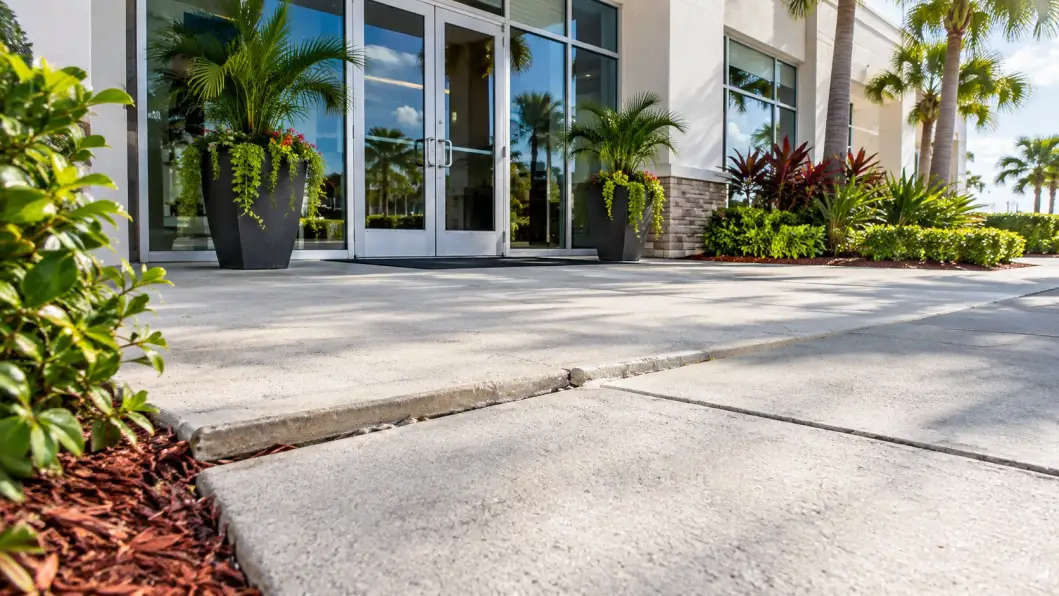
Concrete slabs that no longer align with adjacent surfaces.
Steps or entryways that seem higher relative to the ground.
Water Pooling Patterns
Water that collects in specific areas after rain instead of draining away.
Puddles that remain long after the storm has passed.
Water flowing toward buildings instead of away from them.
Cracks and Separation
New cracks appearing in concrete after storms.
Existing cracks that widen or show height differences.
Gaps forming between concrete slabs or at transitions.
Soil Changes
Soft or spongy ground near concrete edges.
Depressions or low spots in landscaping adjacent to slabs.
Visible soil erosion or washout near concrete.
Hollow Sounds
Concrete that sounds hollow when tapped with a solid object.
Slabs that feel unstable or shift slightly underfoot.
Normal Moisture Movement vs. Serious Soil Loss
Not all concrete movement after rain indicates a serious problem. Understanding the difference helps you decide when to take action.
Normal Moisture Movement
Minor expansion and contraction due to temperature and humidity changes.
Small, hairline cracks that do not widen over time.
Slight elevation changes that stabilize after the soil dries.
No visible soil loss or voids beneath the slab.
Serious Soil Loss
Concrete that continues to sink or settle after multiple rain events.
Voids visible beneath slab edges or through cracks.
Significant height differences between adjacent slabs.
Water carrying visible soil particles away from the area.
Cracks that widen or multiply over time.
Trip hazards that develop or worsen after storms.
If you observe signs of serious soil loss, professional evaluation is recommended before the problem spreads.
How Voids Form Under Slabs After Storms
Understanding the void formation process helps explain why concrete sinks after heavy rain.
The Erosion Process
Water infiltration. Heavy rain saturates soil and creates surface runoff.
Soil particle movement. Water flows through soil pores and carries fine particles.
Channel formation. Flowing water creates small channels or “pipes” in the soil.
Void expansion. As more soil washes away, voids grow larger beneath the slab.
Loss of support. The concrete loses uniform support and begins to settle.
Visible damage. Cracks, uneven surfaces, and trip hazards appear.
Common Void Locations
Beneath driveway edges near drainage areas.
Under sidewalk sections adjacent to landscaping.
Below pool deck sections near pool equipment or drains.
Around foundation edges where water pools.
Near tree roots that create natural water channels.
Repair Options for Rain-Damaged Concrete
When concrete sinking after rain in Florida occurs, several repair options can restore stability and prevent future problems.
Drainage Correction
Addressing the water source is often the first step in any repair plan.
Solutions may include:
Regrading soil to direct water away from concrete.
Extending downspouts to discharge water farther from slabs.
Installing French drains or channel drains to collect and redirect water.
Repairing broken irrigation lines or drainage pipes.
Clearing clogged weep holes and drainage outlets.
Polyurethane Void Filling
Polyurethane foam injection can fill voids beneath settled slabs and stabilize weak soil.
The process involves:
Drilling small access holes through the concrete.
Injecting expanding polyurethane foam beneath the slab.
Foam fills voids and binds loose soil particles.
Slab lifts toward its original level as foam expands.
Access holes are patched, and the area is ready for use.
Benefits include:
Minimal disruption to property.
Fast completion (often within hours).
Water-resistant foam that does not absorb moisture.
Long-lasting soil stabilization.
Concrete Leveling
Concrete leveling raises settled slabs to their proper elevation while preserving the existing concrete.
Leveling is appropriate when:
The slab is structurally sound.
Settlement is the primary issue.
Cracks are minor and do not affect structural integrity.
You want to avoid full replacement costs.
Full Concrete Replacement
Replacement may be necessary when:
Concrete is severely cracked or broken into multiple pieces.
The slab has extensive structural damage.
Underlying soil problems require major excavation.
Previous repairs have failed repeatedly.
Preventive Tips for Florida Homeowners and Property Managers
Prevention is always less expensive than repair. These steps can help protect your concrete from rain-related settlement.
Improve Drainage Before Problems Start
Ensure all concrete surfaces slope away from buildings.
Install proper drainage systems in low-lying areas.
Maintain gutters and downspouts in good condition.
Direct roof runoff away from driveways and walkways.
Monitor Soil Conditions
Watch for soft spots or depressions near concrete edges.
Address erosion immediately when you notice it.
Avoid overwatering landscaping near concrete slabs.
Consider soil testing if you plan new concrete installations.
Maintain Existing Concrete
Seal cracks promptly to prevent water infiltration.
Keep expansion joints in good condition.
Remove vegetation that grows through cracks or joints.
Inspect concrete after major storms.
Plan for Florida’s Climate
Choose appropriate concrete thickness and reinforcement for your area.
Ensure proper soil compaction before pouring new concrete.
Consider drainage improvements when installing new slabs.
Work with contractors who understand Florida soil conditions.
Frequently Asked Questions
Why does my driveway sink after rain?
Driveways often sink after rain because water washes away supporting soil beneath the slab. Poor drainage, inadequate compaction, or broken irrigation lines can accelerate this process.
Can heavy rain cause concrete to crack?
Yes. Heavy rain can saturate soil beneath concrete, creating voids that lead to settlement and cracking. Water infiltration through existing cracks can also worsen the problem.
How do I stop soil washout under my concrete?
Improve drainage by grading soil away from concrete, extending downspouts, installing proper drains, and repairing irrigation leaks. Polyurethane foam injection can also stabilize soil and fill voids.
Can polyurethane foam help after heavy rain settlement?
Yes. Polyurethane foam can fill voids created by soil washout, stabilize weak soil, and lift settled concrete. However, you should also address the drainage issue that caused the problem.
How long does concrete leveling last after rain damage?
Properly performed concrete leveling with polyurethane foam can last many years. The key is correcting the drainage issue that caused the settlement in the first place.
Should I wait for the soil to dry before repairing?
Not necessarily. A professional can evaluate whether immediate repair is advisable or whether waiting for soil conditions to stabilize makes sense. In some cases, prompt repair prevents further damage.
Will my insurance cover concrete sinking after rain?
Coverage depends on your policy and the cause of damage. Some policies cover sudden events like storm damage, while others exclude gradual settlement. Check with your insurance provider for specific coverage details.
How can I tell if there are voids under my concrete?
Signs of voids include hollow sounds when tapping the concrete, visible gaps beneath slab edges, water pooling in specific areas, and concrete that feels unstable underfoot. A professional inspection can confirm void presence.
Protect Your Concrete Before the Next Storm
Heavy rain in Florida is inevitable, but concrete damage does not have to be. Understanding why concrete sinking after rain Florida occurs and taking preventive action can save you from costly repairs and safety hazards.
If you notice sinking concrete, uneven slabs, or drainage problems after storms, address them promptly. Early intervention with proper drainage correction and soil stabilization can prevent minor issues from becoming major expenses.
SlabFix provides professional concrete leveling, polyurethane foam injection, and void filling services throughout Florida. Our team understands Florida’s unique soil and drainage challenges. Contact SlabFix today for a professional assessment of your concrete settlement issues and drainage concerns.
📞 Call SlabFix today at 407-379-2585 to schedule a professional seawall inspection and learn more about the most effective solutions for your property.