Do Pool Deck Cracks Mean Seawall Trouble? How Waterfront Settlement Spreads Across a Property
If you own a waterfront home in Florida, cracked concrete around the pool is more than a cosmetic annoyance — it can be an early warning that your soil is moving and that seawall erosion may already be at work beneath your yard. In many coastal case studies, pool deck cracking and settlement have been directly linked to voids and soil loss behind the seawall, not just normal wear on the concrete.
This guide explains when pool deck cracks are “just surface” and when they are a symptom of deeper waterfront settlement, how that settlement can spread from the seawall to the pool area, and why smart pool deck crack repair often goes hand‑in‑hand with seawall stabilization in Florida.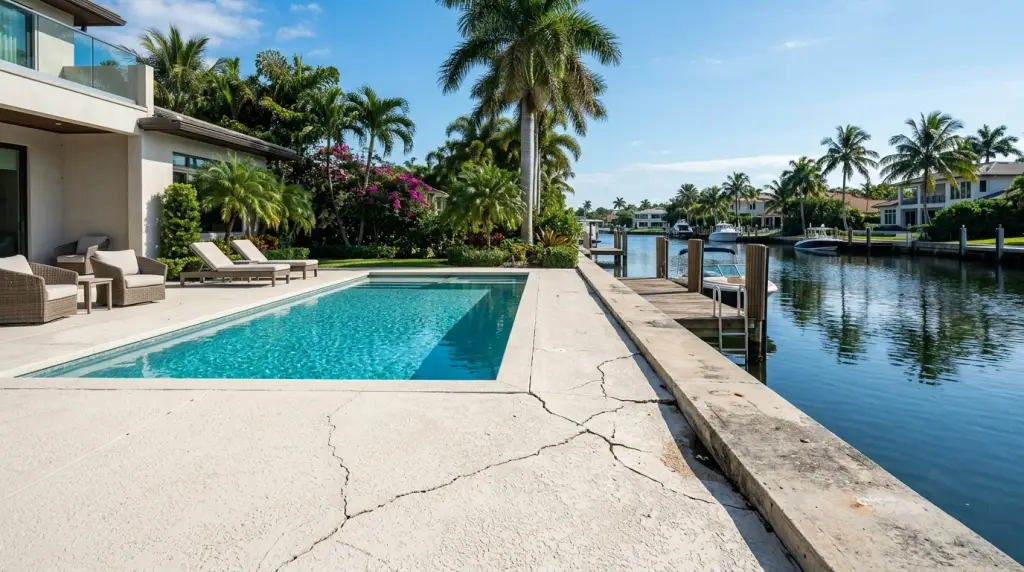
Why Pool Deck Cracks Deserve More Than a Quick Patch
On Florida properties, pool deck cracks almost never appear in isolation; they are usually driven by a combination of shifting soil, moisture, and expansion‑contraction cycles in the concrete. When the ground under the deck settles or washes out, slabs lose support, leading to widening cracks, uneven edges, and trip hazards around the pool.
Local concrete repair experts note that Florida’s sandy soils and heavy rains cause the sub‑base under pool decks to soften, settle, and shrink, which makes cracks more than just an aesthetic issue. Proper pool deck crack repair has to look beyond the surface line to ask a deeper question: is the soil beneath the slab stable, or is there a larger settlement problem moving across the property?
Symptoms of Structural vs. Cosmetic Pool Deck Cracks
Before deciding how to tackle pool deck crack repair, it helps to distinguish between minor cosmetic cracking and more serious structural cracking.
Common patterns include:
Hairline surface cracks under about 1/8 inch wide are often related to shrinkage or normal wear; they can usually be sealed to keep water out and prevent further deterioration.
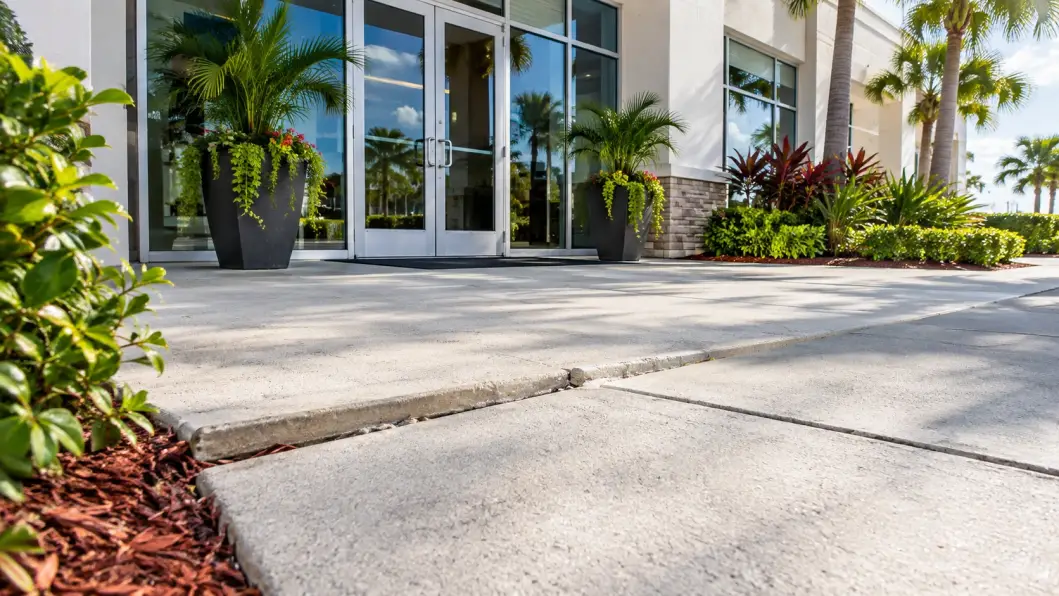
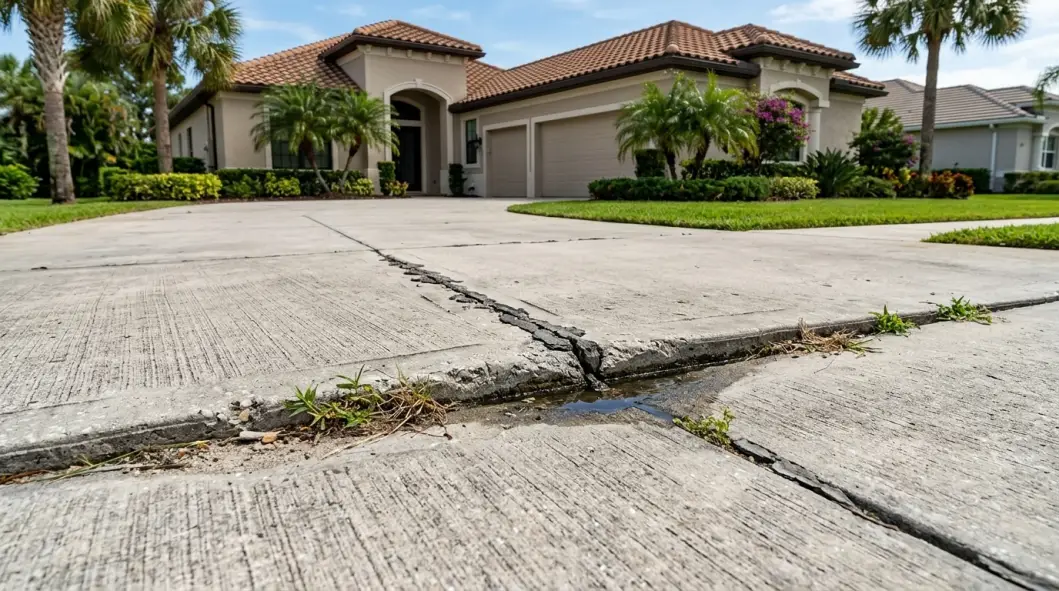
Wider, uneven or “stepped” cracks that change height from one side to the other typically indicate slab settlement or soil movement beneath the deck.
Branching, web‑like cracking across a large area often means the slab is fatiguing and underlying movement or moisture cycling is active, not just a single isolated defect.
Cracks that are widening, migrating, or accompanied by sunken slabs, standing water, or gaps at the pool edge are strong clues that simple surface pool deck crack repair will not address the real cause.
How Waterfront Settlement Starts at the Seawall and Migrates Inland
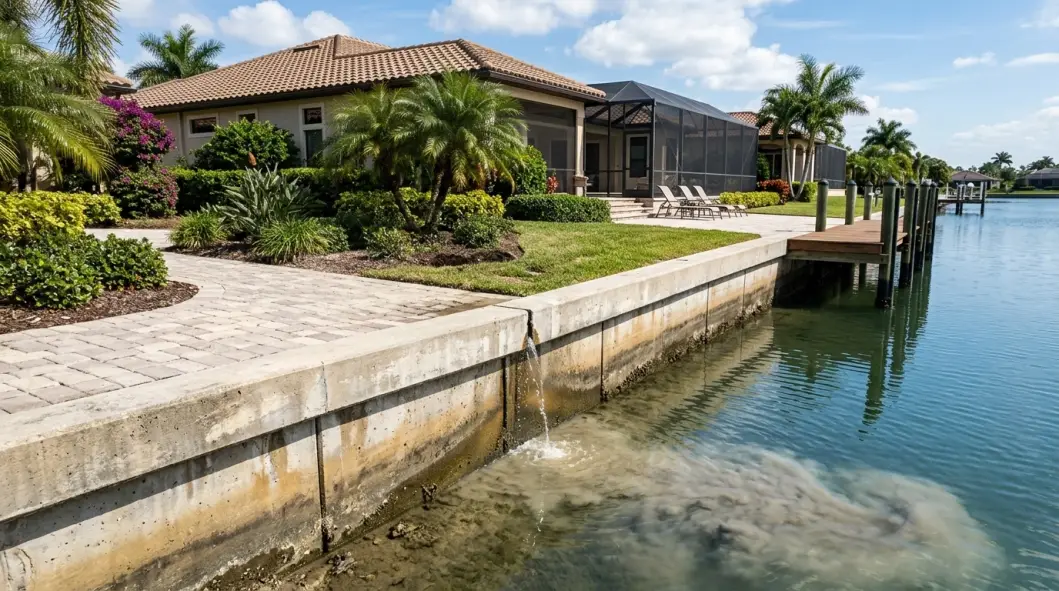
On many Florida lots, the seawall is the first line of defense against erosion — and also the first place where soil problems begin. When joints open or caps crack, water escaping through the wall carries fine sand with it, slowly carving out voids in the backfill that you can’t see from the canal side.
Waterfront erosion specialists describe a typical progression behind a failing seawall:
Early stage: Soft, spongy ground and small dips near the seawall as initial voids form in the backfill.
Building stage: Visible low spots in the yard as soil slumps into growing voids.
Spreading stage: Cracked or settling patios, tilting pavers, and uneven concrete surfaces as voids migrate inland toward hardscape.
Serious stage: Pool deck cracking or dropping, and localized sinkholes near the waterfront.
Critical stage: Leaning walls and foundation concerns once support soil is removed under structural elements.
In a documented St. Petersburg case, voids extending 10–15 feet behind a seawall caused noticeable subsidence around the pool area, including cracks in the pool deck and sinking pavers. Engineers traced the problem back to severe soil erosion and void formation behind the seawall, rather than a defect in the pool deck itself.
That’s why for many coastal properties, pool deck crack repair is not just about the deck; it is about understanding whether seawall erosion and backfill loss are quietly reshaping the entire waterfront.
When Pool Deck Cracks May Point to Seawall Trouble
Not every cracked pool deck means your seawall is failing, but certain patterns strongly suggest a waterfront‑wide settlement issue rather than a local concrete problem.
You should suspect seawall‑related trouble when:
Cracks and settlement are heaviest near the water side of the pool, especially in the band of deck closest to the seawall.
You see yard dips, soft spots, or sinkholes forming between the seawall and pool, not just near the house.
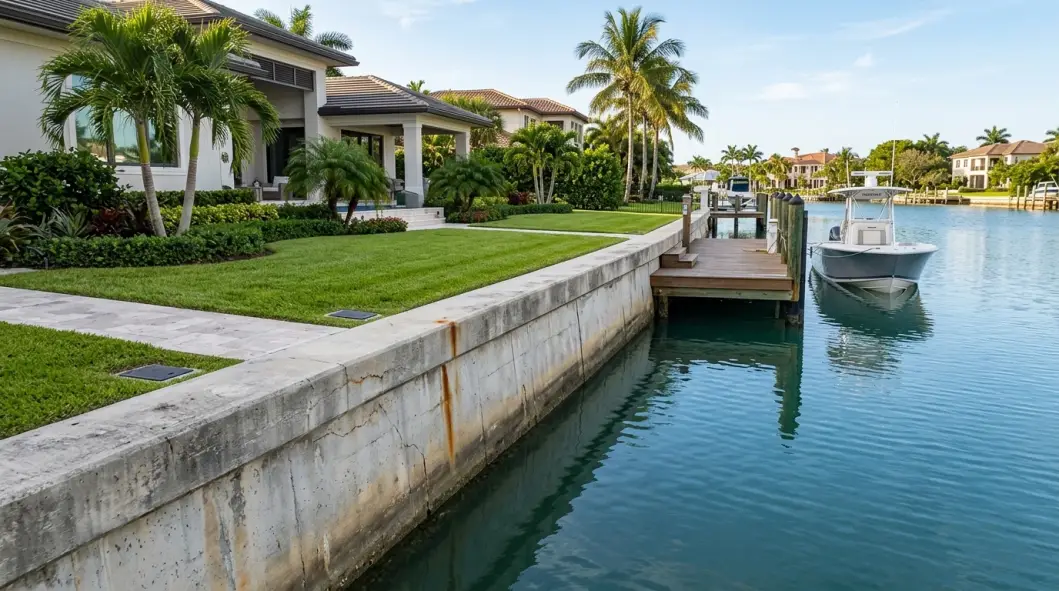
The seawall cap or panels show cracks, gaps at joints, or rust stains, while the pool deck cracks appeared over the same period.
Cracks and slab drops seem to follow a line parallel to the seawall, matching the direction where voids are migrating underground.
In these situations, surface‑only pool deck crack repair (patching or resurfacing) may give you a nicer‑looking deck temporarily, but it will not stop the soil loss pattern that’s already pushing inland from the seawall.
Why Treating the Pool Deck Alone Often Fails on Waterfront Properties
Contractors who specialize in pool deck crack repair in Florida frequently warn that cracks are symptoms, not root causes. When the underlying issue is soil settlement or erosion, patching cracks without stabilizing the ground is likely to lead to recurring damage.
Common reasons surface‑only fixes fail on waterfront lots include:
Active soil voids remain under the slab, so new cracks appear even after old ones are patched.
Water continues to move through the seawall or failing joints, so erosion behind the wall keeps eating away at support soil.
Resurfacing products restore the surface but not the structure, meaning the slab still rides on compromised ground.
In other words, durable pool deck crack repair on waterfront properties usually requires combining concrete work with soil stabilization and seawall leak control — a whole‑system approach instead of a patch on one component.
Integrated Repair: Seawall Stabilization Plus Pool Deck Crack Repair
The best long‑term outcomes reported in case studies come from projects that tie seawall stabilization and pool deck crack repair together in one plan. In the Halifax River seawall revitalization project, helical tiebacks, polyurethane foam injection behind the wall, and cap reconstruction successfully stopped soil erosion and ended pool deck subsidence at about 25% of full replacement cost.
A typical integrated approach on a Florida waterfront may involve:
1. Diagnosing Seawall Erosion and Backfill Loss
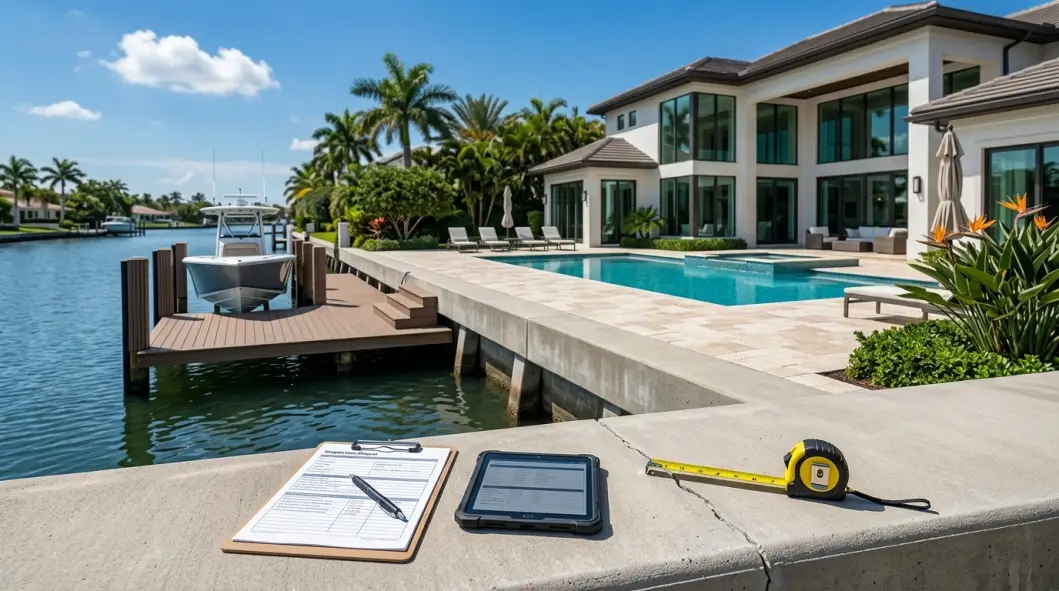
Inspecting seawall caps, joints, weep holes, and panels for cracks, gaps, and evidence of water leakage.
Probing behind the wall to locate voids and areas of weakened backfill.
2. Soil Stabilization and Void Filling
Injecting hydrophobic polyurethane foam or grout into voids behind the seawall to re‑support eroded areas and stop soil movement.
Stabilizing the soil under and around the pool deck where settlement has already undermined slabs.
By addressing the soil first, you give pool deck crack repair a stable base to bond to instead of a moving target.
3. Seawall Leak Control and Drainage Restoration
Sealing cracked caps and open joints so tide and rainwater stop pumping fine sand out of the backfill.
Cleaning or re‑establishing weep holes so groundwater exits through controlled paths rather than carving new channels.
With pressure relieved and leaks sealed, the source of ongoing erosion is reduced, which protects both the seawall and the pool deck.
4. Structural Pool Deck Crack Repair and Leveling
Using slab lifting (polyurethane foam jacking) to raise sunken pool deck slabs back toward their original elevation, eliminating trip hazards and gaps.
Repairing structural cracks with appropriate concrete or epoxy materials and, where needed, resurfacing worn areas once the slab is stable.
This combination preserves existing concrete where possible and focuses on restoring level, supported slabs rather than defaulting to full deck replacement.
How to Decide on the Right Level of Pool Deck Crack Repair
For Florida waterfront homeowners, the right pool deck crack repair strategy depends on how widespread the damage is and what’s driving it.
In general:
Isolated hairline cracks in otherwise stable, level slabs can often be sealed or patched as part of routine maintenance.
Cracks associated with sinking, tilting, or gaps at the pool coping usually warrant slab leveling or lifting plus soil stabilization, not just surface filler.
Patterns of cracking that track back toward the seawall, combined with yard dips or soft soil near the wall, are strong candidates for a combined seawall‑and‑deck soil repair plan.
Spending on structural soil and seawall work first often makes later surface pool deck crack repair more durable and cost‑effective, because the movement underneath has been addressed.
Practical Action Steps for Florida Waterfront Homeowners
If you’re noticing pool deck cracks on a waterfront property and wondering whether they signal seawall trouble, here’s a practical checklist based on coastal repair experience:
Map the cracks and settlement
Walk the entire pool deck and mark where cracks, low spots, or uneven slabs occur, noting whether they are closer to the seawall, the house, or both.Inspect the seawall from land and water if possible
Look for cap cracks, open joints, rust stains, wet spots, or soft ground just behind the wall — all signs that backfill may be eroding.Avoid purely cosmetic “quick fixes”
Resist the urge to simply caulk or resurface without understanding the soil; surface‑only pool deck crack repair often fails when settlement is active.Schedule a combined seawall and pool deck assessment
Contact a contractor experienced in both seawall stabilization and concrete leveling, so they can evaluate how far settlement has spread from the water toward the pool and yard.Prioritize soil stabilization and leak control
Make sure any plan addresses voids behind the seawall, soil loss under the deck, and drainage or weep hole issues before focusing on surface appearance.Then implement structural pool deck crack repair and leveling
Once the soil and seawall are stable, choose appropriate slab lifting, crack repair, and resurfacing methods that match your deck’s condition and your long‑term plans.
Treating seawall, soil, and pool deck as one connected system is the key to turning “mysterious” cracks into a solvable pool deck crack repair and waterfront stabilization project, instead of chasing patch jobs year after year.
Frequently Asked Questions
Can a seawall cause pool deck cracks?
Yes. If soil washes out behind a seawall, hidden voids can migrate inland and remove support beneath nearby patios, pavers, and pool decks. This may lead to settlement, uneven slabs, and cracking.
What causes pool deck cracks in Florida?
Common causes include shifting sandy soil, heavy rain, poor drainage, underground voids, pool plumbing leaks, temperature changes, and inadequate compaction beneath the concrete.
Are pool deck cracks always a serious problem?
No. Small hairline cracks can be cosmetic, but wide, growing, uneven, or stepped cracks may indicate slab settlement. A professional inspection is advisable when cracks appear with sinking concrete, pooling water, or gaps near pool coping.
How do I know if my pool deck is sinking?
Watch for uneven concrete, trip edges, a visible drop between slabs, gaps around pool coping or the pool cage, pooling water, and cracks that widen over time. These signs often mean the soil underneath has shifted or washed away.
Can a cracked pool deck be repaired without replacement?
Often, yes. If the concrete is still structurally sound, polyurethane foam injection can fill voids, stabilize weak soil, and lift settled slabs. Cracks can then be repaired after the slab is supported and level.
📞 Call SlabFix today at 407-379-2585 to schedule a professional seawall inspection and learn more about the most effective solutions for your property.