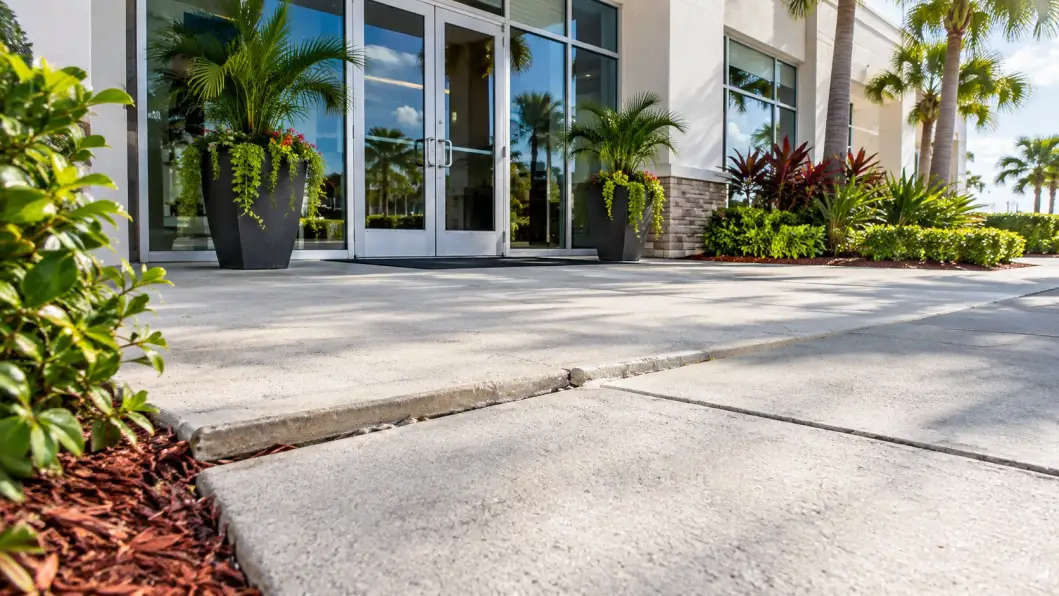
Driveway Concrete Florida: Fix the Gap Between Your Driveway and Garage
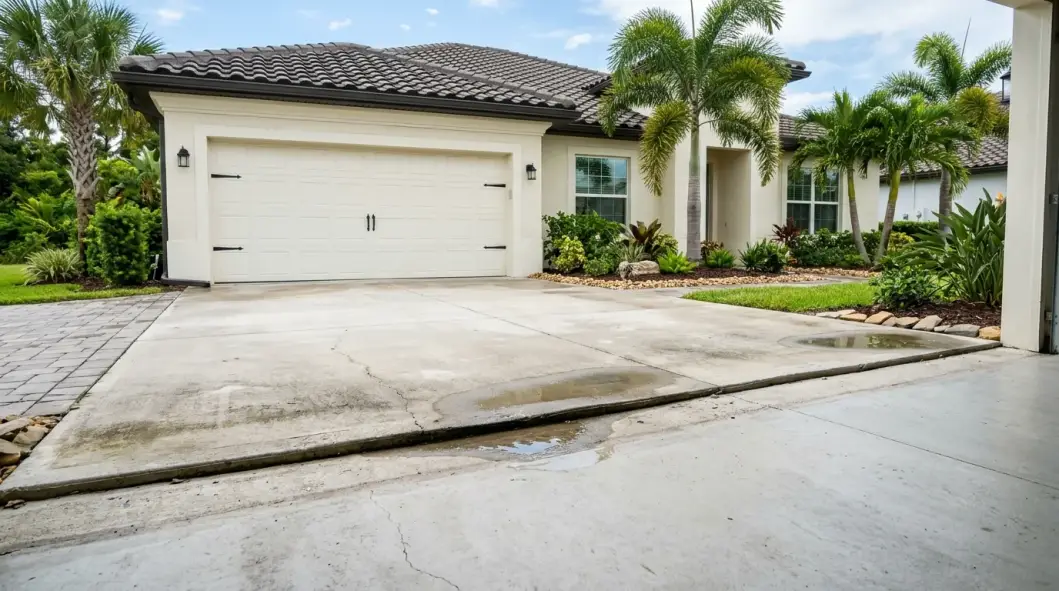
A gap between your driveway and garage is more than a cosmetic issue. It can create a trip hazard, damage your vehicle, allow water into your garage, and signal soil settlement beneath the concrete.
In Florida, driveway concrete leveling services address this common problem by restoring the connection between your driveway and garage floor. Whether your driveway has settled, pulled away from the garage, or developed an uneven transition, professional concrete leveling can restore a smooth, stable surface without requiring full driveway replacement.
This guide explains why gaps form between driveways and garages, how concrete settlement affects your property, and which repair options can restore a safe, even transition.
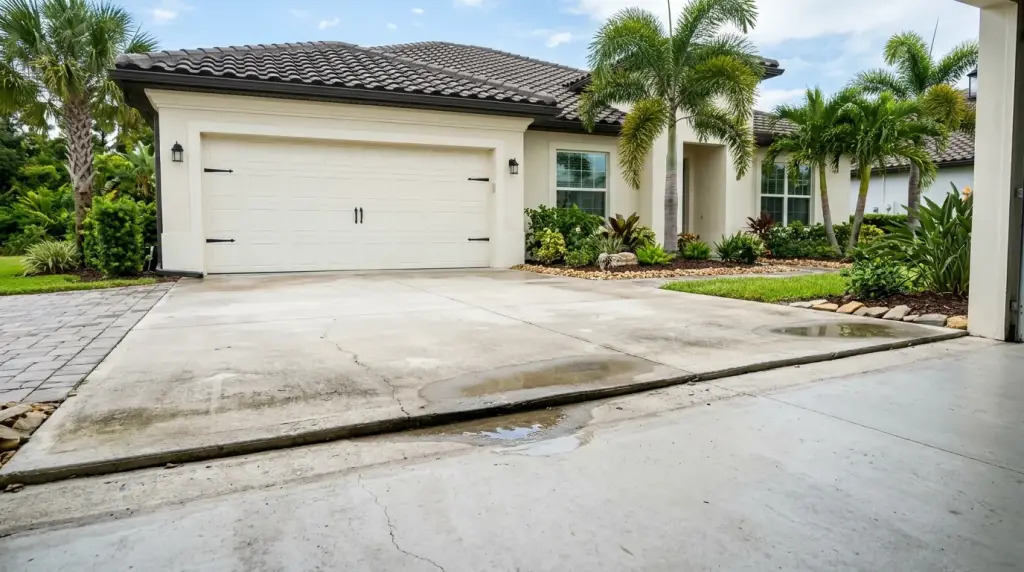
Why Does Concrete Between the Driveway and Garage Settle?
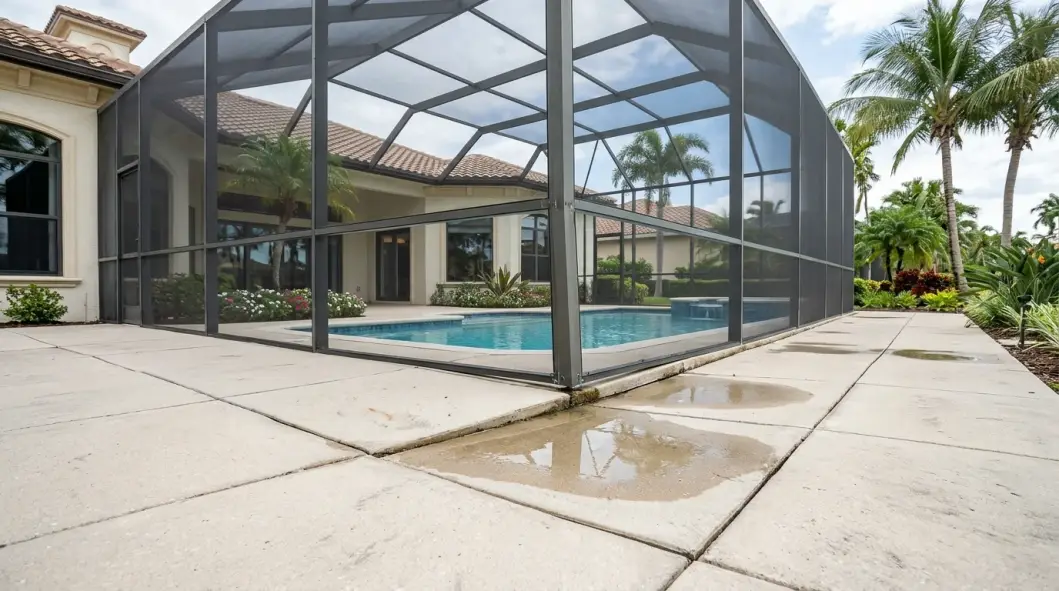
The concrete section connecting your driveway to your garage experiences heavy vehicle traffic, water exposure, and constant weight. Over time, these forces can cause the concrete to settle, crack, or separate from adjacent surfaces.
In Florida, sandy soil, poor compaction, and water erosion are common contributing factors. When the supporting soil moves or washes away, the driveway loses support and begins to sink, creating a visible gap or height difference at the garage entrance.
Why Driveways Settle in Florida
Several factors contribute to driveway concrete settlement in Florida:
- Sandy soil and poor compaction. Florida’s sandy soils can provide inconsistent structural support. If contractors did not properly compact the soil before pouring concrete, the ground can compress over time.
- Heavy vehicle traffic. Cars, trucks, and delivery vehicles place significant stress on driveway concrete, particularly near garage entrances.
- Water exposure. Rain, irrigation, and runoff can wash away supporting soil beneath the driveway slab.
- Temperature changes. Florida’s heat causes concrete to expand and contract, placing stress on joints and connections.
- Age and wear. Older driveways naturally develop settlement and cracks over time.
Why Does a Gap Form Between My Driveway and Garage?
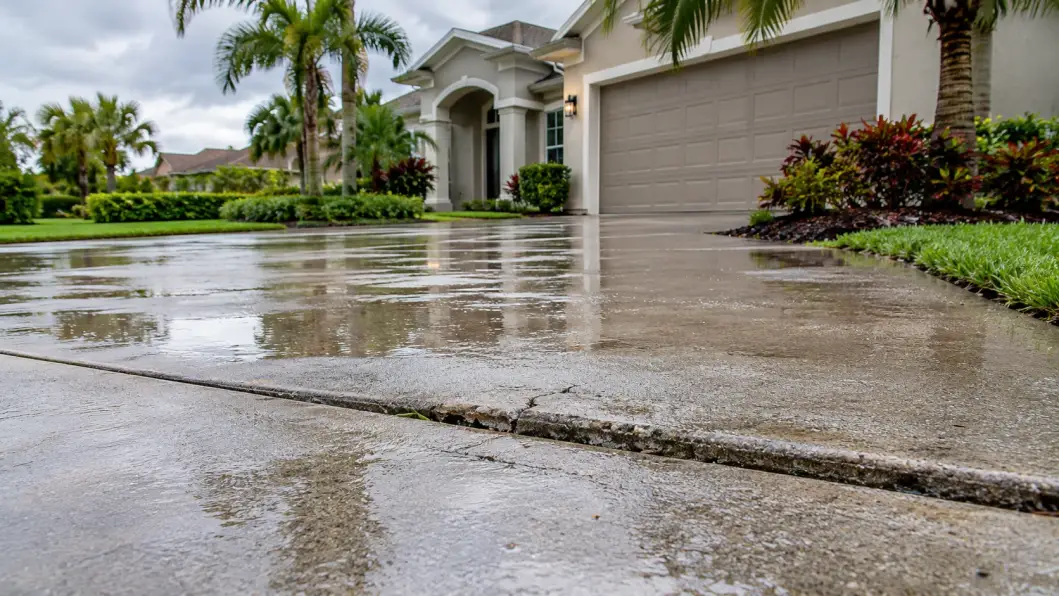
The gap between your driveway and garage floor usually forms when the two concrete surfaces move differently. The garage floor may remain stable while the driveway settles, or the driveway may gradually pull away from the garage.
Soil Settlement Beneath the Driveway
If the soil beneath the driveway was not properly compacted, it can compress over time. As the soil settles, the concrete slab loses support and begins to drop.
This movement creates a gap or height difference between the driveway and garage floor. The gap may become wider as additional soil erodes or compresses.
Water Erosion and Soil Washout
Water can reach the soil beneath your driveway through roof runoff, downspouts, broken irrigation lines, or gaps between the driveway and garage.
As water moves below the concrete, it can carry fine sand and soil particles away. Over time, this creates hidden voids beneath the slab. Once the driveway loses support, it begins to settle and separate from the garage.
Poor Drainage or Reversed Slope
A driveway should direct water away from the garage. However, when the concrete settles unevenly, it can develop a reverse slope that directs water toward the garage instead.
This can lead to:
- Water pooling inside the garage after rain.
- Soil beneath the driveway becoming saturated.
- Moisture entering the gap between the driveway and garage.
- Further settlement and widening of the gap.
Expansion Joint Failure
The connection between the driveway and garage should have an appropriate joint that allows the two concrete surfaces to move independently.
Over time, joint sealant can crack, shrink, detach, or disappear. Once that happens, water, insects, and debris can enter the gap.
An open joint can also allow water to reach the soil beneath the driveway, potentially accelerating soil erosion and settlement.
Heavy Vehicle Traffic
Cars, trucks, and delivery vehicles place significant stress on driveway concrete. Repeated traffic can compress underlying soil, crack the slab, and accelerate settlement.
This is especially true if the driveway was not designed to handle heavy loads or if the soil beneath it was not properly compacted.
How Does Driveway Concrete Settlement Affect Your Property?
A settling driveway affects more than just the concrete. It can create safety concerns, vehicle damage, and moisture problems throughout your property.
Trip Hazards at the Garage Entrance
A gap or height difference between the driveway and garage floor creates a potential trip hazard.
Family members, guests, and delivery drivers can trip or stumble when entering or exiting the garage.
Vehicle Damage
Driving over an uneven driveway entrance can place additional stress on your vehicle’s suspension, tires, and alignment.
Repeated impact can also damage the edges of the driveway and garage floor.
Water Entering the Garage
When the driveway settles or the gap widens, rainwater can flow into the garage instead of draining away.
This can lead to:
- Water damage to garage contents.
- Moisture problems and mold growth.
- Damage to garage floor coatings or finishes.
- Increased humidity inside the garage.
Cracks Spreading Across the Driveway
As the driveway settles, stress transfers to surrounding concrete.
This can cause cracks to spread across the driveway, creating additional trip hazards and potential structural concerns.
Pest and Moisture Intrusion
Gaps between the driveway and garage allow insects, pests, moisture, and debris to enter.
Over time, this can contribute to pest problems and moisture-related damage inside the garage.
Warning Signs Your Driveway Concrete Needs Leveling
Early detection can prevent minor settlement from becoming a more expensive repair project.
Watch for these warning signs:
The Gap Between the Driveway and Garage Is Getting Wider
Monitor the gap between the driveway and garage floor. If it becomes wider over time, the driveway may be settling or pulling away from the garage.
Water Enters the Garage After Rain
If water flows into your garage after storms, the driveway may have developed a reverse slope or the gap may be allowing water inside.
Your Vehicle Bumps When Entering or Exiting
If you feel a bump or jolt when driving over the garage entrance, there may be a height difference or settled concrete that needs attention.
Cracks Are Spreading
Watch for new cracks in the driveway or garage floor.
Cracks that widen or develop noticeable height differences may indicate ongoing settlement.
The Driveway Is Sinking or Uneven
Look for lower sections, tilted concrete, or uneven transitions between the driveway and garage.
These are common signs that the supporting soil may have shifted or eroded.
The Garage Door No Longer Closes Properly
If the garage door sticks, drags, or no longer aligns properly, settlement around the entrance may be affecting the threshold or surrounding concrete.
Driveway Concrete Leveling vs. Full Replacement
When driveway concrete settles, property owners often face a choice: level the existing concrete or replace it entirely.
The right solution depends on the condition of the slab, the extent of settlement, and the stability of the underlying soil.
Advantages of Driveway Concrete Leveling
- Faster completion. Many projects can be completed within hours rather than requiring several days for demolition and replacement.
- Lower cost. Concrete leveling typically costs less than removing and replacing the entire driveway section.
- Minimal disruption. There is no need for extensive excavation or demolition.
- Less construction waste. Existing concrete is preserved instead of being removed and discarded.
- Preserves existing concrete. If the slab is structurally sound, leveling can extend its useful life.
- Restores support. Filling underlying voids helps restore more uniform support beneath the driveway.
When Is Full Driveway Replacement Necessary?
Replacement may be necessary when:
- Concrete is severely cracked or broken into multiple pieces.
- The slab has extensive structural damage.
- The concrete has deteriorated significantly.
- Underlying soil problems require major excavation.
- Previous leveling attempts have repeatedly failed.
A qualified contractor can evaluate whether concrete leveling or full replacement is the better solution for your driveway.
Repair Options for Sunken Driveway Concrete
The appropriate repair depends on the severity of settlement, the condition of the concrete, and the underlying soil conditions.
Polyurethane Foam Injection
Polyurethane foam injection is a widely used method for lifting settled driveway concrete and filling voids beneath the slab.
The process involves:
- Drilling small access holes through the driveway slab.
- Injecting expanding polyurethane foam beneath the concrete.
- Allowing the foam to expand and fill empty spaces.
- Using controlled expansion to lift the slab toward its original level.
- Patching the small access holes after the repair.
Benefits include:
- Minimal disruption to your driveway.
- Fast completion, often within hours.
- Lightweight material compared with traditional mudjacking mixtures.
- Water-resistant foam.
- Filling of voids beneath the existing concrete.
- Reduced need for full driveway replacement.
Void Filling and Soil Stabilization
Void filling and soil stabilization address the underlying support problems that contribute to driveway settlement.
When erosion creates significant empty spaces beneath the driveway, polyurethane foam can fill these cavities and restore support.
Benefits include:
- Filling empty spaces beneath the concrete.
- Restoring more uniform support beneath the slab.
- Helping reduce further settlement caused by unsupported areas.
- Addressing voids created by soil erosion.
- Providing solutions suitable for Florida’s sandy soil conditions.
Drainage Correction
Addressing the source of water intrusion is essential for long-term driveway stability.
Possible solutions include:
- Regrading soil to direct water away from the garage.
- Extending downspouts away from the driveway.
- Installing appropriate drainage systems.
- Repairing broken irrigation lines.
- Clearing clogged drainage outlets.
- Correcting areas where water consistently pools.
Expansion Joint Repair
If the gap between the driveway and garage is caused by failed joint sealant, contractors can clean and reseal the joint using an appropriate flexible sealant.
This allows the driveway and garage floor to move independently while helping keep water and debris out.
However, if the driveway has settled, resealing the joint alone will not correct the underlying height difference. Concrete leveling may also be necessary.
Garage Floor and Threshold Repairs
In some cases, the garage floor edge or threshold may require additional repairs after the driveway has been leveled.
Common repairs include:
- Patching damaged concrete edges.
- Repairing or replacing damaged thresholds.
- Sealing gaps between the garage floor and driveway.
- Restoring appropriate drainage slopes near the garage entrance.
How SlabFix Restores the Connection Between Your Driveway and Garage
SlabFix specializes in driveway concrete leveling Florida services designed to restore smooth, safe transitions between driveways and garage floors.
Our approach focuses on addressing both the visible settlement and the underlying support problems.
Careful Assessment
Our team evaluates the driveway condition, soil stability, and drainage to identify the cause of settlement.
This helps determine whether polyurethane foam injection is suitable for restoring the driveway.
Polyurethane Foam Injection
We use polyurethane foam injection to fill voids, improve soil support, and lift settled driveway concrete toward its original position.
This process can restore the transition between the driveway and garage without extensive demolition.
Minimal Disruption
Our process requires only small access holes drilled into the existing driveway.
This minimizes disruption to your concrete surface and daily routine.
Fast Completion
Many driveway concrete leveling projects can be completed within hours, depending on the size and complexity of the repair.
This helps property owners avoid the longer construction process associated with full driveway replacement.
Drainage Assessment
We evaluate drainage conditions around the driveway and garage entrance and identify potential sources of water intrusion or soil erosion.
When necessary, we recommend addressing these issues to help reduce the risk of recurring settlement.
Documentation Support
We provide documentation of completed repair work to help property owners maintain accurate maintenance and repair records.
Preventive Maintenance for Driveway Concrete
Proactive maintenance can help prevent driveway settlement from developing or becoming worse.
Regular Inspections
Inspect your driveway and garage entrance regularly. Look for:
- Cracks in the concrete.
- Gaps between the driveway and garage.
- Water pooling near the garage entrance.
- Uneven or tilted concrete sections.
- Signs of soil erosion or washout.
Drainage Management
Ensure water drains away from the garage properly.
Address standing water, leaking irrigation systems, and drainage problems promptly.
Prompt Repairs
Address small cracks, minor settlement, and drainage issues before they become larger problems.
Early repairs can help preserve existing concrete and reduce the need for more extensive work.
Vehicle Weight Management
Avoid parking heavy vehicles or equipment on driveway sections that show signs of settlement.
Reducing excessive loads can help minimize additional stress on weakened concrete and supporting soil.
Frequently Asked Questions About Driveway Concrete Leveling
Why is there a gap between my driveway and garage?
The most common reasons include soil settlement, water erosion, poor drainage, expansion joint failure, and heavy vehicle traffic. These conditions can cause the driveway slab to sink or separate from the garage floor.
Can I fix the gap between my driveway and garage without replacing the concrete?
Yes. If the existing concrete is structurally suitable, polyurethane foam injection can fill voids, stabilize the supporting soil, and lift the settled driveway toward its original position without full replacement.
However, drainage problems contributing to the settlement should also be addressed.
Does driveway settlement affect my garage door?
Yes. When driveway concrete settles, it can affect the transition, threshold, and surrounding garage entrance. Depending on the extent and location of settlement, it may also contribute to problems with garage door alignment or operation.
Can polyurethane foam lift a sunken driveway?
Yes. Expanding polyurethane foam can fill voids beneath the driveway, improve soil support, and lift settled concrete. The process requires only small access holes and does not require extensive demolition.
How long does driveway concrete leveling take?
Many driveway concrete leveling projects can be completed within a few hours. Larger or more complex repairs may require additional time, depending on the size of the slab and extent of settlement.
Will concrete leveling damage my garage floor?
The injection process is designed to minimize disruption to surrounding surfaces. Experienced contractors carefully select injection locations and control the lifting process to help protect the garage floor and threshold.
How can I prevent the gap between my driveway and garage from getting worse?
Maintain proper drainage around the driveway, address soil erosion promptly, repair damaged joints, and inspect the driveway and garage transition regularly. If settlement has already occurred, professional concrete leveling may help restore the connection.
Is driveway concrete leveling covered by insurance in Florida?
Coverage depends on your insurance policy and the cause of the damage. Some policies cover certain sudden events, while others exclude gradual soil settlement and normal wear. Contact your insurance provider to determine whether your specific repair qualifies.
Fix the Gap Between Your Driveway and Garage with Professional Concrete Leveling in Florida
A gap between your driveway and garage is a warning sign that should not be ignored. Sunken concrete can create trip hazards, damage vehicles, allow rainwater into your garage, and indicate soil erosion beneath the driveway.
The good news is that full concrete replacement may not be necessary.
SlabFix provides professional driveway concrete leveling in Florida using polyurethane foam injection to fill underlying voids, improve soil support, and lift settled driveway slabs.
Whether your driveway has developed a gap at the garage entrance, uneven concrete, or visible signs of soil settlement, our team can assess the problem and recommend an appropriate repair solution.
Ready to fix the gap between your driveway and garage?
Contact SlabFix today to schedule a professional driveway concrete assessment. Restore a smooth, stable transition and avoid the unnecessary expense and disruption of full driveway replacement.
📞 Call SlabFix at 407-379-2585 today to schedule your driveway concrete leveling assessment!