Why Seawalls Fail From the Back | Hidden Seawall Damage in Florida
Why Seawalls Fail From the Back, Not the Front: The Overlooked Cause of Coastal Structural Damage
When most Florida property owners think about seawall failure, they picture visible cracks, leaning panels, or concrete deterioration caused by saltwater exposure. While these surface-level symptoms are easy to spot, they are rarely the true starting point of failure. In reality, most seawalls don’t fail because of what happens on the water-facing side—but because of what happens behind them.
Understanding why seawalls fail from the back side is critical for protecting waterfront properties, preventing costly repairs, and extending the lifespan of existing structures. This hidden mechanism is also the reason many traditional repairs fall short, even when they appear structurally sound from the outside.
The False Sense of Security Created by an “Intact” Seawall
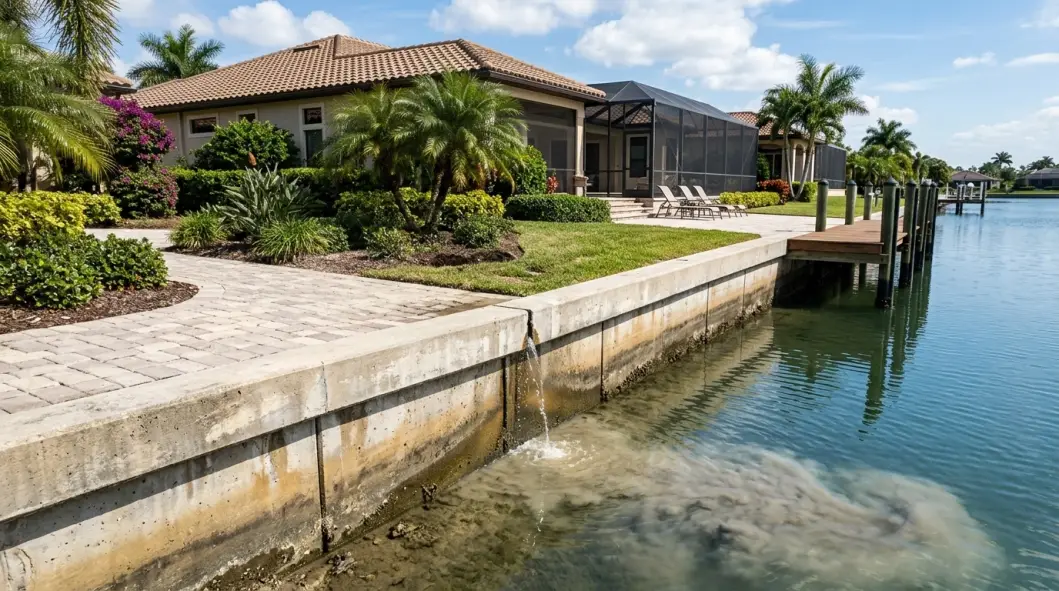
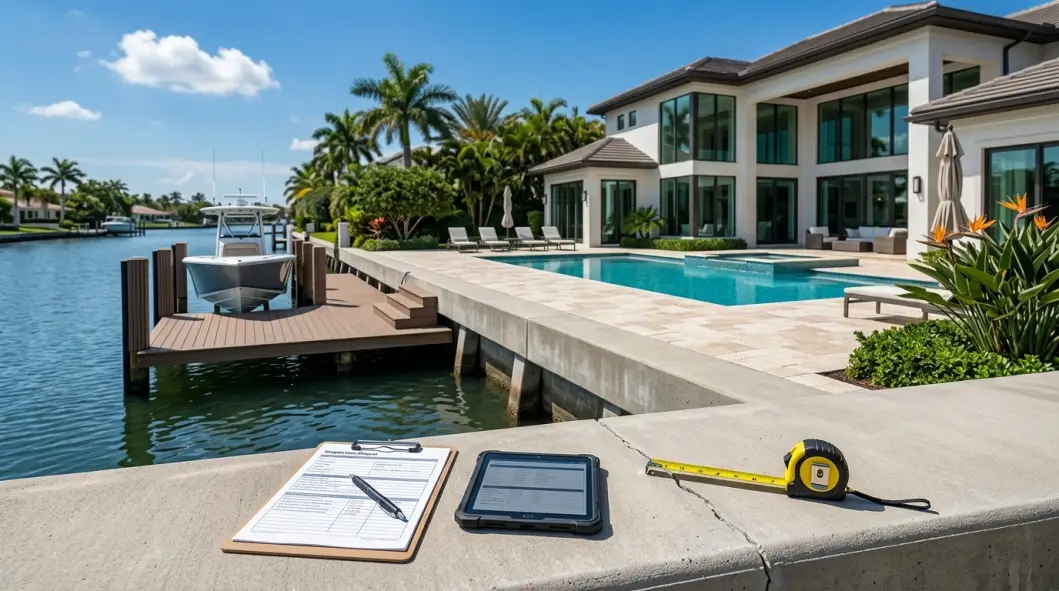
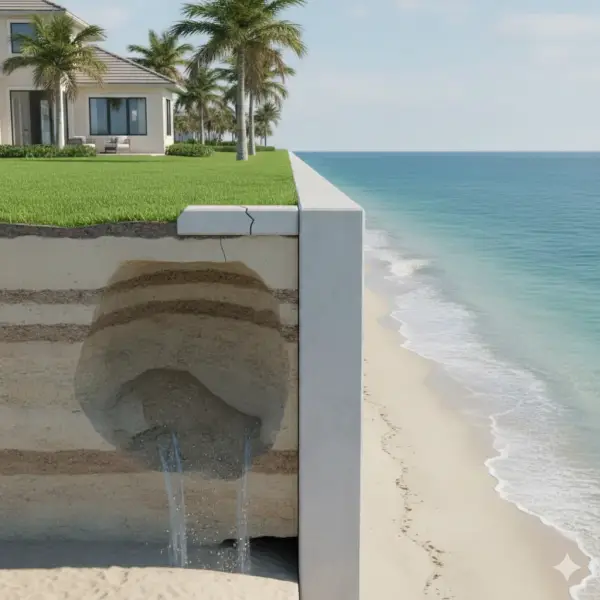
A seawall can look perfectly fine from the canal or bay while serious damage is developing underground. Concrete panels may remain upright, caps may appear solid, and joints may show minimal wear. Yet behind the wall, soil can be slowly disappearing.
This false sense of security is dangerous. Property owners often delay action because there are no obvious warning signs—until sudden settlement, cracking, or collapse occurs. By the time surface damage appears, the problem is no longer minor or inexpensive to address.
How Soil Loss Begins Behind Seawalls
The primary driver of back-side failure is soil migration, not concrete deterioration. Florida’s coastal environment creates ideal conditions for this process.
Behind every seawall is compacted backfill soil that provides lateral support. Over time, this soil is exposed to:
Tidal fluctuations
Groundwater movement
Heavy rainfall
Pressure differentials between land and water
As water moves through or around the seawall, it carries fine soil particles with it. This gradual process—often called internal erosion or washout—creates voids behind the wall.
These voids are invisible from the surface but extremely destructive structurally.
Why Drainage Ports Can Accelerate the Problem
Many seawalls are designed with weep holes or drainage ports to relieve hydrostatic pressure. While the intention is good, these openings often become exit points for soil.
When water flows out, fine particles follow. Over time, this turns drainage ports into erosion channels, allowing more soil to escape with each tidal cycle or storm event. Instead of relieving pressure safely, the system slowly undermines the wall’s support.
This explains why some seawalls fail even when drainage appears to be “working as designed.”
The Load Transfer Problem Most Repairs Ignore
A seawall is not just holding back water—it’s holding back land. The soil behind the wall supports:
Seawall panels
Caps and tiebacks
Adjacent patios, pools, and walkways
Nearby docks and retaining structures
When soil is lost, the load these structures exert does not disappear. Instead, it transfers unevenly to remaining contact points. This creates stress concentrations that lead to cracking, rotation, or separation.
Many cosmetic repairs focus on restoring concrete appearance without addressing this load transfer issue. As a result, the wall may look repaired while continuing to weaken internally.
Why Visual Inspections Often Miss Critical Damage
Traditional inspections rely heavily on what can be seen above ground. Unfortunately, soil loss happens silently and below the surface.
Early-stage voids can develop several feet behind the wall with no visible signs. Grass may remain green, pavers may appear level, and caps may feel solid underfoot. Yet beneath that surface, unsupported soil zones are expanding.
By the time visible settlement or cracking occurs, voids are often large enough to compromise the entire system.
The Role of Heavy Rainfall in Accelerating Back-Side Failure
Florida’s intense rain events play a major role in behind-the-wall erosion. When saturated soil becomes heavy, pressure against the seawall increases dramatically. At the same time, water seeks paths of least resistance to escape.
This combination pushes soil particles toward joints, seams, and drainage openings. After major storms, many seawall failures are mistakenly blamed on age or wave action, when the real cause is rainfall-driven soil movement behind the structure.
Why Front-Facing Repairs Alone Don’t Work
Repairing cracks, replacing caps, or sealing joints from the front does nothing to replace lost soil. In some cases, these repairs can actually make the problem worse by increasing rigidity without restoring support.
A seawall needs both structural integrity and stable backfill to function properly. Fixing one without the other creates imbalance.
This is why some seawalls fail again only a few years after being “repaired.”
Stabilizing the Back Side: The Missing Piece
Long-term seawall performance depends on restoring and stabilizing the soil behind the wall. This is where modern, non-invasive stabilization methods play a critical role.
By accessing the backfill zone directly, it’s possible to:
Fill existing voids
Densify loose soil
Stop ongoing erosion pathways
Restore uniform load transfer
Unlike traditional excavation, targeted stabilization addresses the problem without disturbing the wall or surrounding structures.
How SlabFix Approaches Behind-the-Wall Failure Differently
At SlabFix, the focus is not just on what’s visible—but on what’s happening beneath the surface.
Instead of treating seawalls as standalone concrete structures, SlabFix evaluates the entire soil-structure system. This includes identifying void locations, understanding water movement patterns, and stabilizing the backfill before structural damage progresses.
Using deep injection techniques and high-performance polyurethane materials, SlabFix reinforces the soil zone that actually determines seawall stability.
Why Early Intervention Matters More Than Repair Type
The difference between a manageable stabilization project and a full seawall replacement often comes down to timing. Addressing soil loss early:
Prevents wall rotation
Reduces cap and panel damage
Protects adjacent slabs and decks
Extends the usable life of the seawall
Once back-side failure reaches advanced stages, options become more limited and expensive.
Rethinking Seawall Maintenance in Florida
Seawalls should not be treated as “install and forget” structures. In Florida’s coastal conditions, proactive evaluation of backfill stability is just as important as surface maintenance.
Understanding that failure starts from behind—not the front—allows property owners to make smarter decisions, avoid unnecessary cosmetic repairs, and invest in solutions that actually protect their waterfront assets.
Final Thought
If a seawall looks fine but something feels off—minor settlement, small gaps, unexplained cracking nearby—it’s often a sign of back-side soil loss already in progress. The most durable seawalls are not just strong on the surface; they are supported by stable, reinforced soil beneath and behind them.
That’s where real longevity comes from—and where SlabFix delivers lasting value.
Frequently Asked Questions
Why do most seawalls fail from the back instead of the front?
Most seawalls fail because soil behind the wall is gradually lost through erosion and washout, creating hidden voids that remove support. The concrete may look fine while the backing soil disappears.
What causes soil to disappear behind a seawall?
Water movement from tides, rainfall, and groundwater carries fine soil particles through joints, seams, and drainage ports, slowly creating voids behind the wall.
Can a seawall look healthy while serious damage is developing behind it?
Yes. This is one of the most dangerous aspects of seawall failure. The wall can appear stable while soil loss and void formation are progressing underground.
Why don’t front-facing repairs alone solve seawall problems?
Front-facing repairs may improve appearance, but they do not replace lost soil or restore support behind the wall. Without stabilizing the backfill, the underlying problem remains.
How does SlabFix address behind-the-wall seawall failure?
SlabFix focuses on stabilizing the soil behind the wall using deep injection and polyurethane materials, filling voids and densifying loose soil to restore support rather than just repairing visible concrete.
📞 Call SlabFix Today: 407-379-2585
📍 Serving all of Central and Coastal Florida
💬 Free Inspection & Quote