How Do You Repair a Seawall? Seawall Repair Cost, Methods, and What Homeowners Should Know
Waterfront properties offer incredible views and lifestyle benefits, but they also face constant pressure from water, soil movement, and shoreline erosion. The structure responsible for protecting these properties is the seawall. Over time, even well-built seawalls can develop cracks, soil voids, and structural weaknesses that require professional repair.
Two of the most common questions homeowners search online are:
How do you repair a seawall?
What is the seawall repair cost?
Understanding the seawall repair cost and the different repair methods helps property owners make informed decisions before minor damage turns into a costly structural failure.
This guide explains how seawalls are repaired, what causes damage, and what factors influence the overall seawall repair cost.
What Is a Seawall and Why Is It Important?
A seawall is a protective structure designed to prevent shoreline erosion and protect land from water pressure. These barriers are commonly built along lakes, rivers, and coastal properties to stabilize soil and protect nearby buildings.
Without a properly functioning seawall, water can gradually wash away soil behind the structure. This process can lead to:
ground settlement
foundation instability
property loss
structural collapse
Because seawalls are constantly exposed to water pressure and environmental forces, regular inspection and timely repair are essential. Addressing problems early can significantly reduce the seawall repair cost and prevent major structural damage.
Common Signs Your Seawall Needs Repair
Before discussing repair methods and seawall repair cost, it is important to recognize the warning signs of seawall damage. Early intervention can prevent much larger structural issues.
Cracks in the Seawall
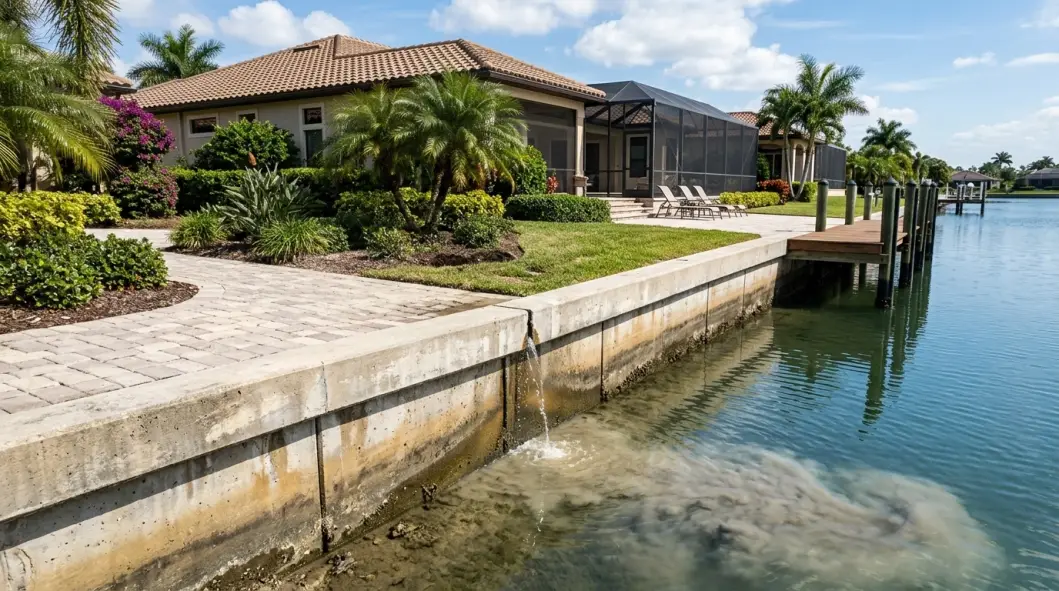
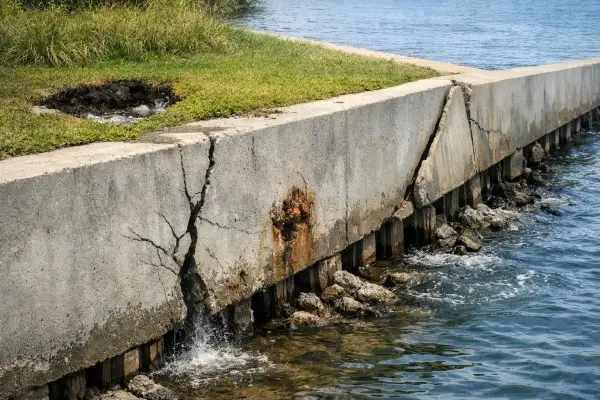
Cracks can develop from water pressure, soil movement, or aging materials. While small cracks may appear minor, they often allow water to penetrate behind the wall and increase future seawall repair costs.
Soil Loss Behind the Wall
If you notice sinkholes or depressions near the seawall, it may indicate soil washout behind the structure.
Water Seeping Through the Wall
Water leaking through joints or cracks is often a sign of hydrostatic pressure buildup.
Leaning or Bowing Structure
A seawall that begins to tilt or bulge outward may be experiencing serious structural stress.
Voids or Hollow Areas
Empty spaces forming behind the seawall weaken the support system and increase the risk of collapse.
Repairing these issues early is the most effective way to control the total seawall repair cost.
How Do You Repair a Seawall?
Seawall repair methods vary depending on the type of damage, soil conditions, and structural design. In most cases, professional contractors use one or more of the following techniques.
1. Crack Sealing and Structural Patching
Small cracks in concrete seawalls can often be repaired using specialized sealants or epoxy injections.
This process includes:
cleaning the damaged area
injecting sealant or epoxy into cracks
sealing the surface to prevent water intrusion
This method is effective for minor structural cracks and typically results in a lower seawall repair cost compared with more extensive repairs.
2. Void Filling Behind the Seawall
One of the most common causes of seawall failure is soil erosion behind the structure.
When soil washes away, empty spaces develop. These voids allow the seawall to move or collapse over time.
Void filling typically involves injecting material behind the wall to restore soil support. Modern repair methods often use expanding polyurethane foam because it:
fills voids quickly
stabilizes loose soil
prevents further erosion
adds structural support
By restoring the soil support system, this method can prevent future damage and reduce long-term seawall repair costs.
3. Deep Polyurethane Injection for Seawall Stabilization
One of the most effective modern methods used to control erosion and reduce long-term seawall repair cost is deep polyurethane injection. This technique stabilizes the soil behind the seawall and fills hidden voids that often form due to water movement and soil washout.
The process begins by identifying weak soil zones behind the seawall where erosion or void formation has occurred.
Using a 6-foot injection rod, technicians inject a high-performance single-component polyurethane material known as Terra-Lok™ 24-120 directly into the soil behind the seawall.
The injection rod is placed deep at the base of the seawall to reach the lowest point where soil support may have been lost. Once the material begins to flow, the rod is slowly withdrawn upward toward the surface.
This bottom-to-top injection process allows Terra-Lok™ 24-120 to permeate the entire soil zone, filling voids, strengthening weak soil layers, and restoring support along the full depth of the seawall structure.
As the polyurethane expands, it binds and stabilizes the surrounding soil while sealing pathways where water may have been washing soil away.
This method provides several advantages for seawall repair:
fills deep voids behind the seawall
strengthens weak or eroded soil layers
reduces further shoreline erosion
stabilizes the structure without major excavation
Because the process targets the root cause of seawall failure—soil instability—it can significantly extend the life of the structure while controlling the overall seawall repair cost.
4. Soil Stabilization
If the soil behind the seawall becomes weak or saturated, the entire structure may begin to shift.
Soil stabilization involves strengthening the ground beneath and behind the wall. Contractors may inject expanding materials into the soil to increase density and improve load-bearing capacity.
This process restores the support system that keeps the seawall stable and helps prevent rising seawall repair costs in the future.
5. Tieback or Anchor Installation
For seawalls that are leaning or bowing, structural anchors may be installed.
Tiebacks connect the seawall to stable soil farther inland. These anchors pull the wall back into alignment and help resist water pressure pushing against it.
While this repair method can increase the seawall repair cost, it is often necessary for significant structural damage.
6. Seawall Cap Repair
The top portion of a seawall, called the cap, provides structural strength and distributes loads along the wall.
Over time, caps can crack or deteriorate. Repairing the cap often involves:
removing damaged sections
reinforcing the structure
pouring new concrete
Cap repairs help restore the wall’s overall strength and prevent future structural issues that could increase seawall repair costs.
Seawall Repair Cost: What Homeowners Should Expect
The seawall repair cost varies widely depending on several factors. Because every seawall is different, professional inspections are usually required to determine accurate pricing.
However, several key elements influence the total cost of seawall repair.
Extent of Damage
Minor cracks and small repairs are usually less expensive than major structural issues.
For example:
small crack sealing may result in a lower seawall repair cost
large void filling or structural stabilization requires more extensive work
Size of the Seawall
Longer seawalls require more materials and labor. A small residential seawall may cost significantly less than repairing an extensive waterfront structure.
Soil Conditions
If the soil behind the seawall has experienced severe erosion or instability, additional stabilization work may be required.
This can increase the overall seawall repair cost, but it also ensures long-term structural stability.
Accessibility
Seawalls located in difficult-to-access areas may require specialized equipment or marine access, which can increase project expenses.
Repair Method Used
Different repair techniques involve varying material costs.
For example:
crack sealing generally has a lower seawall repair cost
structural reinforcement or soil stabilization may require specialized equipment and materials
Average Seawall Repair Cost Range
While prices vary by location and project complexity, many residential repairs fall within typical ranges.
Estimated seawall repair costs may include:
Minor repairs: $1,500 – $5,000
Moderate structural repairs: $5,000 – $20,000
Major stabilization projects: $20,000 or more
Because seawalls protect valuable waterfront property, many homeowners consider these repairs an important long-term investment.
Seawall Repair vs Replacement Cost
Many property owners assume that a damaged seawall must be replaced entirely. However, full replacement can cost $40,000 to $150,000 or more depending on the structure and location.
In many cases, professional repair methods can significantly extend the life of an existing seawall at a much lower seawall repair cost.
Repair is often preferred because it:
costs less than replacement
requires less construction disruption
preserves existing structures
stabilizes soil quickly
Why Early Seawall Repair Saves Money
Ignoring seawall damage can dramatically increase the seawall repair cost over time.
If erosion continues behind the wall, homeowners may experience:
landscape collapse
loss of yard space
damage to nearby structures
foundation problems
expensive shoreline reconstruction
Addressing damage early helps protect both the structure and the surrounding property.
Professional Seawall Repair Services
If your seawall shows signs of cracking, soil loss, or structural movement, professional repair can prevent major shoreline damage.
At SlabFix, we specialize in advanced foam soil stabilization for seawall repair. Our deep injection process fills hidden voids behind seawalls, strengthens weak soil, and restores structural support without major excavation.
Our seawall repair solutions help:
stabilize soil behind seawalls
fill voids caused by erosion
reduce water infiltration
extend the life of existing seawalls
Frequently Asked Questions
How do I know if my seawall needs repair or full replacement?
Not every damaged seawall needs full replacement. In many cases, cracks, soil loss, voids, or early movement can be repaired if the structure is still salvageable and the support behind the wall can be restored.
What usually causes a seawall to crack, lean, or fail?
Most seawall problems start below the surface. Common causes include soil erosion behind the wall, hydrostatic pressure, water intrusion, weak backfill, void formation, and long-term structural stress.
What is the best way to repair a seawall without major excavation?
One of the most effective modern methods is deep polyurethane injection. This process can fill hidden voids, stabilize weak soil, reduce further erosion, and restore support behind the seawall without tearing out large sections of the property.
How much does seawall repair usually cost?
Seawall repair cost depends on the extent of damage, the size of the wall, soil conditions, accessibility, and the repair method used. Minor repairs may cost much less than full stabilization or replacement, which is why early inspection often saves money.
Does repairing the soil behind the seawall really help prevent future damage?
Yes. In many cases, the real problem is not just the visible crack in the wall but the unstable soil behind it. Restoring that support system can help stop further movement, reduce water-related damage, and extend the life of the seawall.
📞 Call SlabFix today at 407-379-2585 to schedule a professional seawall inspection and learn more about the most effective solutions for your property.